After almost thirty years…

It’s been over 30 years since the death of my mother Angela, and about 27 years since I started writing about my true life in this site. In fact, my mother’s death was a major catalyst for this project.

I hold honesty as one of the highest values. I’ve done my best to tell my story honestly, perhaps because I wanted to tell my story myself, on my own terms.

But deep down, there’s has always been a little voice in me that remained afraid of how my role in my story might be interpreted by others. Could I be judged or looked down on?

Ironically, I decided in 1995 to start telling my life story in a blog that anybody could read for free. I guess I was proving to myself that I wasn’t scared of people knowing my story. It likely also meant that I wanted to tell it on my own, in my own way, and at my own pace.

In March 2026, just a few months from now, I will turn sixty. There’s still so much more I want to say and do here. At this rate, I may hit seventy  before I finish writing my true life stories.

My writing style is kind of like a painter: I tend to  “block in” a first version of a story, getting down the essential narrative and aspeccts to establish my timeline. But, because I can revisit my stories to revise them any time I want, I enjoy the subsequent visits to refine a tale, whether to add more detail, establish a deeper context of meaniing or reassert a theme, or just to correct typos or polish my writing. It’s like being able to practise a piece and polish a performance with the benefit of reflection and hindsight.


Take care, or take your medicine!

As a teen, I’d never have thought that in middle-age I’d be taking prescription meds each day to manage my health. (For all I knew back in my teens, even middle-age was like an impossible dream. Sometimes you fear that where you are is all there is and all you’ll ever have.)

Growing up, I never saw my Dad even take an aspirin. With him, I’m convinced he would never even admit to being sick. I don’t remember him ever taking a sick day.

My Mum should probably have been taking Lithium or something to manage her manic-depression, but she hadn’t gone to see a Doctor since before we’d come to Vancouver in 1975. In the half-dozen years since then, the only substance either of my parents ever medicated themselves with was alcohol – way too much alcohol.

My Dad only paid attention to his Doctor when he was given the ultimatum “If you don’t stop drinking, you’re going to die!”. That dramatic advice impressed my old man. It probably made him feel central to a big drama (his own survival), and gave him yet another great story to tell.

By 1984, Dad had a heart attack, multiple strokes, and would relapse into alcoholism and break his hip in a hospital shower. He had survived with his mind and personality intact and had succeeded with the hard work of stroke rehabilitation, but was broken physically and partially paralysed for the remainder of his life.

In contrast, by 1977 my Mother was too far gone into depression and alcoholism to even leave her bed. She’d completely withdrawn from all of us and the outside world, preferring to stay drunk or to appear to be sleeping all the time. She was unreachable, and we probably stopped trying over the course of the year.

Medical intervention for my Mother came with a last-minute ambulance ride to Burnaby General Hospital. She survived, but alcohol poisoning had given her permanent brain damage. She detoxed after a full blood transfusion, and was not the same person afterwards. She’d wanted to escape her life through alcohol, and had almost died and been “remade” with a slightly different mind and personality. She’d had a painful almost-death and kind of rebirth into a new life as a long-term resident in Riverview Psychiatric Hospital.

So I guess I never had good role models for taking care of myself, or staying healthy. At the age of 46, my mum almost died from alcohol. At the age of 62, my Dad almost died from a heart attack and multiple strokes.

Now, at the age of 59, I’m kind of in the middle of those two ages, and managing diabetes and high blood pressure. I’m taking Metformin and Jardiance for my Type 2 Diabetes, and Ramipiril to manage blood pressure. I do blood tests and talk with my Doc every 3 months, eat way more healthy than my folks ever did, and do 5000 to 10000 steps a day.

I guess the point of recounting all this is to show myself that I’m taking better care of myself, in both physical and mental terms. In fact, I’ve learned how each of those aspects can affect the other.

By 2014, my diabetes had been largely unmanaged for about four years. I was pretty large and overweight by that time – maybe weighing 205 or more. I also would experience some very dark feelings at least one morning each week. Other times, tears would come unexpectedly. I felt like my emotions were actually working against me. In the last ten years since that time, my diabetes has stayed in control through meds and some of my attempts at improving my diet and daily exercise.

Today, I weight about 177 pounds and am on-track to lose a few more and to get my blood pressure solidly inside the normal range. I try to get at least 5-6 hours of sleep each night and often walk more than 8000 steps each day. I feel no anxiety, and those black mornings have become very rare occurrences. I feel more calm, more confident, and more happy.

Better physical health can make it easier to improve mental health, and vice versa. I had to learn that lesson myself, but I also had to take my parents’ health struggles to heart as real warnings.


Kindness: A Porttrait in Blue

On Tuesday, July 15th at around 12:15, we said a final goodbye to our beloved cat Blue.

“Blue-Blue”, as we called him, had been with us for about 9 years. We adopted him and his sister back when they were about five.

In June of this year, my wife noticed that Blue’s breathing had become much deeper and laboured, as if he were taking sharper breaths more frequently. He was also weaker than we’d ever seen him, walking slowly and no longer jumping up onto our couch or chairs.

Our vet checked him out, and X-rays showed a lot of fluid in his chest cavity and around his heart, which are all signs of advanced heart disease where blood is leaking out of the arteries and settling into the vestibular areas around the heart and lungs. That accumulation of fluid creates pressure on the lungs, causing them to decrease in size. His heart was weaker on one side too, and more fluid had built-up in the sack that surrounded his heart, causing pressure there too. Basically, his heart was struggling and breathing had become difficult. In typical cat fashion, he made no noise to show his discomfort. A cat’s instinct is to hide weakness and illness from others in order to not be seen as easy prey for predators. They also tend to isolate themselves if they are feeling very unwell.

The Animal ER hospital put him on oxygen and removed over 200 milliliters from his chest, and more from the pleural lining around his heart. After a scary few days in hospital, he came back home and started taking diuretics and blood thinners to help manage his condition. After that first day or two at home with the pressure relieved and the sedation worn off, his spirits bounced back and his smile returned. He looked more like himself again. If we could keep him on his regime of meds (4 pills, every 8-12 hours), we could manage his illness and keep him living a happier life. Unfortunately, Blue discovered the bitter pills that we’d been hiding in his soft treats, and he got wise that we were grinding other meds into his wet food. He refused any food that smelled of his medicine. The prospect of forcing pills down his throat against his will felt like elder abuse to me. If he saw me coming after him with a pill popper, he’d just learn to run under the bed and avoid us. We didn’t want him to fear us or have any anxiety about us, so we made the hard choice to let him eat whatever he wanted and to avoid the meds altogether. It meant that we were in more of a palliative mode with him now, accepting that his life would soon come to an end, one way or another. At best, the fluid extraction and meds had bought him 2 more weeks, but he wouldn’t accept any more meds.

The fluid extractions were done by inserting a big syringe into his chest on each side. We didn’t want to submit Blue to any more invasive procedures, scary separation, or sedation. We just decided it was best for him to live as long as he could in his peaceful, familiar home.

Blue’s decline over the next week was steady and noticeable: he got slower and seemed uncomfortable, appearing somehow both restless and tired. He would lay in our bedroom closet for an hour, and then come out to the main area to lay on the carpet. We tried to feed, brush, and talk or sing to him whenever he was up and about. In spite of his regular mild activity, we worried that he might not last very much longer. His cardiologist confirmed our fear, telling us that he might only have days left. We knew what we needed to do next, and we scheduled an in-home euthanasia from a local vet. It was so difficult to have Blue take his last-ever breath while laying in my arms, but letting him nod-off peacefully was a dignity that our gentle old boy richly deserved. I felt like we had taken on the crying and the suffering so that he wouldn’t have to. Today, Blue’s remains are in a blue urn on our mantle, along with his paw prints. He sits up there next to his sister Peaches in her little pearl-coloured urn.

Every time I looked into Blue’s face, I saw the face of a smiling little friend. In fact, he didn’t seem so little to me at all. His importance in our lives made him a major figure in our home. He made a huge impact.

Blue’s affection was always sincere and unreserved, ever since our very first introduction in 2016. With Blue, the act of being itself seemed like a form of communication. Every pose or move he made told us something about him. Over the nine years he was with us, he taught us to understand him and he watched us closely to learn how we behaved too.

Blue was a good communicator. His eyes, whiskers, and ears told us everything that the word “meow” could not. He used his whole body to communicate, pointing his eyes, his face, or even his entire frame towards whatever thing that he wanted us to pay attention to. His tail was a living punctuation mark, a barometer of his moods, pointing up when he was happy and excited, down when he felt sad or scared, or twisted into any manner of loops or shepherding crooks when he felt intrigued and delighted. I’ve never really paid enough attention to human body language, but I have learned to read “cat” quite fluently.

If I had to sum up Blue’s personality in a word, “kind” is probably the best one I could use. He watched over his sister Peaches in the months when they were stuck in the animal shelter system. Peaches had a lot of fear and anxiety at first, and really relied on her brother to feel safe. They were all each other had. By the time we met them at the SPCA, they were five years old, and had been in the animal shelter system for months. Thankfully, they’d always been together.

Blue had originally been named Epo. He and Peaches had come to the Chilliwack shelter from an owner in Langley. Their owner was moving and couldn’t take them to the new home, so had put them up for adoption. They were about five years old when they entered the SPCA in Chilliwack, then the “Catfe”  cat cafe in downtown Vancouver, before going to the shelter in East Van where we met them. We all got along pretty well from the start, but they were a bit overweight and had noticeable fear and anxiety. They needed a quiet, loving home with lots of room and sunshine where they could feel secure and safe. After being cat-less for four years, we were more than ready to welcome a pair of bonded kitties into our life again.

I’m sure it was was difficult for Blue when his sister Peaches died a few years later. She’d developed a huge tumorous mass all around her heart and lungs, and it was basically inoperable. Poor little Peaches had no future ahead of her. We had to have her euthanized. Blue seemed to understand what had happened when we’d taken her to the Animal Hospital but had come back later empty-handed. We cried as we vainly tried to explain her passing to him. His pupils just went huge and he started shadow-boxing like mad on our glass patio door, “bump bump bump bump!” with his front paws.

The easiest consolation we found from losing Peaches was that we could still pour the excess Peaches portion of our love and care right back into her big brother. Over the next nine years, Blue bounced back, prospering emotionally, returning that extra love back to us ten times over.

https://ejohnlovebooks.com/true-life/tree-house/biographies/i-am-child-free-my-children-are-different/


Sixty years on, the scales of guilt and anger may have balanced

As I approach sixty (in my sixtieth year now), I admit to feeling almost no remaining guilt, anger, or regret whenever I think about my parents. There are just a few whispers, but my attachments to them are long gone.

As a kid, living with them had been both exciting and scary. As an adult, I found that their deaths made me feel real closure and relief.

My Dad

When my dad died, I was 23. It was a painful, rending loss of a person whom I’d once admired, loved, feared, and finally pitied. A year or so after he died, I learned about the full extent of his abuses in my family and I grew to bitterly despise him, his hypocrisy, and his total lack of accountability. He’d raised me with words like respect and responsibility, but his nature contradicted that: He tended to want to sweep his failings under the carpet rather than face them and try to fix them. His narcissistic and authoritarian character ultimately destroyed any fatherly image he’d tried to own.

I took many lessons of his life into my heart. Whenever I need to bring out a strong, authoritative voice, it’s his voice that emerges. He could be sweet, caring, and gentle, but his good moments are forever in risk of being eclisped by his bad ones. That scale is inherently biased: violence, whether psychological/or physical has a denser molecular structure than peace and love. One nasty, violent act, if unredeemed, can overshadow fifty acts of kindness.

I really had to hate the man to truly let him go. When he died, I grieved, but I also felt calmer in the realization that my obligation to him was finished.

My Mum

When my mum died, I was 29.  I felt such a mix of regret and relief. She’d been remote, like a stranger to me, for as long as I could remember. She’d been an enigma, hard to know, and even harder to reach. Her depression and alcoholism were terrible barriers for her to hide behind, but that was her passive, withdrawn way. As a family, we did nothing to intervene. The elephant in the room was illustrated blatantly in a TV commercial I saw as a kid, and that simple phrase and image has stayed with me all my life. We never acknowledged our elephants. Nothing was to be spoken about it.

Over eighteen years of awkward visits in whatever hospital my Mum was living in, I could never really know if she recognized or saw me, even when I was standing right in front of her. She’d left her family to be mired in her own dead end existence, without physically going anywhere. It was no life for her.

I decided to try to preserve her best qualities within my own values and actions and to never punish her for her lack of mothering. Being a mother was never in her nature. She needed mothering and support herself. She was a victim of forces that I couldn’t understand.

Some break-ups just take a long time. Forty years on, I’m still learning from my parents’ examples.


A brief history of Riverview Hospital

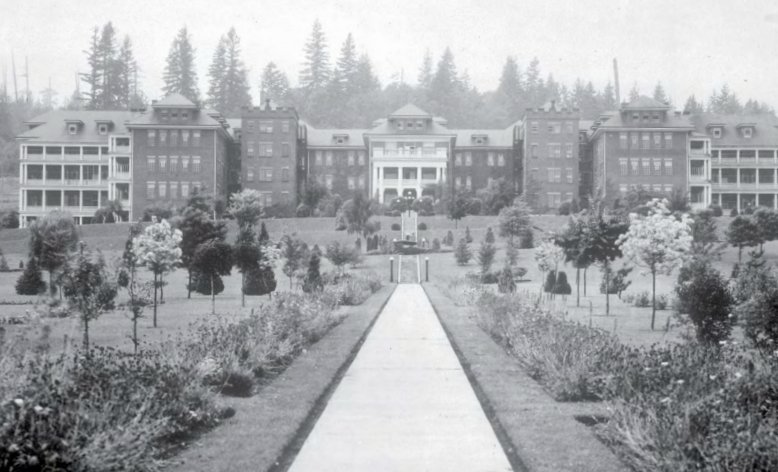
“Before its forced downsizing and eventual closure in 2012, the site would house thousands of patients who would be treated and mistreated; sometimes subjected to lobotomies and forced sterilization. However, particularly after the Second World War, physicians put a newfound emphasis on socialization and community, as well as psychotherapy rather than surgery.”

These articles cover the history of Riverview Psychiatric Hospital, in Coquitlam, BC.

https://tricitiesdispatch.com/riverview-essondale-artifacts/


Almost 60, and unspooled

I will turn 59 in one week. I feel like 60 will be my next age milestone. The next milestone after that may be at whatever year when I finally retire – maybe somewhere between 65 and 70.

Back when I was 20, I felt independent. I had made the final laps into adulthood mostly on my own. At 30, I felt confident, like a seasoned career professional. At 50, I acknowledged finally being over life’s halfway point, with enough wisdom and life experience to finally stop doubting my own judgment. At the age of 58, the doubting voice is still in there, but I just don’t listen to it much anymore. Caution can be helpful, but cynicism can be toxic. My cynical voice has thinned down a lot over the years, to little more than a whisper now.

Tonight, I was looking for just the right size of Allen key to fix a wobbly faucet handle. I had dumped out my red toolbox on the floor in a vain search. I found the right Allen key and fixed the faucet handle well-enough for my wife to call me her hero.

The red toolbox itself might be mine, but it holds all the wrenches, pliers, screw drivers, and blades that had lived in my Dad’s toolbox for my entire life. Screwdrivers I’d literally used to fix my bicycle, forty five years earlier. I don’t know why his hand tools have maintained their nostalgic power, even after their original owner burned away all his emotional credit through numerous alcoholic, violent expressions.

My Dad, James, never used power tools. From all I ever saw, his works, whether good or bad, constructive or destructive, were always hand-made. He always used his own hands.

The difference between my regrets about my father and my lingering nostalgia towards his hand tools seems centred on the idea that the tools themselves never once hurt, betrayed, or threatened me. They always just helped me to repair physical things that could be fixed. Emotional things are much more difficult to manage than physical objects. Human relationships and their legacies can leave permanent marks, and be messy and complicated.

When my wife and I moved to our new apartment in 2023, my old red toolbox with all Dad’s hand tools went missing. It was only when I thought that I’d lost it that its practical and sentimental value really hit me hard. The movers had accidentally grabbed it and stashed it in their truck. They just saw a little red toolbox and assumed it was one of theirs.

I went through a 48 hour period where I felt a real kind of separation anxiety. It was unexpected, but the toolbox was a physical link to my father, and his role as a builder and fixer of things, both mechanical and electronic.

Dad was a complete materialist, not a spiritualist. To him, things had to be measured and evaluated in straightforward and concrete terms. There was no lyrical symbolism to him. He loved a colourful tale (in which he was either the hero or the victim), but I never once heard him speak in lyrical or poetic phrases. He seemed from an old “man’s man” mold, cast decades before World War Two.

Losing that toolbox was like losing a small identification of my Dad and my childhood; losing physical evidence that I’d once been there, that he’d once been there, and that it had all been real. Memories alone can get twisted and morphed by subjectivity. Physical objects persist. I felt such relief when the movers dropped off for my red toolbox.

My Dad had known some carpentry, or at least he could hammer and saw things well enough. Back when I was in Grade 2, he’d built a large porch on our mobile home. He also built a dog house with a little chicken wire fenced yard, so that our German Shepherd Sheba would have a safe home for her eleven pups. He had been a welder once, and was trained in electronics. He could repair a radio, or manage a transmitter site for a radio station, or help to maintain large RF systems at the TRIUMF particle accelerator at UBC. I didn’t know if he had any real technical limits. He just had a very wide range of mechanical, technical capability. That might have been why his rusted, stained hand tools felt like little talismans to me.

I’m not a fixer or builder like my Dad was, but I can repair little things around my home using some of his tools, or I can at least hack things back into working condition using nylon straps or gaffer tape. In my teens, I was a fair-to-middling amateur bike mechanic, building and repairing all my bikes. In grade school, I got in trouble for taking my toys apart. By high school, I was learning to put things together.

I have always learned how to do something by just attempting it face-first, whatever it was. Learning to repair (or at least to manage) one’s internal mental mechanisms was a skill-set that my Dad didn’t seem to have.  Along with any minimal physical craftiness I might possess, I also have a strong set of emotional tools stored in me, adapted, and shaped by years of hard-won experience and reflection.

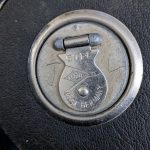
After the successful faucet repair, as I picked up all the little wrenches and things from my Dad’s collection of tools, I rediscovered his old retractable 50 foot tape measure. It’s stamped with the words “Mibro, West Germany”, and is disc-shaped, about the size of a miniature CD player, and covered in dried-out black leather. It has a little steel handle to manually crank the tape back into the case. There was no fancy spring-loaded automatic retraction on this thing. After you’d drawn out the length you needed to measure, you’d have to manually reel it all back by turning the little steel crank. I have guessed that manual tape measure might be from the 50s or early 60s. It definitely predates me. Growing up, I’d played with it a hundred times when I was a kid.

As I turned it over in my hands after so many years, I wondered when the thing had last been fully unwound. Never once in my memory, I guessed. So I decided right then to unspool its full fifty feet of coiled tape out onto my floor, just to see what it looked like. I’ve always enjoyed disassembling or opening up something to see what might be hidden inside. That’s usually where experience hides.

Pulling out the old metal tape, I chuckled at the spiralling, disorganized loops I had discovered. Unpacking a long metal line like that felt messy, yet satisfying. As I carefully wound it all back inside again, I watched the numbers go by, counting down from fifty all the way to zero, noting each scratch, nick, and stain along the way, until the whole length was finally again snugly recoiled back into its worn leather case.

It felt weirdly satisfying to take that old tape out for a little stretch. Every tool has some job to do.



Fear of Becoming Her

Today, my day went flat in more than a few places. Although I think I’d had a good night’s sleep, and our morning and breakfast were fairly bright and happy, my energy became low and lethargic, and  by noon, I felt both irritated and emotionally flat. I didn’t feel much enthusiasm for anything.

Grace and I did a Sunday drive out to Lafarge Lake, bypassing Riverview Hospital as we drove down Lougheed Highway.

I enjoyed the sunniness of the lake and the surrounding park, watching the ducks and the pretty scenery. It was a happy but only momentary distraction from my flat mood. Grace noticed my flatness and I’m sure it likely dragged her down too.

I apologized to her when we got home. She decided to book gym time right away and go get her system cranked up with some cardio. She invited me, but I just said “have a good time” and stayed out on our balcony rocking in our patio chaise and playing solitaire in the remains of the afternoon sun.

As I sat there rocking, I remembered that my cousin Jill had recently recounted a visit she and her family had to visit my family some time back in the 70s. Jill had recalled that throughout her family’s brief visit with us in our living room, my mother had just stayed in her armchair near the back of the room, rocking compulsively and twiddling a lock of hair around her index finger. Mum didn’t seem to react to anyone, and by that point in her depression was pretty much withdrawn into her own mind.

Even almost fifty years later, being reminded of my mother’s  dissociative behaviour and that it had been witnessed by my cousin and her parents, the memory shocked me all over again. Mum had been self-medicating with alcohol for a year by that point, I guess. She didn’t want to see anyone or do anything, and in her deep depression, the compulsive rocking motion and anti-social lack of response was probably her only way to create a defensive shield or a psychological distance.

I didn’t understand it at all as a kid. Indeed, her behaviour was never confronted or even acknowledged by any of us at the time; it was just part of my family herd of deeply dysfunctional elephants that followed us through every room.

I considered all that while I ironically sat compulsively rocking on our patio. I don’t want to have even an outward similarity to my Mother’s depressing behaviours, but there it was. In passing 59, I intend to stay aware of my moods and the ways I might counter-balance any isolationist tendencies. I’ll probably always need my alone time, but I won’t indulge it in a way that hurts the people I love.

I will apologize to Grace when she comes back up from the gym, and then maybe we can figure out what to do for dinner tonight.


Add water and get stirred.

My parents have now been dead for over 30 years. About five years ago, I realized that I’d started to see them more as my ancestors than my parents. It’s begun to feel like my life with them happened a long time ago, to somebody else in another lifetime.

I maintain a large family tree database that goes back about 250 years, and my parent’s names now seem to sit quietly like all the other names and dates on the leaves in my tree. The personal bonds, the feeling of knowing them first-hand, the familiarity I once felt when I used to see them, it all seems to have withered away. The warmth I used to conjure up in my heart when thinking about them seems to have disappeared into the wind now too. It just feels like I’ve lost something special, that my blood connection or association to them has gradually faded. Maybe now they’re more like ghosts than ever before.

I never saw this coming. Worrying about preserving my memories was what originally motivated me to start writing about them back in 1995, not long after my mother passed away. At that time, I wondered if my family memories would fade away, and the stories I remembered would be lost. I knew those things had a shelf life, but still, I suppose that I always took my memories for granted.

It seems now like my stories are still tucked away in the folds of my brain, but perhaps my perspective on them, the glasses through which I review them, has changed as I’ve aged and grown farther away from the original events. Maybe emotional detachment is inevitable and just comes on with time. Maybe the pendulum on my folks has swung over from subjectivity to objectivity.

Sometimes, if I’m sharing memories about our parents or past family times with my sister, I get that old connected feeling back again. It feels comfortable. I think we’re probably as tight as a brother and sister can get, with everything that happened to us growing up. I only have her with me to remember our mother and father the way that we knew them, and I’m so grateful that talking to her helps me recapture my feelings of being my parents’ son again – the feeling of having a childhood and a family home. Even more, I’m grateful if talking to me helps her to reconcile her own side of our family traumas. Sharing is caring, as they say…. 

Another part of the parental remoteness I felt is the distance I experienced growing up: the long generational space that always existed between me and my parents. I had somewhat older parents than my peers. My Dad was 45 when I was born, and probably 15 or 20 years older than most my friend’s dads. As a kid, differences in age always felt very significant.

My Dad was born in 1921, over a hundred years ago. My Mum’s centennial birthday will come in 2031. They were both kids before World War II. Their world back then was all analog, rendered in radio waves and photographic film. Their telephone calls crackled and sounded shitty, people wrote letters not emails, and a loaf of bread cost about a dime. And I’m sure that everyone grew up smoking and drinking in their teens, because it was cool.

There’s a real psychological distance at work. Maybe as parents and kids, we never really knew each other as well as we could. My parents were adults, and I was raised to believe that they actually knew what they were doing, despite regular evidence to the contrary. I wouldn’t know much about their behaviour habits, their values or ways of thinking until they were already too far in the rearview mirror.

Lots of kids grow up thinking that their parents must have come from a whole different planet. We couldn’t know how much they were or weren’t in control of their lives. Maybe “family” was just a survival construct for adults who were hanging on and getting by in life.

In practical terms, the parent-child relationship has been lodged in my past for over half my life by now. So why did I miss them so much tonight that it came out in little convulsive sobs? Where does that new hurt come from?

I’d thought that the past had been compressed down inside all the little stories I’ve written, told, and sold to myself. Maybe I was just believing my own bullshit. It seems like real regret and loss can unfold old, seemingly-collapsed memories out into new equivalents of depth, like a kind of self-revealing reverse-origami. Maybe my flattened emotions and Cole’s Notes summaries of memories can be reconstituted like condensed orange juice, brought back into their full bitter flavour, with just the watering of a few tears. Add water and get stirred.


Pity the Monsters

As a kid between the ages of 10 and 16, I was a fan of old-school monster movies and novels.

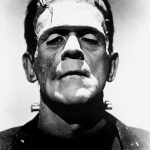
The Frankenstein monster appealed to me a lot. He never asked to be brought to life, and his innocence became stained as he came into increasing contact with mankind. In the original novel, he spoke like an angel, an idealist, probably expressing the ideals of his young creator, Mary Shelley. The 1931 Universal horror movie made him mostly mute and a victim of his outer ugliness, instead of driven by an inner sense of beauty or ideals. Regardless of the medium or the version portrayed, I saw the Frankenstein monster as a victim of circumstances beyond is control.

Count Dracula was a smooth manipulator and a sociopath, manipulating others to fulfill his own needs with no thought for the eternal hell in which he was trapping his victims. He was a blood junkie, ceaselessly killing for his next fix. Dracula was a true villian, sacrificing others for his own fulfillment. Bram Stoker’s novel didn’t engage me, but the character portrayed by Bela Lugosi was extremely compelling and psychologically menacing.

Doctor Jekyll was the symbol for mood disorders and split personalities. He was bipolar-ism and mood swings taken to extreme levels. The good doctor was the genteel, daytime persona that society expected and accepted. My Hyde was the violent, clawing, lying persona that would occasionally erupt after dark, to wreak havoc.

H.G. Well’s novel “The Invisible Man” was another study in hiding one’s illness from society (in this case, murderous impulses and a burgeoning insanity). His invisibility was somewhat portrayed as an affliction or a curse, exploited as an advantage by its user, and seen as a horror by others.

All these characters were probably symbols of Victorian-era fears and insecurities, brought out in strong relief. But they were modern fears too. I began to understand why those stories and movies appealed to me when I looked around me in my home and in the world.

None of us ever asks to be born, and if life is scary or chilling enough and relief seems hopeless, then we may wish that we never were born at all. The contradictions of values and the hypocracies around us may make us question how much others really value their own lives.

In my worry and self-pity growing up with my alcoholic and depressed parents, I witnessed their violence and sadness and sometimes wished that I could be somewhere else or even not alive at all. I’m certain that my mother felt that way more than a few times in her life.

In my father’s use of fear and his temper, and his absolutist approach to obedience, I saw narcissism and manipulation. Every villain considers themselves the hero in their own story, but what about the victims of their actions? Where is forgiveness and redemption without responsibility?

Jekyll and Hyde were to me, straight-up symbols for manic-depression, which we now call bipolar disorder. My mother had that, and we witnessed a manic episode now and then as we grew up, and especially long periods of debilitating depression. She self-medicated her way through all of it with lots of alcohol. For her, eventually, balance was abandoned.

I wanted to like and sympathize with the victims in the horror novels I read and the movies I watched, because I felt I was a victim of things beyond my control too. I wanted someone to have compassion for me, but for that to happen, I’d have to open up about things, and that was not allowed in my family. Growing up, the most important thing to do was to keep quiet and not draw attention to yourself. I didn’t tell my friends much about the things that happened in our home, but they’d hear about some of it buzzing around the neighbourhood. Our next-door neighbours always knew when someone in my house was yelling, or if the cops had to come to give my parents a warning, or if an ambulance arrived.

Horror in novels and old monster movies was a much safer way to escape.


Don’t fear the Reaper

Yesterday, heading upstairs in our building in the elevator, we stopped at the 12th floor and the doors opened to reveal a tall skeleton in a black hooded cloak, holding an enormous scythe.

“Going down?” the Reaper asked, as he stepped inside.

“Up,” I said, feeling intimidated by his height. Never seen this guy so up close before.

“Oh, I…”

“I didn’t expect to see you for another thirty years!” I said, feeling suddenly clever.

“Well, we’ll see, I guess. Goodnight,” said The Reaper, stepping back outside as the elevator doors closed.

Yikes. (True story.)