On Humanity, broken systems, and free will…
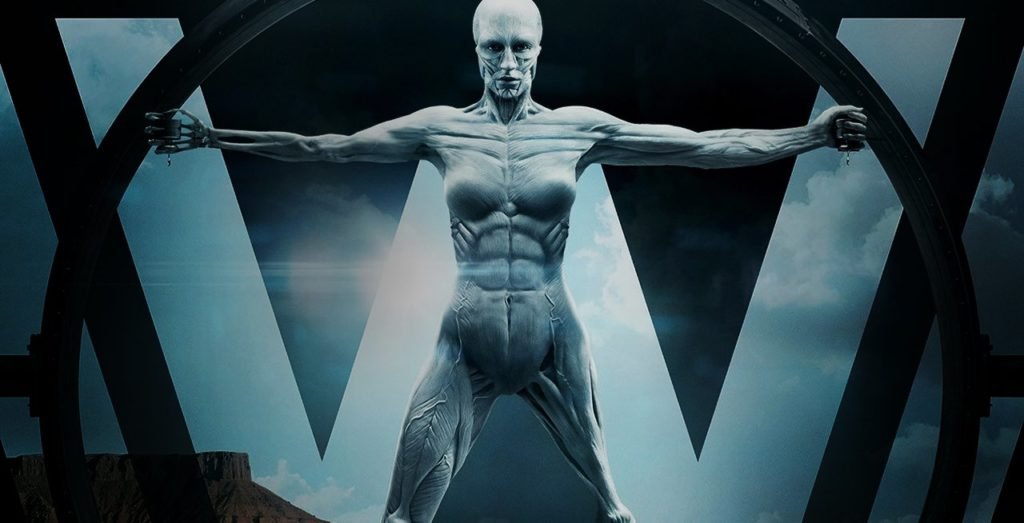
In 2018, we were watching season 1 of Westworld. It posed many questions about human nature and existence and the line between human and machine.
For me, the most memorable themes were:
- How reliable is our definition of reality?
- How permananent is our personality?
- How do advanced AI and life-like automatons alter our definition of a living thing or a sentient being?
- How do we know that we have free will? How do environment or external forces influence and limit our decisions?
- What ethical obligations do we have over our offspring or other sentient dependants?
- Is AI and robotics defining the next race on Earth? (Will humans one day become obsolete?)
- Is Westworld the future of virtual reality and theme parks?
- When does a thing start becoming a person, and when does a person start becoming a thing? (Personification, and dehumanization.)
Connecting some themes to my own life
At some point, my own Mother became a “broken system” and difficult to read and to communicate with. By the time I was finishing grade seven, she’d already slipped into a deep depression and given up trying. She gradually almost killed herself from alcoholism. Something deep in her mind and spirit was broken. She wasn’t trying to help herself, and nobody was helping her.
In her youth, Angela was bright and lively in company. She acted in the Gilbert and Sullivan Society in Victoria, she sang, and she played piano, ukelele and other instruments. She was popular, talented, and well-liked. Who knows if she was actively fighting bipolarism in her youth, but it’s possible. Maybe being happy around others was just another way to fulfill an acting role each day.
Years later in the early 1980s, by the time Angela was in her fifties, she was a patient/resident in Riverview Psychiatric Hospital, and whether it was the cumulative effects of Lithium Sulphate, or the after-effects of alcohol overdose-induced brain damage, she was no longer lively at all. She would sit silently, eyes wide, tremoring her arms, and rocking in her chair, her face looking like a mask that was covering mysterious thoughts.
Indeed, Angela’s personality changed after her alcohol overdose. She had suffered brain damage after liver failure and transfusions, and her mannerisms and speech changed noticeably. She became more direct and almost child-like in her declarations. Many of her memories seemed to have been wiped, at least those from the past five to ten years. It was pretty painful for us to realize that we’d really lost her, even while she was sitting there right in front of us. At home, Dad spoke of her in the past tense, because the person he’d known was gone already. Riverview was now maintaining a different version of Angela Huntley Clarke.
As a late teen verging on adulthood, I began to see my mother and my distance from her in a non-personal, non-subjective way. Perhaps this was just a coping mechanism. Angela’s dysfunction began to make me think about the relationship of the mechanics of the body, and how they may or may not be controlled by the brain. I began to understand that some aspects of human behaviour were systemic, and some were conscious and voluntary, and that when the system became damaged, the behaviour became different.
The image below (from a 1984 issue of either Time or OMNI magazine), struck me so strongly at the time as a representation of my lost mother, and my mother’s lost past and personality. The pale mask of a face, and the empty eye sockets, like the missing windows of an abandoned family home.
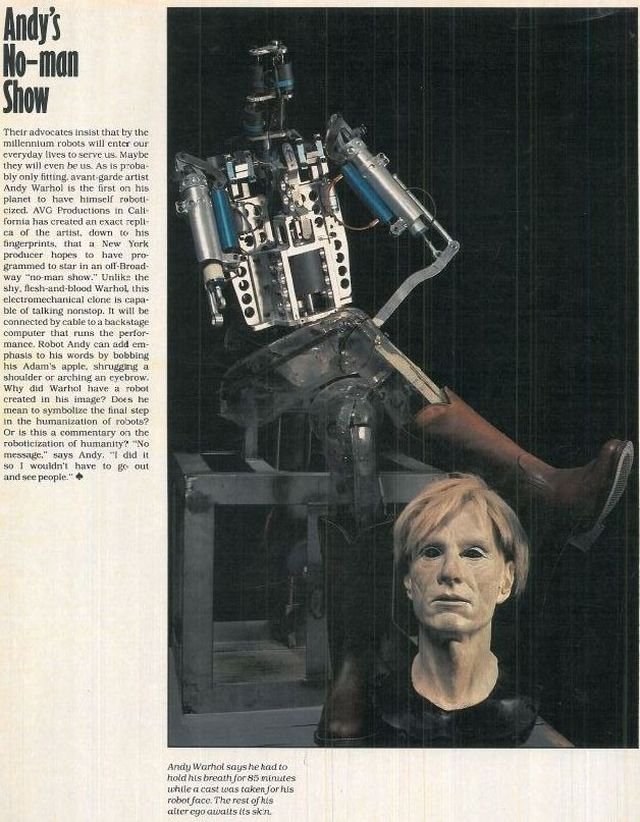
It helped me process it all to see her as a victim with and of a broken system to depersonalize her a little, to accept the space between us that could not be bridged, and any past connection, which now might need to be reconstructed again. I didn’t have the tools for this job.
As 1984 turned into 1985, I visited Mum whenever I could, and tried to connect with her more as a person (even though I wasn’t convinced that she still remembered me as her son). I introduced myself if I needed to, I tried to converse, I shared drawings and photos with here, and brought her chocolate every time. As the years rolled on, it helped me to think of her more like a helpless child, instead of a broken system. I still called her Mum.
Automatons are not people, even if they are shaped like them. People may appear like broken machines, but they’re still people inside – still human.