Life, one frame at a time.
Video has become such a prevalent medium. I can’t think of a time when it hasn’t been around for me to either consume or create. Much of my world seems to have been recorded or presented frame by frame.

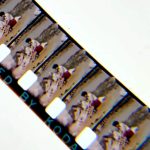
The “frames per second” way of storing images started with photographic film, at much lower speeds and lower resolutions. In the 50s and 60s, my grandfather shot silent home movies on standard 8 colour film, which he’d mail-off to Kodak or drop off somewhere downtown to get processed. There was never any instant playback or instant gratification when you used film.

The usual frame rate for Standard 8 motion picture film was 16 frames per second, and there was no sound at all. So although the images were in colour, your 1950s home movies were silent movies with slightly jerky motion, kind of like a colourized Charlie Chaplin flick.

By the 60s, film students and auteurs could shoot on 16mm film with mono sound, at 24 fps. Since the 1940s, most big Hollywood movies were shot on 35mm film (or bigger) with stereo sound.

I don’t think my Dad ever touched film very much at all. He was an Electronics and RF technician by training. For him, everything was based on a broadcast signal and the electro-magnetic spectrum, not an electro-chemical process.

In 1954, my Dad worked at CHEK-TV in Victoria, BC (where he met my mother). Broadcast TV in western Canada was still a relatively new and evolving medium. The frame rate was 30 fps and resolution was measured in vertical lines, instead of film grain.

Early TV sets were relatively expensive appliances, often designed along the lines of the large radio sets that families would still have in their living rooms, in polished wooden enclosures that resembled nice furniture. By the 60s, tubes were getting replaced with transistors and all electronic devices were becoming smaller, cooler, and more power-efficient. Wood and Bakelite casings were replaced by plastic, and sets became smaller, lighter, and more affordable.

Even with the changes in form factor, the standard video resolution for broadcast TV in North America had stayed at 525 lines from the inception of the NTSC standard in the 1940s until January 2009, when High Definition became the new broadcast TV standard.

My Dad was a television engineer from the mid-50s through the late 60s, through the transition from black and white TV to full colour, and he’d left television for radio by the time that satellite transmissions began driving broader access to TV signals across the country.

Where my grandpa had been a hobbyist film photographer, my Dad had been an RF technician, steeped in what analog transmissions could achieve.  Between them, some kind of media was always around us. Growing up, it had never occurred to me how their interests may have impacted me. Creativity, entertainment, and personal storytelling had been all around me growing up. Nobody ever talked about it – it was just everywhere.

By the time I started shooting and editing my own small videos at art college, the new video tape format sounded familiar: 8mm. Sony had released some cool analog video cameras and miniature editing suites for the 8mm and Hi-8 video formats.

For my generation, the digitization of video happened along with the merging of broadcasting and computing technologies. I learned about theories of converging media, and about some of the principles of media theory from the writings of academics like Marshall McLuhan. Consumer cameras and microcomputers were becoming compatible, allowing the processing of analog video signals in digital systems, for things like image processing, colorization, titling, and special effects. Dad called devices that did analog to digital conversion “Codecs” (COder/DECoder). I knew the idea through devices called “digitizers” or “framestores”.

In the late 1980s, around the same time that I was editing my own experimental videos on Hi-8 video, I rediscovered my grandfather’s old Standard 8mm films. You can’t say that technologists aren’t sentimental.

In the last thirty years since Sony’s Hi-8 video went the way of the Dodo bird, film has completely given way to video for the vast majority of consumers. In the realm of large-scale entertainment, theatres project movies on high definition digital video. On a personal consumer level, the access and gratification challenges our parents and grandparents faced are things of the distant past. Young school kids can instantly shoot video at thousands of lines of resolution on their smartphones, just by pushing a button on a whim.

The thing that the current generation still has in common with all their image-making predecessors is the need and desire to communicate and share their stories. Regardless of the technical quality or the capabilities of the tools or the media, that desire is a big part of where art and passion reveals itself.




The Good Father

In my childhood, two men personified fatherhood for me: my father James Evan Love, and my grandfather Ernest Huntley Clarke.

I believe that people are neither inherently good nor evil, while absolutely being capable of the whole spectrum of good and bad behaviour. It’s on that spectrum that I try to place my father and grandfather.

As a kid, I’m sure I had a simplified view of morality, of good versus bad, and perhaps I even excessively idolized my grandfather. I didn’t know about moral relativism or any of the conflicts or ambiguities that adults actually faced. My early values were probably rendered in the black and white and primary colours of the sunday newspaper funnies that I loved to read. Adult lives and motivations remained mysterious, and it would be years before I’d start to understand the contradictions that a dispassionate universe would impose upon grown-ups. The universe didn’t seem to care about right or wrong; it was up to each person to know the difference.

One thing I learned early-on as a defining characteristic of a good adult was how they dealt with responsibility, obligation, and consequences. Good grown-ups took their responsibilities seriously and were reliable in fulfilling them. Good grown-ups owned their mistakes. Bad grown-ups, on the other hand, were unreliable and inconsistent. I had seen that some bad ones even tried to avoid consequences altogether. Some adults could not be trusted.

So, that’s the lens through which I look at my grandfather Ernest and my father James. Ernest had seemed to me always reliable and responsible. He’d always held a quiet dignity, kept a regular schedule in his activities, taken good care of his health, and managed his affairs with care.

When we lived with him for two years in his house in Victoria, I observed how my parents seemed secondary to him. It was more than the respect that a guest gives to their host. It was like a deference that my unemployed parents granted. Ernest became their de facto landlord while we lived there; they paid him rent. Looking back, I’ve wondered if this grated on my father’s strong sense of self determination. Dad had always been a proud and headstrong man, but it was proper that under Ernest’s roof, James was not the boss of the house.

Ernest Huntley Clarke came to Canada from England at around twelve years old, as part of a group of Salvation Army Home Children. As he grew into his teens, he worked his way west from Quebec through Ontario, to Portage La Prairie, Manitoba. At eighteen, he enlisted in the Northwest Mounted Police, which a few years later would become the RCMP. He was a Mountie for thirty years, and was honourably discharged in Esquimalt, BC in 1948. After that, he held a variety of occupations in his later years, and in his early seventies was the manager of the Yates Hotel in Victoria, still working full-time, when we came to live with him.

“Mister Clarke” (as the hotel’s elderly residents called him) was a well-liked and respected man. I never saw him drunk, and never once did he seem to really lose his temper or lose control of his emotions. He led by example, stood with quiet dignity, and I admired him like nobody else.

In contrast to Ernest’s humility, my Dad seemed to have an active ego, and a need to prove what he knew in front of others. I think Dad needed to be seen as the smartest guy in the room, and to be seen to be in the right. I never saw him assert his intellectual dominance around Ernest though: I suppose that my Dad genuinely respected his father-in-law.

The trouble with a person who needs to be in the right is that often they cannot admit when they’ve done wrong. That was my Dad all the way through: admitting fault or (heaven forbid) apologizing for a wrong were things I never ever saw him do. All he did when confronted with a past bad action was get defensive and angry. I never once saw him apologize for anything.

My Dad did lots of good things for me and my sister though: he raised us alone after our mother had almost died and gone to hospital, he stayed employed and made sure that we always had food, clothes, and a roof over our head. He brought us new bikes for Christmas. Occasionally, he took us out for McDonalds or KFC, or drove us out to the airport to watch the planes land at YVR.

Dad did try to impart values of self-reliance to me and my sister Kim, but even his attempts at constructive lessons were framed by his bitter memories of childhood betrayals or grisly experiences in the army or as a firefighter. To him, the world was challenging, unfair, and absolute: you had to know how to fight to make your way through your group’s “the pecking order”. Dad taught each of us how to throw a punch, but not how to discuss or compromise.

My Dad was not in control of his demons, his addictions, or his temper either. He could be volatile and frightening when drunk. He could be violent, and we learned early that it only takes one violent and unrepentant adult to break your trust and undermine your belief in heroes. That’s why my grandfather Ernest remains so important to me: he seemed to balance the scales in life and remain in the light, even when my Dad was at his darkest.


A Ghost in you…

There’s a song by The Psychadelic Furs that really got under my skin when I was 19 (it’s still in there).

The Ghost in You” made me think of the important people who were not with me, most significantly, my sister Kim, and my Mother Angela.

Both of them were alive at the time, but separated from me for different reasons. My sister and I had been pals and playmates until we were about nine or ten. We were often separated as a consequence of family tragedies, misplaced loyalties (mine), or other people’s stupid, selfish decisions (our father’s). As the boy, I aligned with my father, mainly out of fear. As a girl, Kim would have been aligned with our Mother, if our Mother had been there and had been a factor in our lives.

Separation from my mother was permanent and irreversible. We had no relationship to speak of with her from about the ages of nine or ten, as she gave up on her family and escaped her life in situ, drinking herself into alcoholic abandon until her liver quit and brain damage and memory loss became her new abnormal.

She didn’t come back to us, mentally or physically. Once her memory got disrupted, her personality broke as well. She truly left us years before she ever left home and started living in various hospitals and became a ward of the province.

My sister Kim has survived, stayed alive, and made herself a life. She’s dear to me and I’m proud to be her brother. We talk regularly and we care about each other’s lives. I think that’s probably about as good as life can get: knowing someone who always wants to hear from you, and who always wants you to hear from them.

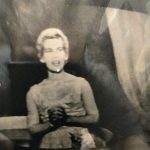
My Mum lived in the long-term care ward in Riverview from 1980 until 1995, where she died after struggling with pneumonia for a week. To me, her life was one of unrealized potential. Now all we can do is try to celebrate her beauty and recognize the traits, attributes, and abilities that she left us.

Memories are my constructs, my proxy rewards for the absence of real people. That’s where my ghosts live, preserved in my heart, freeze-dried in their best, most happiest personas. I greet them gratefully and warmly, like familiar old friends.

The Psychedelic Furs - The Ghost in You (Official Video)


You can’t love them anymore

When someone’s died, you can’t really love them anymore.

You can love your memories of them, but isn’t that just sentiment for your memories?

You can love how they used to make you feel, but isn’t that just the comfort of nostalgia?

You can admire their good values or deeds, but those values really belong to us all. Your lost beloved was doing a good job of reflecting them to you.

You can no longer love your lost person in real time, but you can always love the idea of them, the good values they held, and the inspiring examples they left behind.


Some things haven’t changed much…

https://ejohnlove.blogspot.com/2013/07/


Fatherhood

My wife’s uncle passed away recently. He was a lovely man, surrounded by a loving family. His passing made me reflect on his reputation as a devoted father and member of his church. He left behind a family fresh in their grief, steadfast in their appreciation, and re-affirmed in their love.

My father died when I was in my twenties, leaving behind a fractured family, a dozen unresolved issues, a legacy of regrets, and no last will and testament. Over the past 35 years, I’ve become used to seeing his failures, arrogance, bombast, and violence in the foreground of my memories. It’s amazingly easy to stay inside the habit of bitterness, self-pity, and resentment. Those reactions were fairly earned at some real cost, and still valid to this day.

All the same, those particularly bitter truths obscure other less-familiar truths, like a dominant popular narrative that doesn’t tell the full story.

It’s common to focus on the negative and painful events to the exclusion of the positive ones. We learn from mistakes (our own or others) but not so much from our happiness and successes. So, I continue to mentally sift through my past, finding and polishing little moments worth celebrating that evoke pride in my father’s successes and joy in contemplating his warm moments.

I’m slowly separating the good man he could be from the toxic selfishness and anger he demonstrated. It’s really hard to separate a person from their actions, but I’ll keep trying to see both my parents as full-rounded people struggling with their demons.

Aside from my Dad, I also have to add that there have been a number of surrogate father figures in my life, who’ve provided support and positive examples of what fatherhood could look like at its best.

My maternal grandfather, Ernest Huntley Clarke (“Poppy”) was especially loved by me and my sister when we were young. He led by example every day, through his quiet, good-humoured, and dignified way of being.

I’ve prospered through the support of teachers who took the time to see and guide me, to help cultivate talents they thought were worth developing. The most impactful teachers I’ve known were when I was in art school, when I was slowly becoming mature enough to begin to appreciate them. Their attentions and challenges grew my confidence and self-worth every day.

My father-in-law, Honesto, provided a quiet kind of love and dedication, gradually accepting me as part of his family, and letting me help him when I could. His actions and sentiments to me were always uncomplicated and sincere.


Feeling your worth

Stories of fiction and fact
remind me of a painful truth.
Why treat yourself without tact?
Why be hurt without proof?

Find those old bad lessons
that have burned in afresh.
Outdated bias, old gossip,
weave a rotten old mesh.

Influential people you meet
will spread some old trash.
Scrape their bitter opinions
off your accepting flesh.

Others’ old battles
are not yours to fight.
Nothing devours old shadows
like the truth of light.


Take good care of yourself. (You belong to me.)

As a teen, I’d never have thought that in middle-age I’d be taking prescription meds each day to manage my health. (For all I knew back in my teens, middle-age was like an impossible dream. It’s easy to fear that where you are is all there is and all you’ll ever have.)

Growing up, I never saw my Dad take even an aspirin. With him, I’m convinced he would never even admit to being sick. I don’t remember him ever taking a sick day. How does that saying go? Pride goeth before a fall.

My Mum should probably have been taking Lithium or something to manage her manic-depression, but she hadn’t gone to see a Doctor since before we’d come to Vancouver in 1975. In the half-dozen years since then, the only substance either of my parents ever medicated themselves with was alcohol – way too much alcohol.

My Dad only paid attention to his Doctor when he was given the ultimatum “If you don’t stop drinking, you’re going to die!”. That dramatic advice impressed my old man. It probably made him feel like the centre of a big drama (specifically, his survival). More importantly, it gave him yet another great story to tell. I can only guess, but what a risky way that was to feel recognized.

By 1984, my Dad had a heart attack and multiple strokes, and would relapse into alcoholism and break his hip falling in a hospital shower. He had survived all his harsh physical ordeals with his mind and personality largely intact and had succeeded with the hard work of stroke rehabilitation, but was physically broken and partially paralyzed for the rest of his life.

We like to describe major events like these as “wake up calls”, but honestly, I don’t know if he ever “woke up” from his alcoholism in terms of taking responsibility for it. In his last five years of life, I think he stayed sober and relatively healthy because alcohol and cigarettes were forbidden in his private hospital. Left unsupervised, I think it’s quite likely he’d have relapsed and probably died. He did finally die in 1989 at the age of 68.

Back in 1977, my Mother was too far gone into her depression and alcoholism to even leave her bed. She’d completely withdrawn from all of us and the outside world, preferring to stay drunk or to appear to be sleeping all the time. She was unreachable, and we probably stopped trying over the course of the year. I never tried to rouse her, or go in and talk with her. The master bedroom was somewhere you just didn’t go.

One day, her liver quit and she was unresponsive. If she’d stayed home like that for another 24 hours, the Doctor told us she’d have surely died in her bed.

Medical intervention for my Mother came with a last-minute ambulance ride to Burnaby General Hospital. She detoxed after a full blood transfusion, and was not the same person afterwards. She’d survived, but alcohol poisoning had given her permanent brain damage. She’d tried to escape her life through alcohol, had almost died, and then had sort of been “remade” with a slightly different mind and personality. She’d had a painful almost-death and partial rebirth into a new life as a long-term resident in Riverview Psychiatric Hospital.

So I guess I never had good role models for taking care of myself or staying healthy. At the age of 46, my mum almost died from her alcoholism. At the age of 62, my Dad almost died from a heart attack and multiple strokes.

Now, at the age of 58, I’m kind of in-between those two ages, but am successfully managing my diabetes and high blood pressure. I’m taking Metformin and Jardiance for my Type 2 Diabetes and Ramipiril to manage my blood pressure. I do blood tests and talk with my Doctor every few months, I eat way more healthy than my folks ever did, and I walk 5000 to 10000 steps at least 5 days a week.

I guess the point of recounting all this is to show you (and myself) that I’m taking better care of myself in both physical and mental terms. In fact, I’ve learned how each of those aspects can affect the other.

By 2014, my diabetes had been largely unmanaged for about four years. I was pretty large and overweight at that time – maybe weighing 205 or more. Back then, I’d also experience some very dark feelings at least one morning each week (usually Mondays), and sometimes tears would just come to me unexpectedly. It felt like my emotions were actually working against me. In the last ten years since then, my diabetes has stayed in control through my meds and my attempts to improve my diet and daily exercise.

Today, I weight 177 pounds and am on-track to lose a few more and to get my blood pressure solidly inside the normal range. I try to get at least 5-6 hours of sleep each night and often walk more than 8000 steps each day. I feel no anxiety, and those black mornings have become very rare occurrences. I feel more calm, more confident, and more happy.

So better physical health can make it easier to improve mental health, and vice versa. My parents never experienced that while I knew them, but I can still learn from their examples.


Stories that aren’t mine to tell

It’s good to be reminded of the ethics of storytelling involving other people. I’m talking specifically about family or friends who could be embarrassed or hurt by something I write.

I’ve always felt ownership over the stories from my life, but who really owns a story, and what right do I have to tell it?

Nobody’s life is lived in a vacuum. There are lines one can cross when telling tales that involve others. What can you say without asking someone for their permission or participation? It’s probably a risk that journalists deal with all the time, but being an amateur writer, I’ve tried to find the ethical boundaries on my own, and to think hard about tactics and work-arounds to keep a story on-point without risking someone else’s privacy and peace of mind. It can be a real balancing act.

Here are some filters I use to guide my personal story writing, when dealing with sensitive topics:

  • Will telling the story do more harm than good? There’s a line between telling an impactful story with a point, and telling a dramatic story to get attention. Just because there were various abuses and mental illness in my family background, that doesn’t entitle me to tell similar-themed stories of other people I know. Other people own their own stories, and unless I get their permission or participation, their story is not one I should be telling. For example, one family member straight-out asked me not to write about an incident that had personally affected me. It had affected them much more than me, and they wanted to avoid embarrassment. It was a fair request, so I’ve never written about it.
  • Did the event happen to me personally? This simple filter can help to keep me steered towards relevance while avoiding causing pain to others, just by respecting boundaries of privacy. I despise gossip and would never want to be seen as a spreader of hearsay just for the sake of spinning a colourful tale.
  • Is the person who might be hurt by your storytelling still alive? If the subject of your story has died, this may seem to cancel-out the factors listed above, but it really may not. What about other relatives who are still alive, who may take exception to your rendition of the dead subject?
  • Is your portrayal of a person or event reasonably balanced? I’ve found that an all-negative portrait of someone is never accurate in any case, so balancing negative perceptions with some positive ones helps to build a more-well-rounded portrait, and may balance the scales a bit. Still, be careful.
  • When dealing with sensitive topics, can you get permission or participation from the the main subjects, or their rights-holders? Try to do this. It’s ethical, respectful, and can save you from getting into all kinds of legal hot water. In my case, I asked my sister if it was okay for me to relay some painful stories from our shared past. They involved me directly, but the underlying pain she’d gone through and was still going through was primarily her stories to tell. Between us, we worked out a timeline of events and the people involved. I let her approve my final edit and told her that if she ever changed her mind, the story could easily be pulled off my site. There has to be responsibility and trust, and I’m grateful that she trusted me to render some extremely difficult moments. It was very brave on her part.
  • Existence is subjective, and everyone thinks they’re the hero of their own story. I may feel like the world revolves around me, but that’s just my ego and one-sided perception. Be fair-minded and balanced.

It helps to remind myself that I’m just a microscopic mote in a world which has meanings and motivations that are so much bigger than me and my little life. Underneath each series of events can be found deeper patterns that often relate us to each other. Those shared patterns are the things really worth writing about.


Dear Poppy

Dear Poppy,

I watched a TV show this morning that reminded me of you, and how much I miss you.

The show that my wife and I watch on weekend mornings while we eat breakfast is called “Family Affair”. It’s about a single man raising his dead brother’s children, but it’s really about a new family being formed out of the wreckage of other family breakups; of bringing together broken parts to create a new whole.

It’s over fifty years old now, quite dated in a lot of ways, but has core themes of family devotion, understanding, and love which resonate with me today. You probably watched it with us back when we lived with you on Cook Street in Victoria, in the ’70s.

Anyway, the episode we saw was where the children’s grandfather comes to visit them at their home in New York. The kids are too young to remember his last visit five years earlier, so even though he remembers them fondly and sincerely wants to rebuild a family connection, they don’t remember him and it takes a while before they warm up to him. All the gifts and treats he gives them are received with gratitude, but without feelings of connection or affection.

The grandpa’s daughter had been the grandchildren’s mother, and when she and her husband both died, the children were orphaned toddlers, split up and sent to live with different relatives. By adopting them both, their Uncle had reformed part of their family and started his own journey as a parent. In the years since adoption, their Uncle has become a real father to them.

Grandpa had worked all over the country and in his older years was starting to feel the need to settle down and be closer to his family. By the time he’s visited with his grand-kids for a couple of weeks, they’d begun to bond while sharing memories of the woman they’d both lost. Sitting with his granddaughter, answering her earnest questions about her late mother reminded the grandfather of how his own daughter had once been. Grandfather and granddaughter were now feeling connected by having lost the same person. For each, the other person was a reminder and a living connection and a way to fill in a missing piece in their hearts. As dated as a 1960s family sitcom could be, this show seems well-informed and capable of exploring sensitive topics like death and loss in a delicate way. It also treats the emotions of its children with respect.

Poppy, I still remember being 8 or 9 and having a chat on your knee about your youthful migration to Canada, when you were about 13 or 14. You were reluctant to say much to a curious little boy at the time. I didn’t want you to be sad. Fifty years later, I can still smell your cologne, and feel the cool crispness of your suit jacket and your firm hand around my waist, holding me up on your knee. I can still see your pained face and distant eyes, lost in mysterious old moments.

I think you left a lot of family behind when you left England in 1913 to start your life anew in Canada. You gave up a lot to remake yourself as a Canadian, to meet your future wife, and to raise your daughter Angela. I wish you could have told me about your childhood circumstances. Evidence I’ve found in my adulthood hints that you must have been a British Home Child, sent to Canada by The Salvation Army.

Other than that one lap-top sharing, I didn’t learn any more about your early life during the two years we lived with you. Since I’ve grown up, I’ve been able to find records of some of your highlights among your old papers and photographs, as well as in Canadian government records, which describe your enrolment in the Canadian Expeditionary Force in World War 1, and your career in the RCMP.

As a curious kid living with you briefly, I explored your house, finding evidence of your artistic abilities in the oil paintings and art books in your basement, and through the photographs and home movies you showed us in your dining room. Oil paint and film were your media, and you became a skilled painter and photographer. Your creative, artistic side was passed to your daughter in so many ways, and in her, it blossomed into theatre, music, and singing.

Angela was the angel in your heart, and thinking of what she meant to you and all that you meant to me helps to fill in the gaps left in my own heart. You lost your daughter when she married and moved away, and then lost more of her again as her alcoholism, mental illness became less managed, and her memory loss more pronounced. We lost her to those things completely.

For my part, I want to cast you as the hero in your Hero’s Journey, and a man I’m proud to be connected to and named after. You always carried yourself with quiet dignity, dressed in a shirt, suspenders, and leather wingtips, even to the breakfast table. I never once saw you lose your temper.

Once when I was about five, I was aware of my two names, Ernest and John. I stood on your fireplace’s raised hearth and proclaimed that from now on, I wanted to be called John, not Ernest. Unfortunately at that moment, you were sitting on the living-room couch, right in front of me! I’ve often wondered if my little proclamation ever actually hurt your feelings. If it did, you didn’t let on. I’ve been proud to bear your name for many years now.

There was never ever any question about us loving each other in any case. To me, you were always just “Poppy”, and unlike my mother and father, you never once hurt me or scared me. Ernest Huntley Clarke is always beloved by Ernest John Love.