Category Archives: relationships

Long enough to forget, a little?

This admission is hard to say, but I hope it’s just some natural part of living on and getting older…

My feeling of personal connection to my parents has faded, lessened, a lot. Dad died in 1989 (over 32 years ago as I write this), and Mum died six years later. I just don’t feel that strong an association to them anymore. It’s almost like losing some personal faith. They just feel like ghosts to me now.

They’ll always have been my parents and I can easily say that I loved them each, once upon a time, but it’s been so damned long now since they each died that it almost feels like my living with them or knowing them happened to some other kid, in some distant other life.

I think I’ve been without them now for almost double the time that I was ever with them, including times we were living apart while they were still alive. I’ve been writing about them and forming my web shrine to them here for about 25 years now. That’s longer than I knew my Dad (23 years) and it feels longer for Mum: she left our home to be permanently hospitalized when I was about eleven, and we saw her less and less as the years passed.

Maybe time just erodes everything, and maybe old family times have no special bedrock that can withstand it. It’s frustrating to feel my kid family realities starting to just slip away, but nobody is gladder than me that I started writing it all down here, before time takes more of those old feelings and memories away from me.

Friendships with the living do slip away, so of course one-sided posthumous relationships with dead family would slip away too.

I’ll get my pride back to full strength and accept how life and time change everything.

Taking baby steps in her shadow

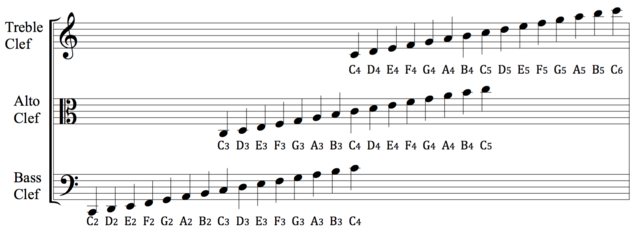
As a little boy, one of the figures I remember learning to draw was a Treble Clef. I thought it was just a funny spiralling capital “S” that had something to do with music.

I’m pretty sure that my Mum taught it to me. She could read music, and had once been a talented pianist and opera singer. I’d seen a Treble Clef in Sunday newspaper funnies whenever Schroeder played Beethoven on his toy piano. I could recognize musical notes in drawings, but I didn’t know what they actually said or meant. They were part of some mystical other language – and judging by the old music they usually represented, the language must have belonged to olden times.

There were little reminders of a musical past in my maternal grandfather’s house in Victoria too: a tiny black toy piano, or a ukelele sitting in the corner gathering dust. Down in his basement, my grandfather had a full-sized upright piano that had been damaged years earlier when his hot water heater blew up. It was covered in boxes, and other than a couple of pokes of its keys by his curious nine year old grandson, it hadn’t made a sound in years.

Around December of 2021, while going through files of my mother’s early photos and papers, I rediscovered a high school handout from her early music training. It was a collection of ten typewritten pages that might have been a correspondence course of some kind. It mentioned preparation for a provincial exam, and it covered musical notation, scales, and staffs. In it, I finally read the explanation of the Treble Clef (known as the “G Clef”). As I read on, I was delighted by the idea that at 55, I was finally tracing some of my mother’s youthful footsteps.

I remembered enjoying learning the notes in Grade 6 music class, and trying to play the recorder, ukele, and guitar. In the forty years since, I can still recognize quarter, half, and whole notes, but I’ve forgotten everything else. I could probably learn to play music by ear and practice, but sheet music itself had never come to life for me – it had remained a silent visual language from a culture I’d only visited or observed, but had never lived in. I felt regret in that realization.

So a couple of weeks ago when I started reading my Mother’s old high school music notes, I wondered why I hadn’t tried to learn to read music years ago. Could I have become a musician like her? Looking at her pages, at the grand staff and its two sets of bars, I started to understand how the layout of a piano keyboard matches the staffs in sheet music. Schematically, a piano seemed to be a much better match for musical scales, and better for learning music and music theory than a guitar.

Learning about reading and playing music might help me to connect to her…

Going from Shadow to Sunlight

Looking back on the past year, in the midst of such fear, uncertainty, and worry around pandemic disease, war, and political and social unrest, I can say that in spite of all those unsettling factors, I have almost ironically grown to feel like some of my old, personal internal baggage has become lighter, almost vapourous, and some very old shadows have almost faded away.

I’m talking, in colorful terms, about the baggage of my youth: my past family experiences and my strained relationships with my parents.

So far, in my True Life writing project, I’ve dredged up a lot of old memories and revisited many one-sided assumptions. I may still regret many of my parents’ life choices, but I’ve also learned to celebrate their successes and to appreciate them. My mother and father were not just tragic people with burdens and failures. They were each full but flawed, and each worthy of compassion and understanding.

Maybe at the age of 56, I’ve finally grown enough distance from them and gathered enough of an older person’s perspective in my life that I’ve released a lot of my lingering sorrow, hatred, and resentment for how their mistakes affected me and my sister. Maybe the mass and individual tragedies in the world in the past few years has finally convinced me of life’s finiteness, and made my problems seem smaller and more ordinary. Maybe I’ve finally reached a “life’s too short” resolution.

Deaths of family and friends has probably been another major factor contributing to my letting go of baggage:

In 2018, we lost our brother Victor to cancer. In 2019, we lost our beloved little cat Peaches to a mysterious cancer-like tumour. In 2021, we lost my wife’s father to complications from Covid.

Watching an old friend’s family suffer the devastating loss of their mother and their son, I saw how the grief and pain drew them all closer, and made them even more devoted to each other. Last month, one of my wife’s dearest friends passed away from cancer too, and we watched her family’s love coalesce and crystalize in the same way.

It’s felt like step after step of loss, from one person to another, all of them reminding me that living must come to an end for each of us some day. Often, a recent loss will evoke a memory of an earlier one, tangling and compounding the grief.

At some point back in my youth, I believed in life as a kind of infinite horizon that offered me as much room as I could take. I felt it was up to me to keep running towards that bright light. Now, it’s an end-point, not a magnetic goal to run towards. It’s more like a wall. I feel as if I can see the wall that I must one day breach, and it’s getting gradually closer. I wonder how long I’ll live, and how healthy or happy I’ll be while I’m doing it.

The challenge is in accepting this truth:

While my life’s horizon no longer feels infinite, once I get over that last wall, everything I am will be.

The Past can be either a Gallery or a Box

It’s okay to visit the past, but you’re not really supposed to live there.

For most of my life, I’ve had questions about my parents, especially my mother. There have always been things I wanted to know about her, but even when she was right in front of me, I either couldn’t ask them, or she would not be in a position to answer.

That feeling of unresolved curiosity and the dread of lost opportunities are nagging, bothersome, incomplete feelings, born of a thousand little toddler-era insecurities.

I started asking myself questions about my Mother when I was between the ages of twelve and eighteen, but I was raised to “accept things” and “move on” with the necessities of living. That was the tone of our family: don’t discuss painful subjects, and don’t question Dad.

I asked lots of little questions anyway, but if my questioning got into tender territory, Dad would lose patience. I learned to not ask him about my Mum very often. These tendencies were practical – they stopped one from being frozen with regret or guilt – but the downside is that they just left all my questions buried under a thin veneer. Until I really decided to dig a little deeper, I’d never know enough about who my mother Angela was on the inside. Our Dad had already known her and lost her, whereas me and my sister had lost her without ever really knowing her.

After our Mum passed on in 1995, I took on a challenge for myself to write my life story as much as I could, to try to capture and make sense of the actions and events of my parents, the arc of their lives, and what my life meant. Overall, that writing project was really just me trying to answer the question “Who am I?”

Writing about my Mother’s life helped me to see her more clearly, to appreciate her anew as a person, and to reinvigorate my feeling of connection to her.

Revisiting the past can be a limiting experience, like climbing inside a box of memories and being trapped in with them, banging your head against the interior.

But, it can also be an expansive, creative experience, where you integrate new information and new insights, and describe your discoveries. The Past can be like a gallery, meant to be shared and celebrated.

Puzzling over the Pieces

July 18/21

It’s not like I’ve always known where
I should be or where I belong.
People and places need to claim you
with some certainty and purpose,
especially when you’re young,
so you don’t feel like you’re just drifting.

Growing up, I never felt extremely claimed
or tied-in to my own family.
It was just where I lived and
who I lived with while I tried
to figure out what each day would bring.
I only knew I was living, but no idea why,
or why it mattered.

It seemed like there was always a reason
to fight, or to cry, or to want to escape
instead of to just enjoy where I was.
I’m probably being unfair to my parents
but that’s most of what I can remember growing up:
Someone being angry, someone crying,
and a meek observer wishing on whatever
the next horizon could bring.

These may all be the products of a rich dinner
or a rich imagination, or an overfed sense of drama.
Maybe I’m just being a little selfish or dramatic.
I’ve always been something of a loner at heart.
Maybe everyone else’s family will always
look better to me than my own,
real or not.

I still feel like a bent piece
searching for my own
space in the puzzle.

Angela, and the Possibility of Nobility

Recently, I mentioned to a friend that my Mum had voluntarily committed herself to Riverview back in 1980, and so (AFAIK) this had been easier for my family than if she had resisted the decision. My friend said that maybe my mother had done that for the sake of her family. That made me feel like a door had opened to an idea I’d never considered before: maybe Angela’s admission to Riverview was, in part or in whole, a conscious decision on her part.

My friend is a selfless, caring parent and daughter-in-law, and I suppose it was natural to project her own tirelessness and self-sacrificial nature onto the Angela whom I’d described to her during our chats. For my part, the idea of selflessness had never occurred to me. I was shocked at how locked-in my image of Angela had been by comparison. She’d almost always been a victim in my mind – never a hero. That bias which I inherited falls mostly at the feet of my father, who, in his grief, frustration and helplessness at her bipolarism and alcoholism, always railed at how spoiled she’d been. That was him unloading his burdens on her, one way or another, as if to cry out “Why couldn’t you have done something about your situation?”

After I passed the age of eleven, my Mum was already out of our home and institutionalized. She couldn’t defend herself or modify our Dad’s stories about her. In his view, he was the selfless hero of our family drama, and his was the only viewpoint I’d ever heard throughout my life. Mum never said a word.

This possibility of Angela having a part in her own commission to Riverview mental hospital helped me reframe her away a bit from my father’s narrative of her “only child” self-absorption, into more of a responsible 50 year-old woman who possibly took some account for her own psychological care. It got me wondering if she thought that her actions might make things easier for her family. I’ll never know if this is true in any degree, but the possibility of it did a lot to soften Angela’s image in my heart, and that felt really good.

Over the past 40 years since her admission, as I visited her less and less, my idea of my mother became abstracted down to a set of goals that I could held onto, instead of being able to hold onto her; goals like “try to rebuild a relationship with Angela” or “remind her who I am, and that her family hasn’t abandoned her”.

After Mum passed in 1995, she transformed further into a story I held onto which always had a sad ending. But even though you can’t change the facts of events, you can change the story you tell about your loved one, and gradually as I learned and incorporated more memories, I grew and expanded upon the story of Angela.

Back when I was about four, and my sister Kim just a toddler, Mum and Dad had a bad alcohol bender on a trip to California, when visiting Mum’s cousin. Angela was convinced by her cousin to consider giving us up, and letting them adopt us. Mum began to agree, perhaps from guilt from her and Dad’s most recent booze bender, witnessed by the cousin. Mum was probably guilt-ridden and emotionally malleable, ready to consent, but Dad would have none of it. He probably told them to go fuck themselves, and so we went home still Angela’s and Jim’s kids. Learning later that for a brief moment I was kind of unwanted hurt me, but it could also be viewed through the lens of “giving the kids a better home”.

My old man loved and hated with equal intensity, and it’s fair to say that surviving his love/hate single parenting, Kim and I learned through the “doesn’t kill you, makes you stronger” lens. Mum did eventually give up her freedom, her personal liberty, her family and friend connections, and lost giant chunks of her memories. But after all that, she really didn’t sacrifice her kids after all – just herself.

It may sound overly dramatic or like some wish to cast her into a heroic light, but that long, slow goodbye is so much more painful for its mystery and lack of closure. Some day, after a loved one is gone from your life and the pains have receded into the past, it’s healthy to dig around looking for those positive elements, and to try to replant and nurture them in hope of growing something new from old ground.

Angela’s ideals, her talent, beauty, and the joys she brought to her family and friends are all worth celebrating and searching for in the mirror 😉 and they can still be found budding on the branches of our family tree.

image_pdfimage_print