Category Archives: history

My Migrations…

For a lot of reasons (mostly a lack of money, but maybe also loneliness or anxiety), my family moved around a lot when I was growing up. In my first ten years, we moved ten times.

In my life (so far) I have lived in 16 different homes. Here they are:

1966 – Born in Saskatoon (Home 1, on Alexander St.)
1970 – Cook Street, Victoria (Home 2, Grandpa’s house, in Victoria, BC)
1972 – Fort Langley Hotel, Blue Star Motel, then a mobile home in Langley (Homes 3 through 5)
1974 – Cook Street, Victoria (Home 6, Grandpa’s again)
1975 – 1976: Vancouver (Homes 7 through 9, three dodgy motel units: 2 in Mountain View, 1 in Peacock Court)
1976 – Vancouver (Home 10, a nice townhouse in Park Place)
1984 – Vancouver (Home 11, a 1 bedroom flat downtown on Hornby Street)
1985 – A nice townhouse again (Home 12, back in Park Place)
1986 – 2 bedroom flat in a skeevy old apartment building on Pender St. (Home 13)
1987 – A nice 1 bedroom flat in Mount Pleasant (Home 14, with my fiance)
1991 – A better, bigger 2 bedroom basement suite (Home 15, in East Van)
1995 – Bought a new 3 bedroom condo (Home 16, still in East Van)

…so that’s why I hate moving.

As kid, I had no say or control in where I lived. Ownership seemed to have really forced me to stay put. 😉

My Three Fathers (part 2)

I see my life in terms of phases, each highlighted by a significant father figure.

My first father was my biological one, James Evan Love.

His approach to life was stoic and Spartan. He didn’t show any appreciation for art, media, or public events. He didn’t decorate our house, or tend to plants, or do barbecues on the weekend. He was not religious and seemed to hold organized religion in strong contempt. He was an “every man for himself” kind of person and never socialized much.

What he did have was a sense of confidence in his knowledge and beliefs – he never expressed self doubt – and a definite sense of what he thought was right and wrong. He was also a conservative in both social and economic terms. He was tight-fisted with money, but generous in sharing his opinions.

Every so often, I hear his voice when I want to do something right the first time, feel strong physically, feel resolute in my opinion, or hold myself to an ideal standard.

What I keep from him are many things: the undeniability of my genetics, an interest in *our family history, an understanding of the value of working hard to earn something, my earliest impressions of what personal worth is, and what bravery and fear feel like (similar).


My second father was my most significant teacher and mentor, Tom Hudson.

I met Tom when I was in my first year of art college at Emily Carr College of Art, where he was the Dean of Education. At that time in my life, I was nineteen, living on my own for the first time, away from my Dad’s influence but subconsciously seeking another strong father figure, during my phase of post-secondary education and adult independence.

Tom’s dominant yet warm personality resonated with me. I was drawn to his authority, wisdom, and experience, and I saw him as the wisened Obi-Wan Kenobi teaching the forces of art history and visual literacy to my young, inexperienced Luke Skywalker.

Over the next six years, I prospered under his advice and mentorship, attended all his lectures, and worked on most of his research projects. In 1989, just one week after my graduation from art school, Tom gave me my first paying job as a commercial artist and animator, and became my supervisor for the next two years.

Every so often, I hear his voice when I design a document, an image, or a visual interface. I hear him when I think about which colour to use, how thick a line should be, how to compose a diagram, or how to configure text, images, or buttons. In addition to being a mentor and guide, he was also my friend.

What I keep from him is the feeling that I can learn whatever I need to. I believe that some of the ideas and principles I learned from him are directly or indirectly part of a lineage reaching from antiquity to the Renaissance, through modern psychological, scientific, and artistic movements, into realms of modern technology and media theory.

Tom helped me to develop my own creative process, my awareness of visual and media literacy, and my ability to keep learning. This is a fancy way of saying that he inspired me to read in new and different languages and to love learning. That’s what great teachers do.


My third father was my father-in-law, Honesto Sotto Dino.

Initially, he didn’t like me very much; I was the scruffy-chinned 20 year-old punk kid who was going to take his beloved daughter away from him.

Over time, as I brought Grace a Christmas card in the rain on my bike, or had roses delivered to her at his house, he seemed more relaxed and less scary to me. I wouldn’t stop coming by and he gradually accepted me. His nature was always good and accepting, and after I married Grace he softened to me more and his real warmth started to come through. He became “Pop” to me instead of “Mister Dino” or “Grace’s Dad”. From that point on, he became my Father-in-law.

Years later, he treated me with a father’s care and concern, massaging my hand and shoulder when I sprained my hand or had back pain, or asking about my health and suggesting various remedies. I learned to accept his sincere gifts and to truly think of him as my surrogate father. I knew how lucky I was to have his love and be part of his family.

Every so often, I hear his voice when I remember him, or when I think of Grace’s brother Victor or her mother. Pop always took care of his family, but none more so than Vic and Grace’s Mom, who needed extra special love and care every day. Pop sacrificed his career, his time, and his energy to help family and friends, and he did it with humility, restraint, and devotion, and without self-pity or complaint.

As a little boy growing up, I wanted the men raising me, especially my father and grandfather, to be my heroes – I wanted to feel proud of them. They raised me as best they could, but along with their admirable qualities, each of them made mistakes that would permanently shipwreck their heroic ideals in my young, hopeful heart. Now, even past my middle age, I can feel a small sting of disappointment when I remember the stains of abuses that can’t just be washed away. But in Pop’s case, his image, heart, spirit, and legacy still feel clean, just, and true to me.

What Pop had was a singular devotion, untouched by too much pride or ego. He had a moral centre and a good compass to guide him, unlike many of the other so-called “adults” I’ve seen, who lived more like rudderless, drifting boats. I loved Pop, and I’m glad to have had him in my life, to show me that good men can still exist.


See My Three Fathers (Part 1)

Subtle Inheritance

From my Dad I think I got my ability to be confident, and cool under pressure (or at least believably fake those things). His last lesson came in 1989.


From my Mum, I think I got my eye and heart for art, music, and beauty (and to accept people and keep myself open-minded). Her last lesson came in 1995.

Neither of them consciously tried to pass along their values to me, but everything was evident, and I remember all the real-time demonstrations.


How to love. How to regret.
How to try. How to leave.

We had some talks, some significant moments together, and some good storytelling. It’s all in bits and pieces, like those boxes of magnetic fridge words that you can use to make up phrases. It can be either a poem or a horror story. The raw material is there for you to compose.

They were so different – in many ways, almost opposite personalities. I never saw much of whatever sweetness must have brought them together. I just have to believe it was there in the beginning.

Their legacy is woven into my life, and my sister’s life, and a few fine threads reach farther out to their grandchildren, whom Mum and Dad should regret never being able to properly meet.

I’ve spent my whole life trying to answer the question “Why?”
I think the exercise of asking is the way to keep you awake
so you don’t fall asleep in the backseat,
when you ought to be up front
driving the damned bus.

There’s no reward. Nobody asks to be born,
but only a fool ignores the priviledge of being alive.

Talking about Angela without saying anything

Telling my mother’s story has never been easy. I had almost no conversations with her ever, and unlike my Dad, she wasn’t a big storyteller, so I learned nothing from her by way of oral history.

So, it is difficult to write about her except of in terms of how her actions, inactions, presence, or lack thereof affected me personally. All I seem to have is my memories and personal point of view.

But actually, my eyes are not the only lenses through which I can view her life. Her father, Ernest Huntley Clarke, documented his daughter enthusiastically on still and moving film, right from her babyhood in 1931, through to her mid-life around 1974. Put together chronologically, all those photos and film clips could make a pretty rich silent movie of the life of Angela Huntley Clarke.

She never really spoke for herself.

If I do compile some movies to present the photos, I’ll may still provide a little narration, hoping that my own voice could be an adequate proxy for her missing one.

Angela, and the Possibility of Nobility

Recently, I mentioned to a friend that my Mum had voluntarily committed herself to Riverview back in 1980, and so (AFAIK) this had been easier for my family than if she had resisted the decision. My friend said that maybe my mother had done that for the sake of her family. That made me feel like a door had opened to an idea I’d never considered before: maybe Angela’s admission to Riverview was, in part or in whole, a conscious decision on her part.

My friend is a selfless, caring parent and daughter-in-law, and I suppose it was natural to project her own tirelessness and self-sacrificial nature onto the Angela whom I’d described to her during our chats. For my part, the idea of selflessness had never occurred to me. I was shocked at how locked-in my image of Angela had been by comparison. She’d almost always been a victim in my mind – never a hero. That bias which I inherited falls mostly at the feet of my father, who, in his grief, frustration and helplessness at her bipolarism and alcoholism, always railed at how spoiled she’d been. That was him unloading his burdens on her, one way or another, as if to cry out “Why couldn’t you have done something about your situation?”

After I passed the age of eleven, my Mum was already out of our home and institutionalized. She couldn’t defend herself or modify our Dad’s stories about her. In his view, he was the selfless hero of our family drama, and his was the only viewpoint I’d ever heard throughout my life. Mum never said a word.

This possibility of Angela having a part in her own commission to Riverview mental hospital helped me reframe her away a bit from my father’s narrative of her “only child” self-absorption, into more of a responsible 50 year-old woman who possibly took some account for her own psychological care. It got me wondering if she thought that her actions might make things easier for her family. I’ll never know if this is true in any degree, but the possibility of it did a lot to soften Angela’s image in my heart, and that felt really good.

Over the past 40 years since her admission, as I visited her less and less, my idea of my mother became abstracted down to a set of goals that I could held onto, instead of being able to hold onto her; goals like “try to rebuild a relationship with Angela” or “remind her who I am, and that her family hasn’t abandoned her”.

After Mum passed in 1995, she transformed further into a story I held onto which always had a sad ending. But even though you can’t change the facts of events, you can change the story you tell about your loved one, and gradually as I learned and incorporated more memories, I grew and expanded upon the story of Angela.

Back when I was about four, and my sister Kim just a toddler, Mum and Dad had a bad alcohol bender on a trip to California, when visiting Mum’s cousin. Angela was convinced by her cousin to consider giving us up, and letting them adopt us. Mum began to agree, perhaps from guilt from her and Dad’s most recent booze bender, witnessed by the cousin. Mum was probably guilt-ridden and emotionally malleable, ready to consent, but Dad would have none of it. He probably told them to go fuck themselves, and so we went home still Angela’s and Jim’s kids. Learning later that for a brief moment I was kind of unwanted hurt me, but it could also be viewed through the lens of “giving the kids a better home”.

My old man loved and hated with equal intensity, and it’s fair to say that surviving his love/hate single parenting, Kim and I learned through the “doesn’t kill you, makes you stronger” lens. Mum did eventually give up her freedom, her personal liberty, her family and friend connections, and lost giant chunks of her memories. But after all that, she really didn’t sacrifice her kids after all – just herself.

It may sound overly dramatic or like some wish to cast her into a heroic light, but that long, slow goodbye is so much more painful for its mystery and lack of closure. Some day, after a loved one is gone from your life and the pains have receded into the past, it’s healthy to dig around looking for those positive elements, and to try to replant and nurture them in hope of growing something new from old ground.

Angela’s ideals, her talent, beauty, and the joys she brought to her family and friends are all worth celebrating and searching for in the mirror 😉 and they can still be found budding on the branches of our family tree.

Making the most of a ghost…

How do you commune with the dead?

I know this sounds morbid as hell, but the question comes back on me every so often, like a bad aftertaste.

Why bother, and why care? I don’t believe in any afterlife or reincarnation, so why is the need for mental continuity so compelling?

I think for me, especially where my mother Angela is concerned, it’s because she represents the most significant unfinished conversation in my life.

As a kid, I can’t remember more than a dozen words Angela ever really spoke to me. In any memories I have, she didn’t make my lunch, she didn’t play with me, she rarely spoke with me one-to-one, and I cannot remember one clear “I love you” . I believe that she must have loved me, for I can see it in her face in a few photos from my babyhood, but she wasn’t “there” in my life very much. She just wasn’t a presence, parental or otherwise in any meaningful way.

I think this present-yet-absent theme explains the attachment issues I have with women, and why I tend to treasure the women who mother me in their own ways. I’ve had a few woman friends who’ve baked cakes or sweetbreads for my birthday, and it has always touched me very deeply. There’s something about the time and effort taken by a caring person to create a treat that triggers my sweet tooth (not to mention dopamine), and that I may enjoy over multiple sittings. It’s taken me a long time to see these little acts of kindness and friendship in a balanced way, and not let them get blown out of proportion.

All the same, the sweet taste of a treat made just for me helps to eclipse the bitterness left inside my gut. It came from a little boy who didn’t understand that some women are not wired to be nurturing mothers or to be demonstrative or affectionate in general. Such may be the nature of introversion or depression, or a product of how my mother was raised.

So as I’ve gotten older and less subjective, I’ve tried to see my mother Angela in a whole-person kind of view and accept and understand her nature, and not internalize it as any form of personal rejection. It’s a simmering-down of the neediness that peaked in those one or two occasions where I can remember that we had some one-to-one time. Inside me, that little eight-year-old boy needed attention from his mother and needed to know that she saw him and loved him.

Over the years, it hasn’t been easy to depersonalize and detach from someone who sat in such a symbolically significant position, but that’s what happened gradually, as our family broke up and we lived apart and disconnected from each other. It has happened to all of us to some degree, but it was especially so with my Mother. Gradually, from my age of nine to twenty nine, Mum went from being my familiar mother, to being a curiosity and a worry inside our home, to being a lost person whom you no longer knew (and whom you feared no longer knew who you were), and ultimately a stranger you never saw anymore.

If that arc doesn’t describe the downfall of a relationship for all of us (me, my sister, and especially for my Dad), then I don’t know what could.

Although I accept how and who she was, I’ll never know if she ever truly wanted to be a mother, or if it was family pressure that ultimately cast her in that role. I don’t really think she ever became her own person. I think her mind became a kind of depressive hell which she ultimately gave in to. It’s possible that, if her life or choices had been different, she might have found fulfilment in a different relationship or via a deeper connection with her creative artistic and musical impulses.

So I sit here and wonder what I would say to her if we could speak for a moment. I suppose the simplest and most direct thing is “I love you” . The voice is mine, and unfortunately so is her answer.

My True Life web shrine is almost 20 years old!

True Life is almost 20 years old!

I cannot believe that, actually. It has only just hit me that I’ve been adding little bits and pieces to this True Life project since about 1998. Back in 2015, I congratulated myself for importing my 51 original stories into this newly redesigned WordPress blog. (It was a huge improvement over my original hand-rolled php site.) Here’s another page that gives the history and breaks down the major beats of this project, from day one…

I hope to keep adding to this space, adding my stories, images, audio clips, and personal reflections on growing up in different places, with a family that had a lot of internal and external challenges to face.

Today, I think there are closer to 60 stories, and almost 40 blog posts, but there’s still a lot more to say…

On Humanity, broken systems, and free will…

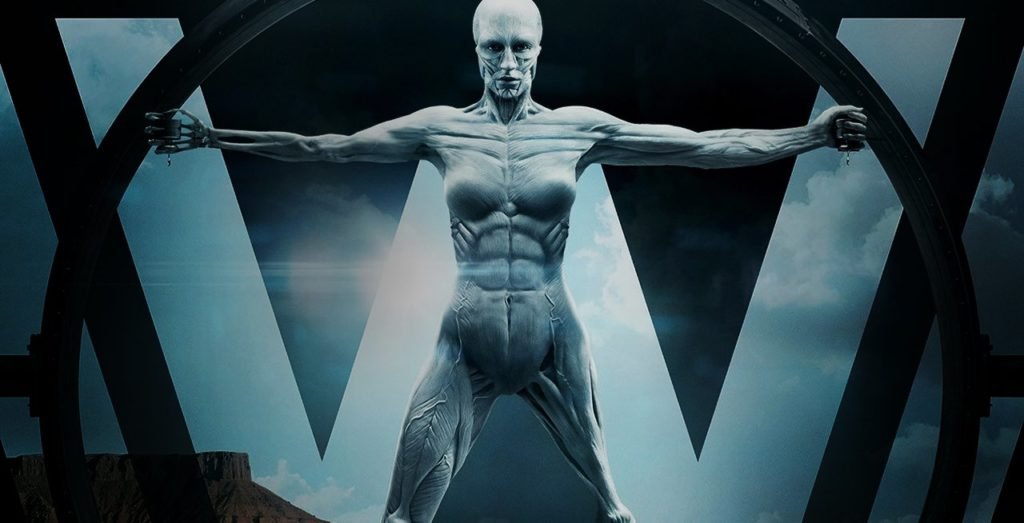
In 2018, we were watching season 1 of Westworld. It posed many questions about human nature and existence and the line between human and machine.

For me, the most memorable themes were:

  • How reliable is our definition of reality?
  • How permananent is our personality?
  • How do advanced AI and life-like automatons alter our definition of a living thing or a sentient being?
  • How do we know that we have free will? How do environment or external forces influence and limit our decisions?
  • What ethical obligations do we have over our offspring or other sentient dependants?
  • Is AI and robotics defining the next race on Earth? (Will humans one day become obsolete?)
  • Is Westworld the future of virtual reality and theme parks?
  • When does a thing start becoming a person, and when does a person start becoming a thing? (Personification, and dehumanization.)

Connecting some themes to my own life

At some point, my own Mother became a “broken system” and difficult to read and to communicate with. By the time I was finishing grade seven, she’d already slipped into a deep depression and given up trying. She gradually almost killed herself from alcoholism. Something deep in her mind and spirit was broken. She wasn’t trying to help herself, and nobody was helping her.

In her youth, Angela was bright and lively in company. She acted in the Gilbert and Sullivan Society in Victoria, she sang, and she played piano, ukelele and other instruments. She was popular, talented, and well-liked. Who knows if she was actively fighting bipolarism in her youth, but it’s possible. Maybe being happy around others was just another way to fulfill an acting role each day.

Years later in the early 1980s, by the time Angela was in her fifties, she was a patient/resident in Riverview Psychiatric Hospital, and whether it was the cumulative effects of Lithium Sulphate, or the after-effects of alcohol overdose-induced brain damage, she was no longer lively at all. She would sit silently, eyes wide, tremoring her arms, and rocking in her chair, her face looking like a mask that was covering mysterious thoughts.

Indeed, Angela’s personality changed after her alcohol overdose. She had suffered brain damage after liver failure and transfusions, and her mannerisms and speech changed noticeably. She became more direct and almost child-like in her declarations. Many of her memories seemed to have been wiped, at least those from the past five to ten years. It was pretty painful for us to realize that we’d really lost her, even while she was sitting there right in front of us. At home, Dad spoke of her in the past tense, because the person he’d known was gone already. Riverview was now maintaining a different version of Angela Huntley Clarke.

As a late teen verging on adulthood, I began to see my mother and my distance from her in a non-personal, non-subjective way. Perhaps this was just a coping mechanism. Angela’s dysfunction began to make me think about the relationship of the mechanics of the body, and how they may or may not be controlled by the brain. I began to understand that some aspects of human behaviour were systemic, and some were conscious and voluntary, and that when the system became damaged, the behaviour became different.

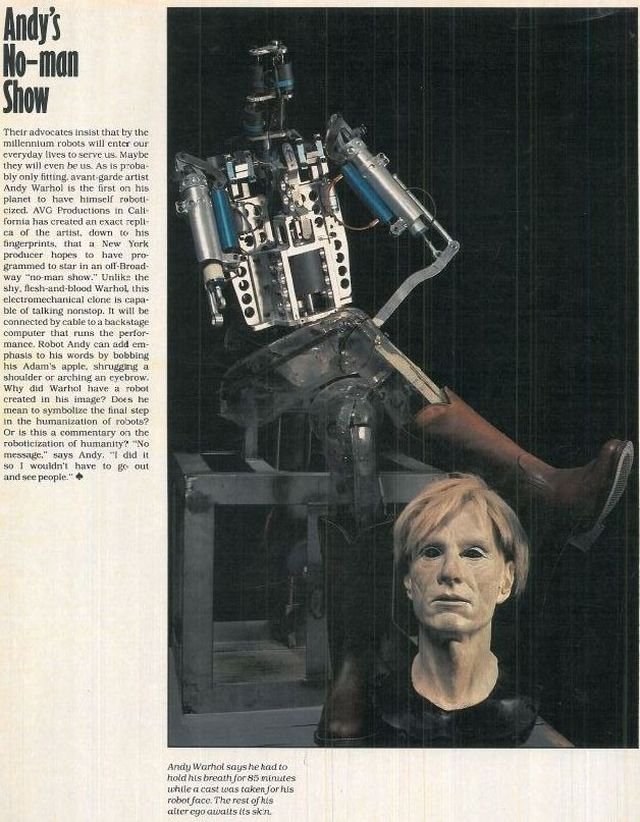
The image below (from a 1984 issue of either Time or OMNI magazine), struck me so strongly at the time as a representation of my lost mother, and my mother’s lost past and personality. The pale mask of a face, and the empty eye sockets, like the missing windows of an abandoned family home.

It helped me process it all to see her as a victim with and of a broken system to depersonalize her a little, to accept the space between us that could not be bridged, and any past connection, which now might need to be reconstructed again. I didn’t have the tools for this job.

As 1984 turned into 1985, I visited Mum whenever I could, and tried to connect with her more as a person (even though I wasn’t convinced that she still remembered me as her son). I introduced myself if I needed to, I tried to converse, I shared drawings and photos with here, and brought her chocolate every time. As the years rolled on, it helped me to think of her more like a helpless child, instead of a broken system. I still called her Mum.

Automatons are not people, even if they are shaped like them. People may appear like broken machines, but they’re still people inside – still human.

Back to a Shrine, Online…

My passion for biography waned years ago, particularly regarding this True Life project. It’s like a form of burnout, and was probably due to a number of factors:

  • In discussing the past with my sister, I was reminded of some very terrible times, and instead of seeing them objectively, like a reporter, I felt them viscerally. I had not really let myself feel them the first time around, and I became angry at my Dad all over again.
  • I was happier in my present, and found myself less interested in discussing my past. I didn’t feel as special either, because I’d learned that my past suffering was really very minimal compared to some of the things other people suffered. I didn’t feel the need to get attention by telling my story. I didn’t even want my colleagues to know much about it. I had nothing to prove, and emotionally had receded a little…
  • The novelty of writing – the excitement of calling myself a writer and of exploring the art form – had been lost. Been there, done that (or so I felt).

So over the past few years, the only writing I’ve done has been occasional journaling, or bits of short-form poetry online in Facebook, and a couple of brief short stories featuring my proxy, Jack Owen.

But…

A recent Google search on my own name (ego, thy name is John) led me to searching for my parent’s names, and then an old feeling started to resurface: I’m trying to keep them alive.

In fact, I want to read about their story myself! I truly believe that the Internet is my go-to global memory, even as an extension of my own memory. Maybe I want to keep them “alive” online as a way to reconnect with them. It’s like visiting a gravesite. The stone is still there and will stand the test of time. Funny how the ephemeral Internet feels permanent to me. It’s a place where I can preserve the pieces I have. One day, I will forget things – I will lose the last of it. Some of my web pages might outlive me though. Maybe.

As angry as I am at my Dad even 30 years later, I don’t want his name to disappear. He burnt bridges more than he’d ever have admitted, but he doesn’t deserve to disappear. My Mum died alone and largely forgotten in Riverview. How will she be remembered? By web-shrining their memories, how will I be remembered? Will I finally be the good son who kept the memories together, who tended the garden that they abandoned? I have no idea, but apparently the need hasn’t left me yet.

In my online personal and professional life, I use Google like a mental scrapbook, a photo album, a repository. I started putting images and stories about them online in 1998, and I told myself a web-based shrine would help me to remember their stories as time passed and experience faded in narrative.

I think I’ve just felt the fear of forgetting tap me on the shoulder. I’m still the only one who can tell my story the way it needs to be told.

I should get back to it now…

Seventeen, and Untethered…

It was 1983 and Christmas was coming, but Dad’s heart attack came first on December 21st. It was a terrifying wake-up call.

He fell out of bed at maybe 5:30 or 6am, all tangled up in his sheets. We were on Christmas break, just a few days before the 25th. I think most of my shopping was already done and I’d even gotten the tree up too. I was seventeen.

It was that built-up feeling, that low-level anticipation that accumulates around you in the air, in the clouds of people’s laughs dissipating as they talk about it. It builds up under car tires on the street, and in the folds of coat sleeves bringing bags home from the mall. Christmas excitement and with it, Christmas stress.

So something broke inside my Dad and he fell out of bed early that day. Instead of being woken up by his voice saying “come on son, time to get up”, I heard him call out my name, loud and shaking. He sounded desperate and I found him laying on the floor wrapped in his sheet, trying to get untangled, telling me to call an ambulance. My sister heard us, and we yelled at each other to call 911.

The ambulance arrived and two large paramedics carried Dad downstairs in his t-shirt and briefs, and one said “Oof. Big boy.” He must have been at least 240 pounds and over 6 feet tall. The Love men were all so much bigger than me. In my shock at seeing him helpless, I still remained proud of his size.

Whether agreed or discussed, I don’t know, but my sister stayed behind at the house and I went in the ambulance with Dad. His eyes were wide and he was soaked in sweat, and probably frozen stiff in the sub-zero morning air. It couldn’t have been 2 degrees outside – probably more like minus 2.

In Emergency at Burnaby General, I stayed with him for an hour or more. He looked at me with the scaredest face I’d ever seen. It was his true self, which perhaps I’d never seen before. His face said “I’m scared to hell” but his voice said “I love you son”. I tried not to cry and to not let my voice shake, but he saw and knew that I felt the same way he did. We held hands the way brothers do, with that underhanded grip that looks like the beginning of an arm wrestle. We clenched hands tight and I told him I loved him too. He said “I’ll be okay. You go home and take care of your sister”, so that’s what I did because I always did what Dad told me to do. Right then I didn’t know what else to do. I needed him to tell me.

I left his ER bed and phoned Kim at home, and through her crying and my shaky words, we discussed what Dad had told me, and I said I was coming home.

When I walked out the doors from Emerg, I felt a wave of fainting, and jammed my back up against the building as my legs gave out. I slid down into a crouch as everything went grainy, snowy blue, and a bell rang hard in my ears. I gasped for breath and waited until my head cleared and the ringing stopped. It was too much. I had to get home.

I don’t remember a Christmas that year. I remember drinking with my friends in our livingroom and a lot of awkward fucking silence. The townhouse was the same space it had always been, but Dad’s absence was a huge damned elephant. That first night, my sister and I each spent the evening at different friends houses, talking and being consoled. I went to my friend Jamie’s and drank with his family. His mum cried for my sister and me, calling us babies. Her slightly drunk but sincere motherliness has always stuck with me. Kim and I had each found somewhere to be around friends.

I began listening to “Pink Floyd, The Wall” on my Walkman every night. I’d lay in bed too wound up to sleep, and would live through the scenes from The Wall, with all those sad Father and Mother images and the character of poor Pink, the lost boy, losing his identity and losing his mind. I was afraid of the future and beginning to hate the world more than ever. Other times, I just felt lifeless and depressed.

During the day I was the dutiful son, making daily or bi-daily visits to the hospital or to the grocery store. I kept shit running at home the best a responsible teen could. During the night, I felt alone, bleak, and lost. I was untethered and a big part of me was depressed and stressed. I wished for everything to just be over. I wished for someone to love me, and help me feel secure. Life sucked more than it ever had before, and I couldn’t imagine a future.

Dad gradually got better over the weeks, then months. Then he got worse (four strokes) and did eventual, continuous rehab until he was able to move and kind of control his left arm a little and speak more clearly. It was a long, slow process of not knowing what the next day would bring, but I was really proud of his progress and of how hard he’d worked to literally get back on his own two feet. His face showed that he was proud too. I will always have gratitude to the Activation Ward in BGH for the therapy and support that they gave my Dad.

A counselor at the hospital told me that I was handling events that adults twice my age could not, and this also made me feel proud. But I was also feeling depressed, dog-tired, and emotionally lost in my life.

I had Dad’s debit card and he told me his pin, so I kept the house stocked with food and wrote cheques for him to sign to pay the bills. He always trusted me. Still, my sister and I were just teens – kids really – so Dad never knew that we partied our asses off in the house, or that I sat in his recliner drinking beer and playing The Doors really loud on his stereo. The cat was away, and the mice were 15 and 17. The cops came only once and warned us to behave ourselves. After that, we settled down, but my poor gentle neighbours did hear a lot of shit through the walls, I’m sure

Dad had always smoked about a pack a day, and he drank every night. He never really did any exercise, never had friends over, and never did anything but work. I also believe he harboured a lot of guilt for the abuse he gave my mother, and her emotional collapse into depression, and the other forms of abuse he visited on us.

By the time of his heart attack in ’83, my Mum had been a patient in Riverview and a ward of the province for a couple of years already. Dad had basically stopped going in with us to visit her by that point, claiming back pain. He would just sit in the car, wait for us, and smoke. I resented him for it, and thought he was an awful coward for not going in with us. I felt like I had to compensate for him. I did not understand what he might have been struggling with emotionally. This stress was probably a major factor in Dad’s health collapse.

Looking back on him and his pride and ego,I’ll bet Dad felt like his family was a failure – maybe his failure. And in many ways, we were a failed family, but that was never solely his fault, even if it was his burden to bear. I won’t forgive him for things he did, but I will still feel compassion for his suffering and near-death collapse. I still respect his strength and stubborness.

When Dad did finally come home again from the hospital, he was walking with a cane, holding his head up, but really he was kind of broken-down and had a hard time noticing things on his left side, like a few of our well-meaning neighbours, who awkwardly tried to welcome him back.

Within a month or two, he went on a serious drinking binge and caused himself a bad stroke, and went back to hospital. He just couldn’t stop drinking. He rehabbed again, and finally quit smoking and drinking for good, but also fell down in the shower in hospital and fractured his hip (plus, had another stroke). He never walked again after that, confined to a wheelchair, and settled into a private hospital. I didn’t let him go, but visiting him became one of my weekly errands. He never came home again.

image_pdfimage_print