
There’s something deeply satisfying
about exploring the world on foot.
When my years were in single digits,
I explored the city of Victoria.
It was my home, it was my mother’s birthplace,
and it felt big but usually also friendly.
It was the right size for me, perhaps.
Most of my dreams are of personal journeys,
on foot most often, down blocks,
or along endless hallways.
I’m always looking for something
or late for something, and unprepared.
It means that life can be mysterious
and unpredictable, and often lonely.
Just a week ago, I walked a few miles around Victoria,
down the tourist strip, through Beacon Hill Park,
where I’d played as a kid and marvelled at the peacocks,
and walked way up Cook Street, past the sites of both
of my grandfather’s long-demolished homes.
It made me reconsider what the words “home”
and “memory” are really worth
when most of the landmarks from my
neighbourhood had disappeared
after forty years.
But on this little real-world journey, my wife was with me,
and as we walked, we joked some old jokes, bickered in the heat,
and debated our directions, and i was not alone,
and the past was something that happened to
someone else, a long time ago.
Most cities are in some constant state
of reinvention and transformation.
This city and its occupants are no different.
We’re going somewhere – together.
Category Archives: memoirs

My Migrations…
For a lot of reasons (mostly a lack of money, but maybe also loneliness or anxiety), my family moved around a lot when I was growing up. In my first ten years, we moved ten times.
In my life (so far) I have lived in 16 different homes. Here they are:
1966 – Born in Saskatoon (Home 1, on Alexander St.)
1970 – Cook Street, Victoria (Home 2, Grandpa’s house, in Victoria, BC)
1972 – Fort Langley Hotel, Blue Star Motel, then a mobile home in Langley (Homes 3 through 5)
1974 – Cook Street, Victoria (Home 6, Grandpa’s again)
1975 – 1976: Vancouver (Homes 7 through 9, three dodgy motel units: 2 in Mountain View, 1 in Peacock Court)
1976 – Vancouver (Home 10, a nice townhouse in Park Place)
1984 – Vancouver (Home 11, a 1 bedroom flat downtown on Hornby Street)
1985 – A nice townhouse again (Home 12, back in Park Place)
1986 – 2 bedroom flat in a skeevy old apartment building on Pender St. (Home 13)
1987 – A nice 1 bedroom flat in Mount Pleasant (Home 14, with my fiance)
1991 – A better, bigger 2 bedroom basement suite (Home 15, in East Van)
1995 – Bought a new 3 bedroom condo (Home 16, still in East Van)
…so that’s why I hate moving.
As kid, I had no say or control in where I lived. Ownership seemed to have really forced me to stay put. 😉
Puzzling over the Pieces
July 18/21
It’s not like I’ve always known where
I should be or where I belong.
People and places need to claim you
with some certainty and purpose,
especially when you’re young,
so you don’t feel like you’re just drifting.
Growing up, I never felt extremely claimed
or tied-in to my own family.
It was just where I lived and
who I lived with while I tried
to figure out what each day would bring.
I only knew I was living, but no idea why,
or why it mattered.
It seemed like there was always a reason
to fight, or to cry, or to want to escape
instead of to just enjoy where I was.
I’m probably being unfair to my parents
but that’s most of what I can remember growing up:
Someone being angry, someone crying,
and a meek observer wishing on whatever
the next horizon could bring.
These may all be the products of a rich dinner
or a rich imagination, or an overfed sense of drama.
Maybe I’m just being a little selfish or dramatic.
I’ve always been something of a loner at heart.
Maybe everyone else’s family will always
look better to me than my own,
real or not.
I still feel like a bent piece
searching for my own
space in the puzzle.

What I would tell them is…
He was my father. As of this year, he’s been gone for 32 years. Next October will be the 100th anniversary of his birth in Prince Rupert. There’s a lot to remember, to rejoice, and to regret with him. Maybe his pulse still can be heard in the waves rhythmically washing the Prince Rupert shoreline.
If I could talk to him, openly, honestly, and gently, I would tell him that I love him, I forgive him, and I would ask him to forgive himself. We were very different people, and he might not have understood me as much as I’d liked, but he did try.
His biggest gifts to me must have been his stories. A lot of them are still tucked away in my memories, waiting to be unfolded again. In his storytelling, he told me who he was. The successes, the failures, and the hopes are all there to be found again. He is infinite and unbounded now, long ago released back into the world.
She was my mother. As of this year, she’s been gone for 25 years. This June was the 90th anniversary of her birth in Victoria. She remains enigmatic to me, but I can imagine her singing voice entwined among the sounds of morning birdsong and ringing church bells in her hometown.
If I could talk to her, openly, honestly, and gently, I would tell her that I love her, I miss her, and I would ask her to let go of any regrets, and to take joy in the happy lives of her descendants. She really never got to know her offspring, but we still feel like we carry resonant pieces of her inside us.
Her biggest gifts to me might have been her laughter and her moments of joy and playfulness. These were rare and precious things. A lot of her is probably tucked away in my cells, waiting to be revealed and reused. In her creativity and beauty, she showed me who she was, and who I might become. All the joy to be found in a free, untethered, and unaddicted spirit is there for me to explore. She is infinite and unbounded now, long ago released back into the world.
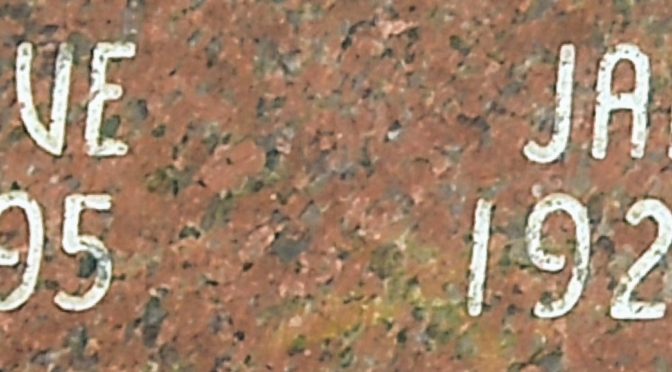
A quiet visit on a dry day
Today was a good day to visit Mum and Dad at Mountain View Cemetery. They’re on the Rose Wall of the Vancouver Crematorium, right next to each other, Angela first, then James.
As I write this, I’ve just gone to see Mum and Dad and wipe off their lettering. The roses in the little garden below them look weather-beaten, but their memory is safe up on their wall next to their neighbours.
On the way in, I passed the biggest monument around, belonging to a “Mr. William Dick”. It really stood out. I guess ol’ Willy had something to prove.
I’m now sitting by a little fountain listening to it bubble, and hearing the birds sing and a crow call. It’s actually a nice place to hang out after a brief visit. In spite of being right on the intersection of 41st and Fraser, once you’re a little ways into the grounds, it’s not as noisy. I saw a squirrel prancing and jumping across the grass, scooting over the plaques to get to his next tree, and for the past few minutes I’ve been hearing conversation and laughter from a group down the lane behind me, sharing their good stories.
I guess today’s lesson is that it’s not all just tears and remorse at the cemetery. It’s kind of nice too. But the wind is picking up and I’m sure we’ll have a big dowsing of rain later, so I’d better go home.


My Three Fathers (part 2)
I see my life in terms of phases, each highlighted by a significant father figure.
My first father was my biological one, James Evan Love.
His approach to life was stoic and Spartan. He didn’t show any appreciation for art, media, or public events. He didn’t decorate our house, or tend to plants, or do barbecues on the weekend. He was not religious and seemed to hold organized religion in strong contempt. He was an “every man for himself” kind of person and never socialized much.
What he did have was a sense of confidence in his knowledge and beliefs – he never expressed self doubt – and a definite sense of what he thought was right and wrong. He was also a conservative in both social and economic terms. He was tight-fisted with money, but generous in sharing his opinions.
Every so often, I hear his voice when I want to do something right the first time, feel strong physically, feel resolute in my opinion, or hold myself to an ideal standard.
What I keep from him are many things: the undeniability of my genetics, an interest in *our family history, an understanding of the value of working hard to earn something, my earliest impressions of what personal worth is, and what bravery and fear feel like (similar).
My second father was my most significant teacher and mentor, Tom Hudson.
I met Tom when I was in my first year of art college at Emily Carr College of Art, where he was the Dean of Education. At that time in my life, I was nineteen, living on my own for the first time, away from my Dad’s influence but subconsciously seeking another strong father figure, during my phase of post-secondary education and adult independence.
Tom’s dominant yet warm personality resonated with me. I was drawn to his authority, wisdom, and experience, and I saw him as the wisened Obi-Wan Kenobi teaching the forces of art history and visual literacy to my young, inexperienced Luke Skywalker.
Over the next six years, I prospered under his advice and mentorship, attended all his lectures, and worked on most of his research projects. In 1989, just one week after my graduation from art school, Tom gave me my first paying job as a commercial artist and animator, and became my supervisor for the next two years.
Every so often, I hear his voice when I design a document, an image, or a visual interface. I hear him when I think about which colour to use, how thick a line should be, how to compose a diagram, or how to configure text, images, or buttons. In addition to being a mentor and guide, he was also my friend.
What I keep from him is the feeling that I can learn whatever I need to. I believe that some of the ideas and principles I learned from him are directly or indirectly part of a lineage reaching from antiquity to the Renaissance, through modern psychological, scientific, and artistic movements, into realms of modern technology and media theory.
Tom helped me to develop my own creative process, my awareness of visual and media literacy, and my ability to keep learning. This is a fancy way of saying that he inspired me to read in new and different languages and to love learning. That’s what great teachers do.
My third father was my father-in-law, Honesto Sotto Dino.
Initially, he didn’t like me very much; I was the scruffy-chinned 20 year-old punk kid who was going to take his beloved daughter away from him.
Over time, as I brought Grace a Christmas card in the rain on my bike, or had roses delivered to her at his house, he seemed more relaxed and less scary to me. I wouldn’t stop coming by and he gradually accepted me. His nature was always good and accepting, and after I married Grace he softened to me more and his real warmth started to come through. He became “Pop” to me instead of “Mister Dino” or “Grace’s Dad”. From that point on, he became my Father-in-law.
Years later, he treated me with a father’s care and concern, massaging my hand and shoulder when I sprained my hand or had back pain, or asking about my health and suggesting various remedies. I learned to accept his sincere gifts and to truly think of him as my surrogate father. I knew how lucky I was to have his love and be part of his family.
Every so often, I hear his voice when I remember him, or when I think of Grace’s brother Victor or her mother. Pop always took care of his family, but none more so than Vic and Grace’s Mom, who needed extra special love and care every day. Pop sacrificed his career, his time, and his energy to help family and friends, and he did it with humility, restraint, and devotion, and without self-pity or complaint.
As a little boy growing up, I wanted the men raising me, especially my father and grandfather, to be my heroes – I wanted to feel proud of them. They raised me as best they could, but along with their admirable qualities, each of them made mistakes that would permanently shipwreck their heroic ideals in my young, hopeful heart. Now, even past my middle age, I can feel a small sting of disappointment when I remember the stains of abuses that can’t just be washed away. But in Pop’s case, his image, heart, spirit, and legacy still feel clean, just, and true to me.
What Pop had was a singular devotion, untouched by too much pride or ego. He had a moral centre and a good compass to guide him, unlike many of the other so-called “adults” I’ve seen, who lived more like rudderless, drifting boats. I loved Pop, and I’m glad to have had him in my life, to show me that good men can still exist.
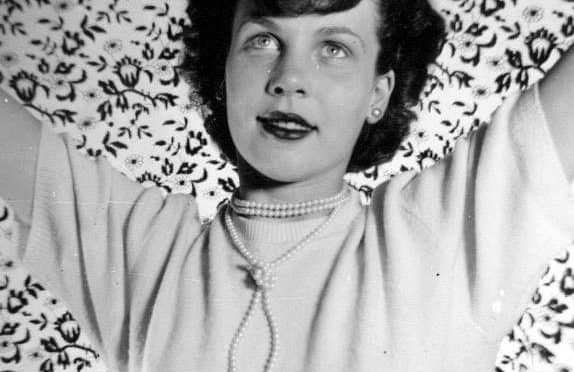
Dear Mum: Happy Belated Mother’s Day
May 15/21
Hi Mum,
I think it’s been years since I last wrote to you. It’s been well over 25 years since we last saw each other, but I keep pictures of you nearby, and think of you and look at you all the time.
Last year, Kim and Christina sent me some letters written by you and Dad, from Saskatoon, before I was born. There was one you wrote to your mother, not long after you were home from hospital, recovering from your burns and skin grafts. That must have been such a scary, stressful ordeal for you. It really sounds like you were trying to regain your confidence while you healed at home. Although you sounded hopeful for the future, you sounded a bit lonely too.
I think I like writing these letters to you when your special dates roll around. It was always hard to know what to get you as a gift on Christmas, birthdays, or Mothers Day. Mostly, I remember buying you slippers and lots of chocolate! You always seemed to enjoy the chocolate.
Kim is surviving and thriving in her life, and her two daughters are raising their own children. You have great-grandchildren. That just blows my mind, but in a good, happy way. One of your great-grandsons has the middle name of Huntley, just like you. Although you weren’t able to be in our lives for very long and couldn’t enjoy your family or even have much of a role in it, you have influenced it greatly all the same. Kim and I both love music, and hold your idealized image in our hearts, and beautiful photos of you on our walls and in our photo albums.
 I’m sitting in a favourite coffee shop being thoughtful on a sunny day, while a piano version of “Take the A-Train to Harlem” tinkles brightly from the cafe’s speakers. That old chestnut is a tune I first heard either on the radio or maybe hummed or sung by you, back in Poppy’s house in Victoria. Beautiful piano music always makes me think of you.
Subtle Inheritance
From my Dad I think I got my ability to be confident, and cool under pressure (or at least believably fake those things). His last lesson came in 1989.
From my Mum, I think I got my eye and heart for art, music, and beauty (and to accept people and keep myself open-minded). Her last lesson came in 1995.
Neither of them consciously tried to pass along their values to me, but everything was evident, and I remember all the real-time demonstrations.
How to love. How to regret.
How to try. How to leave.
We had some talks, some significant moments together, and some good storytelling. It’s all in bits and pieces, like those boxes of magnetic fridge words that you can use to make up phrases. It can be either a poem or a horror story. The raw material is there for you to compose.
They were so different – in many ways, almost opposite personalities. I never saw much of whatever sweetness must have brought them together. I just have to believe it was there in the beginning.
Their legacy is woven into my life, and my sister’s life, and a few fine threads reach farther out to their grandchildren, whom Mum and Dad should regret never being able to properly meet.
I’ve spent my whole life trying to answer the question “Why?”
I think the exercise of asking is the way to keep you awake
so you don’t fall asleep in the backseat,
when you ought to be up front
driving the damned bus.
There’s no reward. Nobody asks to be born,
but only a fool ignores the priviledge of being alive.
All you can do is Deal and Heal
Last night, I dreamt that I was supposed to meet my sister Kim at the Brentwood Mall. It was a beautiful sunny day, and all around me at the mall were street performers, sidewalk sales, and colorful banners waving in the bright sun. It was a lovely festive feeling, and I really enjoyed being there.
I looked all over for Kim and her car, but I couldn’t find her, and I started to feel that sad, abandoned feeling. The lovely day was suddenly transformed into an anxious afternoon. I felt lost myself.
I met some lovely first nations folks who were friendly to me, but who couldn’t answer my questions. So, I felt that I was on my own. That is the feeling that I’ve had with me throughout life: “you’re on your own kid”. It’s like my core truth. One moment, the person you care about is with you or where you can reach them, and then the next moment, they’re gone forever. Blip, just like that.
I told my wife about it when I woke up, realizing that recently losing her Dad had reminded me of how much I don’t want to lose my sister. Every time in the past when Kim has moved or changed her phone number without telling me, I would re-experience some of that same feeling of panic and loss.
But people die, and there’s really nothing you can do to stop it. All you can do is deal and heal.
Talking about Angela without saying anything
Telling my mother’s story has never been easy. I had almost no conversations with her ever, and unlike my Dad, she wasn’t a big storyteller, so I learned nothing from her by way of oral history.
So, it is difficult to write about her except of in terms of how her actions, inactions, presence, or lack thereof affected me personally. All I seem to have is my memories and personal point of view.
But actually, my eyes are not the only lenses through which I can view her life. Her father, Ernest Huntley Clarke, documented his daughter enthusiastically on still and moving film, right from her babyhood in 1931, through to her mid-life around 1974. Put together chronologically, all those photos and film clips could make a pretty rich silent movie of the life of Angela Huntley Clarke.
She never really spoke for herself.
If I do compile some movies to present the photos, I’ll may still provide a little narration, hoping that my own voice could be an adequate proxy for her missing one.

