Tag Archives: reflection

Home is what you make it

We moved a lot when I was a kid. By the time I was eleven, we had moved that many times. Sometimes it was just a few doors up the lane and other times it was to a new town hours away.

It’s amazing how permanent or transient life can feel, and how you can adapt to changes in living conditions. As a kid, you follow your parents; you cross each new threshold in their footsteps. I’ve lived in a number of different kinds of homes, in my grandfather’s fifty year-old house in the middle of a city, in a brand new mobile home in the middle of 77 acres of brush and cow pastures, in three different motels along busy trucking routes, and in rental row housing where your neighbours are just a few inches away on the other side of a wall.

Wherever we lived, we didn’t own our home, we rented it. Each residency could last for months or years. I usually watched life unfold on the ground floor, at the lower-end of the middle-class. I had my own room for the first time at the age of eight, but a couple of years later, we were living in a motel and I had to share a bedroom. I wouldn’t have my own bedroom again till a few years later.

When you can’t have private personal space, you end up cultivating the space you need in your mind. When I was ten, I shared a bed with my Dad, and while he was sleeping, I’d listen to 14CFUN on my transistor radio with a little plastic earphone. My private late night AM radio took me into a wider world where KISS sung a ballad to Beth and Boston power-chorded their way through more than a feeling. Escapism helped to bring my kid-brain some much-needed psychological privacy and personal space. I don’t know how much I really liked my parents or my life back in those days, but I’m pretty sure I resented all chaos and uncertainty. Any chance to escape was refreshing.

I have wondered if impermanence or mobility had been kind of baked into my parents, carried over from their own upbringings. For me and my sister, our relatively transitory housing was driven by the kinds of circumstances that my parents were in. Our mother’s mental illness and father’s alcoholism must have made it difficult for them to save money or create permanence and stablility, but maybe there were older patterns at play too. Maybe ownership wasn’t even a consideration for them. Although Grandpa Love, my Dad’s dad, had built the Love family house in Prince Rupert back in 1918, my Dad never seemed followed in his father’s steps into home ownership.

I’ve wondered over the years if home ownership would have changed our family for the better. As far as I can tell, my Dad had always been a renter and none of his jobs ever laster more than a few years. Maybe he actually liked moving around every so often. Whether that was his nature or not, it wasn’t all on him. Every few years, my Mum would have a nervous breakdown or Dad would lose his job or something, and we’d have to move somewhere new and kind of start all over.

I believe that to my Mum, her real home would always be in her hometown of Victoria, where her father lived, and where she’d spent most of her life. Mum’s dad had been a Mountie and they’d moved a fair bit during her youth as the family followed him from post to post around British Columbia. Maybe in her first eleven years, she changed home as many times as I would. She and her parents settled in Victoria sometime in the mid-forties.

A Nesting Instinct

By the time I was a teen, we were renting a townhouse in East Van. I had my own room again for the first time in a few years and it was like heaven to me. We lived there through my last two years of elementary, and all through high school. By that time, I’d collected a vast collection of books, magazines, and comics, and had my own second-hand TV and a clock radio in my room, so my entertainment was self-contained and assured. I think I was trying to equip my own apartment, to define my own living space, and set up some amount of self-sufficiency. Home didn’t always feel secure or totally safe, but at least my room was mine.

When I turned 29, my wife and I were able to buy a condo in East Van, very near to the neighbourhood where she’d grown up. Ownership was a big step for us. The responsibility scared me,  but we’d gone into it together, talked it all out, and worked hard to save up our down payment.  We bought our condo pre-built, and drove by the site every week to watch the construction progress of our future home.

On move-in day, it felt so amazing to be moving into a brand new place that nobody had ever lived in before. I can still smell the new carpet and paint, and see the bright walls and shiny fixtures. There was no evidence of age anywhere: no dust, no stains, no scratches, no dented corners, no musty, mouldy aromas, no dry-rot, and no old, second-hand furniture that’d been in someone’s family for thirty years. Everything was new, and it felt like a total housing reboot.

However, our dream condo turned sour as it revealed its substandard underbelly to us so many times over the years. Starting just a few months after moving in, we discovered that we lived in a leaky condo, but we stuck it out through leak after leak, levy after levy, and more than a couple of insurance claims, hoping that each repair event would be the last. Now, twenty-eight years later, after a leak into our bedroom caused by old, degraded membrane outside, we finally decided we’d had enough of annual repairs, and should use our home’s value to find a newer condo with better-quality construction.

But even with leaks, plumbing problems, and all the other issues in our original condo, it has still been my home for almost thirty years, and of that relative permanence, I still feel very proud indeed.

Chasing shadows, gratefully…

For most of my life, I’ve chased after intangible things that I thought I needed. Whether it was fatherly praise or some kind of motherly love, I quietly sought reassurance that I was worthwhile, valuable, and cherished. It didn’t matter if the granters were my real parents or, later on, proxy people whom I’d adopted to take their places. It was a reflex that I didn’t even know I was playing out.

By the time I reached thirty both my parents had died, and whatever conversations we might have had would remain unfinished, capping-off relationships with each other that had been thin, confusing, and largely unhappy.

Thirty seemed to be the age when I felt the most physically and emotionally charged and capable. By that time, I’d become a part-owner and co-manager in a small software company. I was learning my craft as an artist and designer in the high-tech sector, and also learning a little about business and a lot about the human nature of the people around me.

While I built up my own abilities and forged my own life, I still needed to fill some gaping holes inside myself. They were my unsatisfied yearnings to have a supportive father figure, a nuturing, communicative mother figure, and to fill some family role without bitter feelings of resentment ruining the joy.

So, from my thirties through my fifties, I found bosses who gave me guidance, training, and praise, and a few colleagues whom I could help or counsel. Sometimes my work-teams felt like a new family.

When some career coach tells you not to treat your workmates like family, it may be prudent advice, but it’s only practical to those who don’t have gaps in their life where real family ought to have been. For me, during my first job out of college, working with people who’d become my friends, the dysfunction and misunderstandings that arose inside that group appeared to me like problems I thought I could help solve. My problems stemmed from not identifying others as the sources of dysfunction, and thinking I needed to take on some responsibility for finding solutions. Sometimes however, it really is someone else’s fault and their problems need to be dealt with by themselves, or just somebody else who isn’t you.

When I felt something resonate with a new person, I’d find myself wanting to connect, to bond, to provide support, or feel needed. With anyone in whom I’ve confided my life stories or shown some affection, those moments were always real, genuine, never contrived. The people I placed as my proxy parents or confidants, they earned my real love and gratitude. But my need to connect, the kernel that continued to influence my behaviour, came from the need to reconfirm my worth in some way.

After the age of fifty, I really tended to shy away from attention and crowds, but ironically I still wanted to be acknowledged in some way. “See me, hear me, feel me, touch me” as the song goes, but maybe don’t get too close… I think that must be a classic introvert behavior. But the pull to put myself in a familial identity or to assign that to a colleague seems less powerful now that I’m 57. It’s just a faint gravitational influence, instead of a strong magnetic pull.

But I have learned something from each friend, colleague, or mentor, directly or indirectly, and for that I’m grateful.

I like the saying “you might be done with the past, but the past ain’t done with you”. It’s a blunt way of saying that life can be circular and recurring, looping your dumb, distracted ass around and around through similar patterns until you learn what you need to change. Poets use rhyme, storytellers repeat themes, and composers replay refrains, all to show us some pattern they need us to see again and again, until we finally recognize that there’s a pattern being repeated. That’s the point at which you can finally perceive the real race you’re running, and try to jump out of the wheel ruts.

But getting to clarity and objectivity is slow, and the work takes years to clear away the fog of childhood issues. It’s like you can’t see the big picture of your own behaviour until you’re well past it, look back on it. Hindsight is 20/20.

It’s not about getting to that thing that’s always out of your reach. It’s more about getting the clarity to see it for what it is. It’s about reminding yourself to let go of that elusive thing, because it’s probably an illusion. You could just be chasing your own shadow.

You can’t catch it, but once you realize what you’re really running for, it won’t matter so much.

Home is a state of mind.

After 28 years, it’s amazing what you take for granted, and what you get used to. My wife and I are looking hard at selling our condo and buying a new one. It’s about time to get a new home.

When we bought our current condo back in 1995, we’d been renting since 1987. The financial commitment of ownership was new, and it scared me. My Dad had never owned a house, as far as I knew. All my life, my folks had rented, and for my first eleven years, we moved about eleven times. As an adult myself, I saw that the allure of home ownership was mostly in its permanence. I’d learn later that, over time, it could be less expensive than renting (at least in Vancouver). In those ways, me and my wife were fortunate in buying our new condo, back in 1995.

We were most unfortunate however in that our place was a leaky condo in a poorly-built post-Expo wooden low-rise. It was classic wood frame construction with the kind of California stucco on the outside, built before rainscreen became a requirement.

We had plumbing issues since day one: in our first week, we watched soap suds goosh up into the toilet in our ensuite. It was funny at first, making poltergeist jokes or yukking it up over our “self-cleaning crapper”.

A few months after that, we had our first rainfall leak that soaked the carpet in our master bedroom. On rainy nights, we could hear the little taps of raindrops inside the wall. Over the next 20 years, every exterior wall of our flat had some water ingress, including our sunroom (a cold room that opened onto our patio) which had to be demolished and completely rebuilt due to degradation from past water leaks and some very active carpenter ants.

Oh, and every few years, a copper pipe would break or have a pinhole leak above us (we’re on the first floor). We’ve had overhead leaks or drain line overflows over our kitchen, diningroom, and both bathrooms.

Sometimes, if the drain lines haven’t been maintained in the basement, kitchen waste water would back up into our kitchen sink. This used to be a once-every-two-years event, but became a once-per-month event for three months a year ago. In the laundry drain line, once or twice, hardened detergent or whatever would block a drain line, causing other people’s soapy laundry water to back up through our laundry drain pipe. We got a backflow valve installed to prevent it, but not before our new laminate floor next to the washing machine had gotten ruined.

As the building has aged, we’ve had ants, silverfish, and mice running around the building. (Thank god we had cats.) That situation is well in-hand in the last couple of years, thanks to our didecated strata council and good budgeting.

So, even though this had originally been our kind of “dream home” and our first ownership stake, there have also been multiple water-related issues and problems related to building deficiencies which have soured the home-owner experience fairly bitterly.

As the years went on, other residents became affected too, but things did gradually get better: In 2018, the roof was redone and the entire building envelope was rebuilt (rainscreen, thank god). We can honestly say that the wood structure and waterproofing of our exterior walls and ground-level membrane have all be rebuilt or replaced, and are now in excellent condition.

Coming in the next year (we hope), the majority of the building’s old copper piping will be replaced with new flexible Pex piping. So, buh-bye crappy copper, hello 25 years of reliability (and yet another big levy).

With many of the repairs have come levies and insurance claims, not to mention a lot of unwanted frustration, uncertainty, and stress during the repair work. We guess that since buying in 1995, we’ve probably spent over $150k to deal with leak repairs or other water-related damages in our place. That number is a source of both frustration and pride.

In January, a leak through the ground-level membrane outside one of our bedrooms seemed to be the final straw. Months of tenacity from our strata and building management brought a restoration team to our doorstep, and as I write this, we’ve paid our bill and thanked the good tradesmen for making our home waterproof once again. Thank god for helpful volunteer strata board members, and tradespeople who take pride in doing a good job.

But although materially, mechanically, our suite has never been better, that recent leak event was the last straw for us emotionally and financially. The insanity of our various building deficiencies is head-shaking, but only surpassed by the insane rise in housing prices in the Vancouver condo market.

It looks like a good time to downsize into something newer, and to move on to a new chapter. If home is a state of mind, it’s time for us to change ours. Someone else will take our place, and make this rehabilitated condo into their own dream home.

Moonlight and Blue

Tonight, I found myself sobbing over the age of my cat.
In calendar years, he’s about 12 or 13,
In human years, maybe almost 60, I think.

Maybe he’ll live another 7 if we take good care of him.
I’ll be 64 and he’ll be gone, just like his sister, Peaches,
whom we lost just a few years ago in 2019.

We’d lost two brother cats in 2011 and 2012
after raising them for 20 years,
from little kittens.

One day, Blue will be gone forever too, I cried in my head,
keeping my little convulsions silent
so I didn’t wake up my wife.

I walked out gingerly in my bare feet
to our enclosed balcony
where I knew Blue would be while we slept.

He was sitting on our table staring out our big window,
just looking at the moon and night sky.
He loves sunlight and moonlight equally.

He was still high off a little catnip that
we’d given him earlier, and he greeted me
with an enthusiastic head-butt.

I talked and he purred, and I stroked him
and he head-butted, and showed his joy
in all the curls and waves that his tail could tell.

His joy in the moment of moonlight sharing
made me forget my future fear and worry,
and just enjoy a beautiful now.

I was glad to meet him where he was
share his moon moment with him,
and have all the moments
that we can have
for now.

Happy Canada Day, 2022

I grew up with a feeling of my country living in the shadow of our southern neighbour. The stereotypes I held were that people from the U.S. were louder, flashier, prouder, and more opinionated than the people I knew in Canada. Growing up in the sixties and seventies, I think that for the most part we truly did live in the shadow of our neighbour, constantly influenced and deeply intermingled with their culture, media, and values.

Canadians, as my Dad described us, were proud, independant, and smart. Dad didn’t think much of Pierre Trudeau, but he loved that he seemed smarter than Richard Nixon. He told me that all the best engineers from A.V. Roe left when our government cancelled the Avro Arrow project, and went to work for NASA in the States. He thought that our people were smart, our leaders were stupid, and the US government was opportunistic. His version of Canadian pride seemed to be framed by resentment.

Looking at Canada and the U.S. today, the differences and similarities are still in force. Collectively, our idiocy and genius are as pronounced as ever, although since 2015, the idiocy level south of the border seems to be tipping the American scales of justice in the wrong direction over and over again. Sadly, some Canadians have taken part in the right-wing anti-vaccine echo chamber, proving that US media bias and radical thinking are as transmissable as Covid, and almost as dangerous to freedom and progressive values.

Let’s stay clear-minded, balanced, and rational up here, and treat ourselves and our fellow citizens with compassion, honesty, justice, and understanding.

When you’re yelling, you’re not listening.

Happy Canada Day.

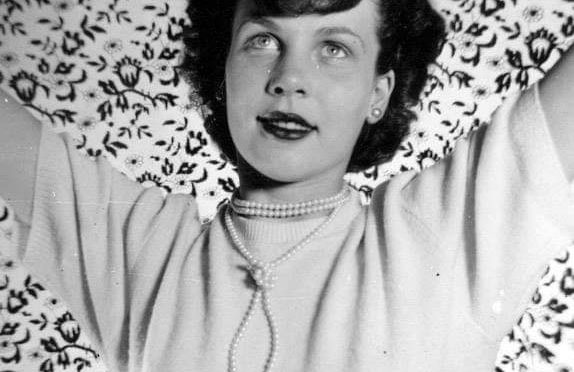
Happy 91st, Mum

91 years
since you were born,
many costumes
have you worn.

Shirley Temple look-alike,
in ballerina gear.
Treasured only child,
at tea with Teddy Bear.

Daddy was a Mountie,
moving post-to-post.
Western town to western town,
then homeward to the coast.

Mummy groomed you well
primped lady from little girl.
Elegance in voice and pose
was her special goal.

The popular girl in school
you sang, acted, and played.
Music and singing passions,
a future might be made.

But middle-age
turned light to dark,
dulled existence’s shine
and dimmed the spark.

Present life wore you down
success went past-tense.
You gave up the reins
and jumped the fence.

I think yours was
a lonely life,
either in a crowd
or by yourself.

Were your highs and lows
just misunderstood?
Were you seen
the way you should?

I’m still trying to meet you
and steel our connection,
with no story to follow
but instinctive direction.

I see beauty in your eyes
(a colour we share)
I wish I could have learned from you
while you still were there.

Photos and blurry films of you
all whispering to me.
Immortalized on Kodak film,
Angela shines for all to see.

Dear Mum: Happy Belated Mother’s Day

May 15/21

Hi Mum,

I think it’s been years since I last wrote to you. It’s been well over 25 years since we last saw each other, but I keep pictures of you nearby, and think of you and look at you all the time.

Last year, Kim and Christina sent me some letters written by you and Dad, from Saskatoon, before I was born. There was one you wrote to your mother, not long after you were home from hospital, recovering from your burns and skin grafts. That must have been such a scary, stressful ordeal for you. It really sounds like you were trying to regain your confidence while you healed at home. Although you sounded hopeful for the future, you sounded a bit lonely too.

I think I like writing these letters to you when your special dates roll around. It was always hard to know what to get you as a gift on Christmas, birthdays, or Mothers Day. Mostly, I remember buying you slippers and lots of chocolate! You always seemed to enjoy the chocolate.

Kim is surviving and thriving in her life, and her two daughters are raising their own children. You have great-grandchildren. That just blows my mind, but in a good, happy way. One of your great-grandsons has the middle name of Huntley, just like you. Although you weren’t able to be in our lives for very long and couldn’t enjoy your family or even have much of a role in it, you have influenced it greatly all the same. Kim and I both love music, and hold your idealized image in our hearts, and beautiful photos of you on our walls and in our photo albums.

I’m sitting in a favourite coffee shop being thoughtful on a sunny day, while a piano version of “Take the A-Train to Harlem” tinkles brightly from the cafe’s speakers. That old chestnut is a tune I first heard either on the radio or maybe hummed or sung by you, back in Poppy’s house in Victoria. Beautiful piano music always makes me think of you.

All you can do is Deal and Heal

Last night, I dreamt that I was supposed to meet my sister Kim at the Brentwood Mall. It was a beautiful sunny day, and all around me at the mall were street performers, sidewalk sales, and colorful banners waving in the bright sun. It was a lovely festive feeling, and I really enjoyed being there.

I looked all over for Kim and her car, but I couldn’t find her, and I started to feel that sad, abandoned feeling. The lovely day was suddenly transformed into an anxious afternoon. I felt lost myself.

I met some lovely first nations folks who were friendly to me, but who couldn’t answer my questions. So, I felt that I was on my own. That is the feeling that I’ve had with me throughout life: “you’re on your own kid”. It’s like my core truth. One moment, the person you care about is with you or where you can reach them, and then the next moment, they’re gone forever. Blip, just like that.

I told my wife about it when I woke up, realizing that recently losing her Dad had reminded me of how much I don’t want to lose my sister. Every time in the past when Kim has moved or changed her phone number without telling me, I would re-experience some of that same feeling of panic and loss.

But people die, and there’s really nothing you can do to stop it. All you can do is deal and heal.

Losing and Missing Someone

March 20/21

Last night, I dreamt that I was supposed to meet Kim at the Brentwood Mall. It was a beautiful sunny day, and all around me at the mall were street performers, sidewalk sales, and colorful banners waving in the bright sun. It was a lovely festive feeling, and I really enjoyed being there.

I looked all over for Kim and her car, but I couldn’t find her, and I started to feel that sad, abandoned feeling. The lovely day was suddenly transformed into an anxious afternoon. I felt lost myself.

I met some lovely first nations folks who were friendly to me, but who couldn’t answer my questions. So, I felt that I was on my own. That is the feeling that I’ve had with me throughout life: “you’re on your own kid”. It’s like my core truth. One moment, the person you care about is with you or where you can reach them, and then the next moment, they’re gone forever. Blip, just like that.

I told Grace about it when I woke up, realizing that losing Pop had reminded me of how much I don’t want to lose Kim. Every time in the past when Kim has moved or changed her phone number without telling me, I would re-experience some of that same feeling of panic and loss (but just temporarily – Kim and I always reconnect again).

People die, and there’s nothing you can do to stop it. All you can do is deal and heal.

Shocked into submission…

Between about 1981 and 1995, my mother was a resident at Riverview Hospital, our provincial mental health facility. I was probably about 15 when she was admitted. It was the last and most drastic move in a series of difficult moves for her.

The reasons for her landing in Riverview went something like this:

  • In 1977, she tried to drink herself to death, self-medicating through a serious depression. She almost succeeded, but survived and came out of Burnaby General Hospital with permanent brain damage and a different, more simplified personality.
  • We could not keep her at home, unsupervised – she would need some kind of constant care and supervision – so she was admitted into the first of what would be a few different private care hospitals around Vancouver. (I remember one out in the Old Orchard neighbourhood of Kingsway in Burnaby, and later, Como Lake Private Hospital in Coquitlam.)
  • She was, I was told, difficult to care for, and at Como Lake had to be strapped to a bed on one occasion. Apparently, after she struck a nurse and walked out into the snow, trying to find her way home, Como Lake Hospital said that she had to go.
  • I really don’t think those private hospitals were equipped to handle her manic-depression or emotional outbursts. So, after that, she went to Burnaby Psychiatric Centre, near Willingdon Avenue in Burnaby. I thought she seemed to be doing much better there. It seemed like a more professional and structured environment. Dad told us that it was basically a “holding pen” for Riverview.
  • Dad said the word “Riverview” like it was a threat – a bad consequence that Mum would get if she didn’t behave herself. She’d been there before, back in the early 70s, when I was about 8 or 9, so she knew what it was like. I think Riverview was not anywhere she wanted to be, but by 1980 or so, that’s where she ended up.

I was very afraid of Riverview with its high ceilings, large heavy doors with their loud metal locks, and the wide linoleum floors surrounded by windows covered by metal grills.

The women’s ward that my mother was on in what was called “Centre Lawn Unit” was, to my young eyes, identical in age, layout and spirit to the men’s ward shown in the movie “One Flew Over the Cuckoo’s Nest”, or to the wards seen in the movie “Awakenings”. Not kind of similar. Almost identical.

It was heart-wrenching to leave Mum behind in there after our first visit. She cried and pleaded to come home. She kept asking us “when can I come home?”. It hurt so much to not know what to say, or worse, to know that there was nothing that could be said, that she might never ever leave, and that she either didn’t realize it, or worse, that she knew deep-down, but couldn’t accept it.

Gradually, over the first year or two, our Sunday drives out to see Mum at Riverview lessened to only every two weeks, and then even less, as I recall. It seemed to have become too much for Dad, and on our visits, he began to claim that a sore back prevented him from climbing up the stairs to go inside, leaving it up to me and my sister Kim to go in while he sat in the car and smoked. I saw through his smokescreen, and in my teenaged binary thinking, I deeply resented him for being a coward and for leaving the burden solely for his kids. Looking back now, Mum’s near-death and physical and mental degradation must have broken his spirit and defeated him utterly. It was the final break-up of their marriage – a consequence of things that I only partially had seen as I grew up, and the full truth of which I will never really know. He still loved her, so he told me later, but he always talked about her in the past tense even while she was still alive. Nobody really talked about my Mum Angela after she went to Riverview. She was out there, but she was also just… gone.

Eventually, after Dad had a heart attack and multiple strokes in 1983, his driving days were finished. In 1984, I went out on my own on the bus to visit Mum a number of times. I wanted to take some responsibility for her in a way, and I wanted to see her and maybe try to know her in some way.  I also didn’t want her to be basically abandoned by her family.

By 1984 or 1985, she seemed to not recognize me any more or to remember my name. It was painful to try and remind her every time, but I perservered, and would also bring her a chocolate bar and enjoy her enthusiastic, child-like chewing. She was toothless by this point and ate with the enthusiasm and impatience of a toddler, sometimes coughing it out onto a bib or towel around her neck. She was reduced to a baby’s kind of existence, and I never knew if it was due to some of the meds she was on, or to some mental degradation from years of minimal stimulation.

Over the first couple of years that Mum was in Riverview, we noticed her behaviour change. Her emotions seemed dead and gone, as if her remaining spirit and personality had left her. She had become quieter and distant, and would only speak in monosyllables. In the years later, she would rock back and forth, somewhat extremely, or tremor or shake her arms up and down on the sides of her wheelchair. I never knew what her body language was telling me. Was it involuntary, or was she agitated or excited about something?

Once, after one of Mum’s cousins visited her in Riverview, we heard that the cousin had claimed that Mum had undergone electroshock therapy, nowadays called E.C.T. It was, to me, at the time, a barbaric idea, and I didn’t want to accept it. It felt like that was the worst stigma of psychiatric treatment, like a form of modern-day torture, and I didn’t want to think that my mother would be put through something that I thought was so violent.

But, there’s every likelihood that Angela did go through E.C.T. at Riverview. I’ve read recently that it was a fairly commonly-used therapy at Riverview until maybe the early 2000s.

I’ll just leave this here…  http://www.ect.org/news/130shocks.html

image_pdfimage_print