
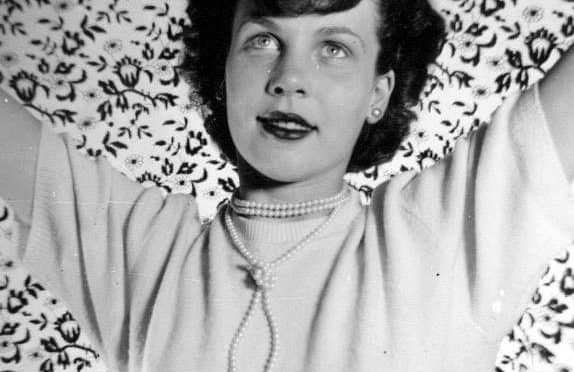
Sometimes when my mother Angela spoke, it wasn’t just with words. In fact, my memories of her speaking in ordinary conversation are rare.
She wasn’t very ordinary anyway, as far as I was concerned. I only really remember how her voice sounded when it sounded extraordinary, like when she was singing or yelling out the front door to call me and my sister home to dinner.
When I was a kid, her laughter was rare and sounded like music to me. My mum had always been a musical person. She loved popular music from films, Broadway, and the radio. As a girl, she loved escapist movies and comic books, and likely had the same dreams of fame and fortune that pre-teens and teens have once they get old enough to really start enjoying the Hollywood fantasy machine.


From her late teens through her mid-twenties, Angela had been an actor and a performer. She acted and sang in high school stage shows.
One of her primary voices was her singing voice. The other voice she had came from her hands. All of it was fuelled from her heart.
In her hometown of Victoria, BC, in her young adult years, Angela sang pop songs and opera, she played the piano, the ukulele, and the violin, and she acted in stage productions with the Gilbert and Sullivan Society, and the Starlight Theatre company. She was an active amateur singer and performer, and she loved it.
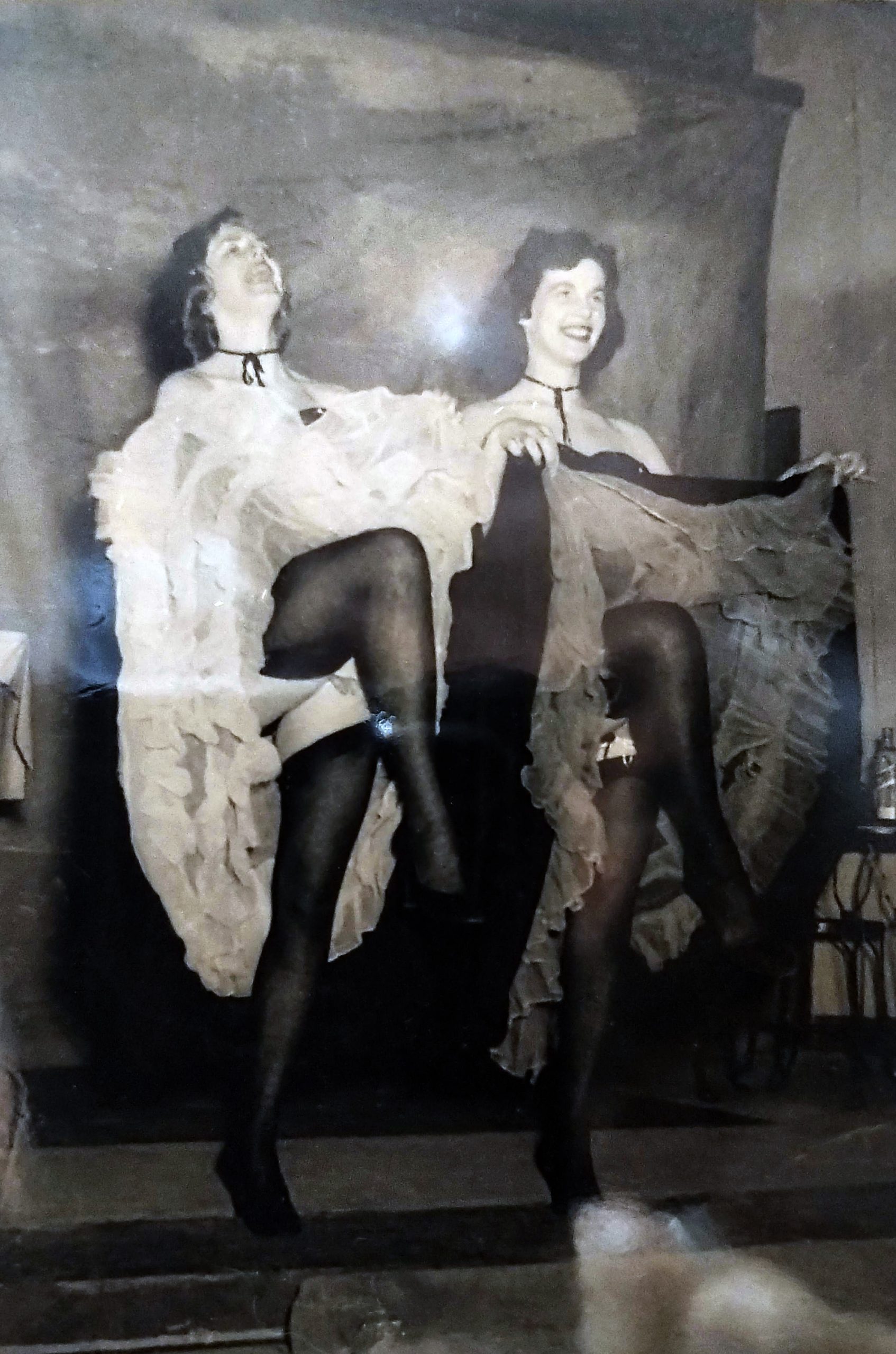
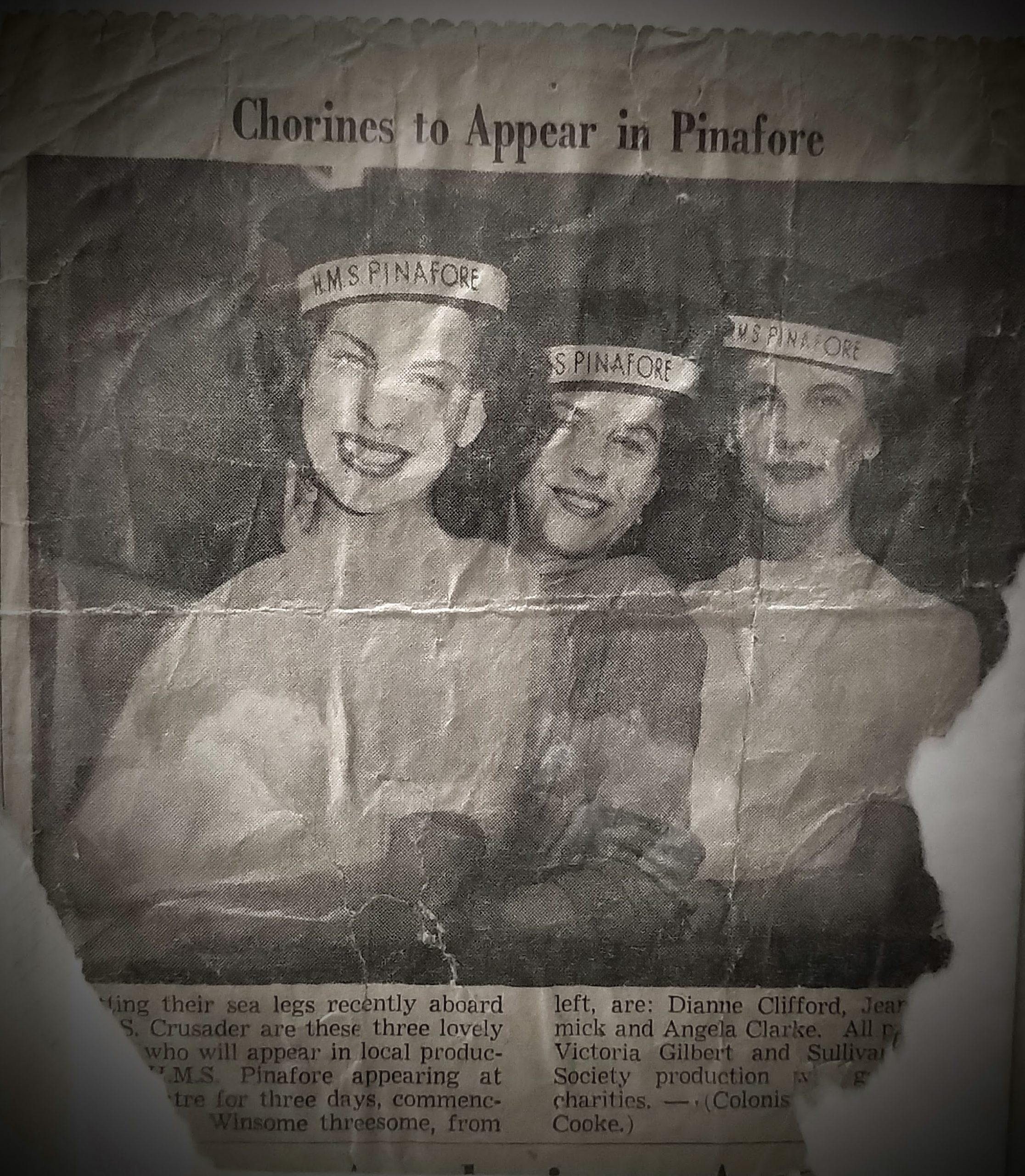
In 1955, at the age of 24, Angela auditioned for the “Singing Stars of Tomorrow” contest. It was the same contest that one of her musical inspirations, Oscar Peterson, had won back in 1940. Whomever won got to perform on radio on the CBC. I don’t know how well she placed in the competition, but recordings of her auditions survive on a small LP, cut for the occasion.

Angela sang two songs for the competition, “Che Faro” from the opera “Orfeo ed Euridice”, and “Wonderful, Wonderful Day” from the movie “Seven Brides for Seven Brothers”.
It was her passion, but it wasn’t a long amateur career – she also had to work. In the 1950s, she became a secretary at CHEK Television in Victoria. She met my father Jim there, around 1954. In 1961, at the age of thirty, they married in Victoria, and Angela gave up her musical theatre aspirations to become a wife and, eventually, a mother.


By the time I was born, she was thirty five and any chances she had to sing or play must have been rare. As a kid growing up, I saw glimpses of photos that hinted at an elegant past emphasizing her beauty and her charisma. Images like those made me feel like my Mum had been a star!


I only heard my mother sing a few times. They were little impromptu moments of personal joy. Once, she played the ukulele and sang a duet of “You are my Sunshine” with my Dad on their thirteenth wedding anniversary. A couple of years later, she spontaneously banged out a vigorous boogie-woogie on my classroom’s upright piano when she was supposed to be bringing me home after school.
Many of the other voices I heard from Angela were much sadder. Since her youth, she’d struggled with manic depression. Throughout her adult life, when she wasn’t getting psychiatric care or taking medications like Valium or Lithium, she tended to self-medicate with alcohol. Intermittently, during my first eleven years, my mum’s voice seemed to run hot and cold, alternating between joy and despair. She’d cry, laugh, yell, shriek, or just rock compulsively.
She really wasn’t cut out to be a parent. Her personality was not naturally selfless, and not particularly motherly. As a young mother when me and my sister were tots, she did her best to take care of us and I truly believe that we were loved by her, but as she got older and more depressed, she played less and less of a role in parenthood, almost entirely retreating from involvement with her husband and kids.
Anecdotes from relatives claim that Angela’s mother Edna drove her to succeed as a music and stage performer. Perhaps to Edna, this was an antidote to ensure that Angela didn’t suffer the same fate as her grandfather.
I have wondered if Angela could be hard to control. Maybe she had good reason to rebel, or maybe she just had moments of mischief that went too far. The true nature of Angela’s and Edna’s mother-daughter relationship is unknown to me, and long lost.
Regardless, mental illness was in the family line, inherited down from generation to generation. Like her grandfather Isaac, who passed away at Essondale Hospital in 1948, Angela was also hospitalized and institutionalized in middle-age, and spent the last eighteen years of her life “in care”, until she passed away at Riverview’s North Lawn Unit in 1995.
I think she could have been a lot happier in life if she’d sang and played music more often. These days, it’s so easy to buy a little electronic keyboard. Even an inexpensive Casio might have given her a musical outlet. But, maybe that’s just a childish optimistic wish of mine. I don’t know how debilitating real depression is. That affliction seems to have skipped over Angela’s descendants.
As a kid, once in a while I’d see that my parents would seem to be a team, acting on the same side of things and being friends, cooking together or, more often as they aged, smoking and drinking together in the company of a neighbourhood friend. There could be lovely moments of harmony between them, where she’d express joy and seem to be at peace.
Giving up some dreams of youth
By her mid-forties, Angela had become deeply depressed and in a severe alcoholic spiral that would nearly end her life. From the age of 46, she lived in a succession of private care homes and mental health facilities.
Practically speaking, her institutionalization was her final separation from our family and from my father – effectively ending their relationship. They remained married, but about a year after her admission to Riverview (a voluntary commitment that made her a ward of the provincial government), Dad just stopped going inside to visit her. He’d send me and my sister in, claiming to have a bad back. He couldn’t face her and her situation, I suppose.
Dad always told me and my sister how much he’d loved her, and when he spoke of the things about her that he admired, it was her singing voice and piano playing that he seemed to remember most fondly. He talked about Angela’s greatest hits as if she was already gone. She seemed to exist only in the past tense, even when she was still alive but away in hospital.
But the fact of my parent’s relationship was that my Dad was an alcoholic as well. He could have a very volatile temper. I’d seen him hit and manhandle my mother a lot over the years. She was a beaten wife, physically and emotionally subdued by a man who needed to be the boss, and who couldn’t face his own faults. So perhaps at some point in Angela’s fall, he couldn’t face her anymore because it was like facing his own faults and complicity.
Separated by Life
Over the years, as my parents got older – Mum in her forties and Dad in his fifties – any compassion, tolerance, and cooperation they might once had for each other had been burned away or given up on. They couldn’t communicate and they couldn’t work together to resolve problems – they just co-existed, probably doing a “stay together for the kids” kind of thing.
As a woman, my mother had given up on her own dreams, and with the role of wife, she probably also gave up a big piece of her identity and strength. Maybe a different partner would have treated her better- I’ll never know. For my part, I sometimes do wish that she’d never married my Dad and had never had me, if it would’ve meant that she could have enjoyed a happier, more fulfilling and stable life for herself.
Ridiculous, I know.
In fact, through her mental illness and eventual memory loss, she lost her connection to her son and daughter. We just tried to remain presences in her life whenever we could, while doing our best to more or less raise ourselves.

Angela never really knew her kids well. Her brain damage, medication, and possible ECT sessions all contributed to her mental fog and memory loss. She lost her ability to recognize her kids as they grew up, and never got to see the beautiful, creative, strong women her grand-daughters became.

The mental health challenges Angela struggled with were in her family line long before her time, and have remained with a few of her descendants since. The differences today are that women have the power to make their own choices in life, and there are better therapies, more support, and no societal stigma surrounding mental health and addiction.

My mother passed away in 1995 in Riverview Hospital where she’d lived her last fourteen years. In our family, I had my first eleven years with her, during times when she was well past her psychological and physical prime, and beginning a slow decline into alcoholism and depression.
When she married my Dad after the age of thirty, my Mum’s life went on a new track: her hometown days of aspirational career building were over, and she started a new life with her husband, moving to Saskatoon where his career was, where she created her own family.

I never saw the happy, glowing young woman described by her cousins and classmates. That seemed like a different person in a different era, like a small-town celebrity I wished I could have met. I never experienced much of her artfulness first-hand. To me, Angela’s young career in theatre and music was lived out in black and white photos, newspaper articles, theatre programs, and audio recordings. She lived a different life, a happier life, in her hometown in the 1940s and 1950s.
Looking back on her youth is like seeing a beautiful ancestor whom I wish I’d known. In my life, she transformed from parent to painful emotional project, and finally dissolved into precious memories.
If Angela were a young woman today, facing the same kinds of personal challenges with mental health and addiction, I think she’d have more power to find her own voice and to follow her own path. But her time of growing up was a much different world, generations ago. In the year 2031, her birthday will become a century old, but to me, her youthful optimism and virtuosity will remain my inspiration.


