Category Archives: research

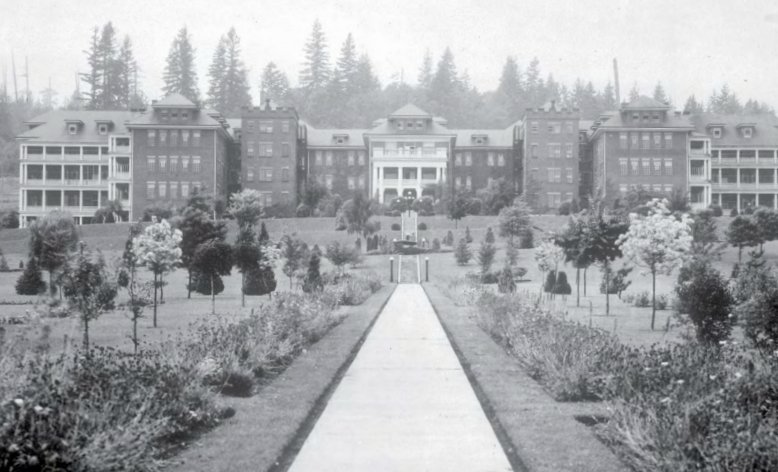
A brief history of Riverview Hospital

“Before its forced downsizing and eventual closure in 2012, the site would house thousands of patients who would be treated and mistreated; sometimes subjected to lobotomies and forced sterilization. However, particularly after the Second World War, physicians put a newfound emphasis on socialization and community, as well as psychotherapy rather than surgery.”

These articles cover the history of Riverview Psychiatric Hospital, in Coquitlam, BC.

https://tricitiesdispatch.com/riverview-essondale-artifacts/

Stories that aren’t mine to tell

It’s good to be reminded of the ethics of storytelling involving other people. I’m talking specifically about family or friends who could be embarrassed or hurt by something I write.

I’ve always felt ownership over the stories from my life, but who really owns a story, and what right do I have to tell it?

Nobody’s life is lived in a vacuum. There are lines one can cross when telling tales that involve others. What can you say without asking someone for their permission or participation? It’s probably a risk that journalists deal with all the time, but being an amateur writer, I’ve tried to find the ethical boundaries on my own, and to think hard about tactics and work-arounds to keep a story on-point without risking someone else’s privacy and peace of mind. It can be a real balancing act.

Here are some filters I use to guide my personal story writing, when dealing with sensitive topics:

  • Will telling the story do more harm than good? There’s a line between telling an impactful story with a point, and telling a dramatic story to get attention. Just because there were various abuses and mental illness in my family background, that doesn’t entitle me to tell similar-themed stories of other people I know. Other people own their own stories, and unless I get their permission or participation, their story is not one I should be telling. For example, one family member straight-out asked me not to write about an incident that had personally affected me. It had affected them much more than me, and they wanted to avoid embarrassment. It was a fair request, so I’ve never written about it.

  • Did the event happen to me personally? This simple filter can help to keep me steered towards relevance while avoiding causing pain to others, just by respecting boundaries of privacy. I despise gossip and would never want to be seen as a spreader of hearsay just for the sake of spinning a colourful tale.

  • Is the person who might be hurt by your storytelling still alive? If the subject of your story has died, this may seem to cancel-out the factors listed above, but it really may not. What about other relatives who are still alive, who may take exception to your rendition of the dead subject?

  • Is your portrayal of a person or event reasonably balanced? I’ve found that an all-negative portrait of someone is never accurate in any case, so balancing negative perceptions with some positive ones helps to build a more-well-rounded portrait, and may balance the scales a bit. Still, be careful.

  • When dealing with sensitive topics, can you get permission or participation from the the main subjects, or their rights-holders? Try to do this. It’s ethical, respectful, and can save you from getting into all kinds of legal hot water. In my case, I asked my sister if it was okay for me to relay some painful stories from our shared past. They involved me directly, but the underlying pain she’d gone through and was still going through was primarily her stories to tell. Between us, we worked out a timeline of events and the people involved. I let her approve my final edit and told her that if she ever changed her mind, the story could easily be pulled off my site. There has to be responsibility and trust, and I’m grateful that she trusted me to render some extremely difficult moments. It was very brave on her part.

  • Existence is subjective, and everyone thinks they’re the hero of their own story. I may feel like the world revolves around me, but that’s just my ego and one-sided perception. Be fair-minded and balanced.

It helps to remind myself that I’m just a microscopic mote in a world which has meanings and motivations that are so much bigger than me and my little life. Underneath each series of events can be found deeper patterns that often relate us to each other. Those shared patterns are the things really worth writing about.

Considering Responsible Storytelling…

I’m an amateur writer of fiction and non-fiction. I’m not a reporter or a journalist. I’m not a researcher, or an academician. I’m not scholarly.

I like telling a colourful story, and I love evocative imagery, and poetic license.

In creating my meagre attempts at fiction, there’s wiggle room: I’m not very dependent on historical accuracy or elaborate world-building, IMHO, the reader will likely allow minor inconsistencies if the characters and story are well-formed and worth caring about.

However with biography, I think it’s different. If your subject is someone else you must contend with, and pay respect to, narratives that have already been developed around your subject – especially other people’s real experiences and research.

Even if the subject is yourself, you’re not immune from certain factors: the reality of the other people you’ve known, who you are writing about, and what you can or should ethically reveal which may affect others.

In my case, I think I can almost write anything I want, with the following ideas in mind:

  1. I cannot embarrass or hurt my parents, since they have both passed on, but I could cause embarrassment or discomfort for other family members who may not agree with my stories.
  2. The things I say about other people, places or events still reflects back on me and my character. All art is a form of self portrait.
  3. Rule #2 means that if I embarrass someone else, by definition I am embarrassing myself.
  4. Save your work often kids.

(I had written two or three more really good, well-written points here, but I lost my edits somehow and had to start over. Re-doing, starting a new draft of even a small section,  is my creative Kryptonite. I almost become paralyzed with indecision about whether or not to continue at all. Technology can totally kiss my ass.)

Anyway, on the topic of responsibly biographies, here are a few articles I’m going to read and books to consider, to see if they help me to think more about  ethics and responsibility in biographical writing:

51 stories down. [Infinity Symbol] to go…

I have finally added in the last of the first fifty-one stories from my old True Life site.

I started writing True Life back in 1998 as a hand-rolled web memorial to my past family, events, and themes. It was then, and remains today, my personal mirror and cathartic echo chamber, and a place where I can polish my stories, refine my memories, and find patterns and meaning.

I stopped adding to the original site sometime around 2005 – maybe I just got burned-out, or bored with the way the site looked. It had just stopped exciting me, so I let it be for what it was. Not long after, my personal Linux server started to die, so I took it offline, and True Life (which was hosted on that server) went down entirely.

Strangely, I didn’t feel much loss from “de-publishing” the True Life project – maybe I even felt liberated. I didn’t have to carry that self-imposed burden of a shrine on my back, if I didn’t want to. I began resenting Mum and Dad for all their failings as parents, and then moved their little framed photographs off the top of my dresser, and down to a low corner of a bookshelf, where I wouldn’t be reminded of them so often. I decided that it’s okay to not want to see them, and to feel sick of them and of the one-sided story I’d been telling about them for almost 10 years. I decided that we were a failed family, and they were failed parents to my sister and I. Kids can’t choose their parents, but as an adult, I could sure as hell scorn mine, post-mortem.

I have noticed that I tend to obsess over people who are no longer in my life. If there’s nothing to be learned from conversing with ghosts, I really ought to let them go unanswered.

However, I eventually came back to my family background, as I always have. Reminders of past joys, sorrows, abuses and achievements kept entering my mind. Writing my memoir as “True Life” may be a compulsion now – a deep part of my identity. As they say, I might be done with the past, but the past ain’t done with me.

So, I’ll boot up Scrivener, or get my pad and pen, and start sketching out snippets of a path that will take me from 1976 towards the early eighties, when things got much, much worse.

It’s time to bite off more than I chew again, and choke down what I can of all those random scraps of daily life, and digest it all into some kind of coherent narrative. I will stick my head out, and see where the process takes me.

Should only take a few hundred more stories to get True Life up to the year 2000. At this rate, it may never get done, but I think the process is the important piece.

True Life is coming back to life…

After many years of dormancy, I have restarted this web project, as a way to keep telling my personal history.

The history of this project goes back to 1998, when I began designing a website that could organize my memoir as a series of small stories. I didn’t know how to tell my story, and the idea of writing a book or something seemed too big and monolithic to take on. I decided to use the web, and break the tale down into little chunks that I could complete, one-by-one, as the spirit moved me and time permitted. Overall, I wrote about fifty stories or articles on  my original True Life site before I let it lapse for a number of years.

My driving need to write that story continues, fifteen years later after starting this project, and better writing platforms are making it a richer process. Now, instead of my hand-written HTML website, I can enjoy authoring with the benefits of the WordPress platform where plugins give me access to new  capabilities I have yet to fully exploit, and responsive web design means that my site looks and works better on tablets and smartphones.

WordPress also means that writing can happen anywhere I want it to. I can now write stories or post articles using apps on my tablet, instead of needing to FTP into my website and use an HTML editor. It just makes it easier to develop this project wherever I happen to be. This is the way it is now.

image_pdfimage_print