Tag Archives: Angela

After almost thirty years…

It’s been over 30 years since the death of my mother Angela, and about 27 years since I started writing about my true life in this site. In fact, my mother’s death was a major catalyst for this project.

I hold honesty as one of the highest values. I’ve done my best to tell my story honestly, perhaps because I wanted to tell my story myself, on my own terms.

But deep down, there’s has always been a little voice in me that remained afraid of how my role in my story might be interpreted by others. Could I be judged or looked down on?

Ironically, I decided in 1995 to start telling my life story in a blog that anybody could read for free. I guess I was proving to myself that I wasn’t scared of people knowing my story. It likely also meant that I wanted to tell it on my own, in my own way, and at my own pace.

In March 2026, just a few months from now, I will turn sixty. There’s still so much more I want to say and do here. At this rate, I may hit seventy  before I finish writing my true life stories.

My writing style is kind of like a painter: I tend to  “block in” a first version of a story, getting down the essential narrative and aspeccts to establish my timeline. But, because I can revisit my stories to revise them any time I want, I enjoy the subsequent visits to refine a tale, whether to add more detail, establish a deeper context of meaniing or reassert a theme, or just to correct typos or polish my writing. It’s like being able to practise a piece and polish a performance with the benefit of reflection and hindsight.

Fear of Becoming Her

Today, my day went flat in more than a few places. Although I think I’d had a good night’s sleep, and our morning and breakfast were fairly bright and happy, my energy became low and lethargic, and  by noon, I felt both irritated and emotionally flat. I didn’t feel much enthusiasm for anything.

Grace and I did a Sunday drive out to Lafarge Lake, bypassing Riverview Hospital as we drove down Lougheed Highway.

I enjoyed the sunniness of the lake and the surrounding park, watching the ducks and the pretty scenery. It was a happy but only momentary distraction from my flat mood. Grace noticed my flatness and I’m sure it likely dragged her down too.

I apologized to her when we got home. She decided to book gym time right away and go get her system cranked up with some cardio. She invited me, but I just said “have a good time” and stayed out on our balcony rocking in our patio chaise and playing solitaire in the remains of the afternoon sun.

As I sat there rocking, I remembered that my cousin Jill had recently recounted a visit she and her family had to visit my family some time back in the 70s. Jill had recalled that throughout her family’s brief visit with us in our living room, my mother had just stayed in her armchair near the back of the room, rocking compulsively and twiddling a lock of hair around her index finger. Mum didn’t seem to react to anyone, and by that point in her depression was pretty much withdrawn into her own mind.

Even almost fifty years later, being reminded of my mother’s  dissociative behaviour and that it had been witnessed by my cousin and her parents, the memory shocked me all over again. Mum had been self-medicating with alcohol for a year by that point, I guess. She didn’t want to see anyone or do anything, and in her deep depression, the compulsive rocking motion and anti-social lack of response was probably her only way to create a defensive shield or a psychological distance.

I didn’t understand it at all as a kid. Indeed, her behaviour was never confronted or even acknowledged by any of us at the time; it was just part of my family herd of deeply dysfunctional elephants that followed us through every room.

I considered all that while I ironically sat compulsively rocking on our patio. I don’t want to have even an outward similarity to my Mother’s depressing behaviours, but there it was. In passing 59, I intend to stay aware of my moods and the ways I might counter-balance any isolationist tendencies. I’ll probably always need my alone time, but I won’t indulge it in a way that hurts the people I love.

I will apologize to Grace when she comes back up from the gym, and then maybe we can figure out what to do for dinner tonight.

Pity the Monsters

As a kid between the ages of 10 and 16, I was a fan of old-school monster movies and novels.

The Frankenstein monster appealed to me a lot. He never asked to be brought to life, and his innocence became stained as he came into increasing contact with mankind. In the original novel, he spoke like an angel, an idealist, probably expressing the ideals of his young creator, Mary Shelley. The 1931 Universal horror movie made him mostly mute and a victim of his outer ugliness, instead of driven by an inner sense of beauty or ideals. Regardless of the medium or the version portrayed, I saw the Frankenstein monster as a victim of circumstances beyond is control.

Count Dracula was a smooth manipulator and a sociopath, manipulating others to fulfill his own needs with no thought for the eternal hell in which he was trapping his victims. He was a blood junkie, ceaselessly killing for his next fix. Dracula was a true villian, sacrificing others for his own fulfillment. Bram Stoker’s novel didn’t engage me, but the character portrayed by Bela Lugosi was extremely compelling and psychologically menacing.

Doctor Jekyll was the symbol for mood disorders and split personalities. He was bipolar-ism and mood swings taken to extreme levels. The good doctor was the genteel, daytime persona that society expected and accepted. My Hyde was the violent, clawing, lying persona that would occasionally erupt after dark, to wreak havoc.

H.G. Well’s novel “The Invisible Man” was another study in hiding one’s illness from society (in this case, murderous impulses and a burgeoning insanity). His invisibility was somewhat portrayed as an affliction or a curse, exploited as an advantage by its user, and seen as a horror by others.

All these characters were probably symbols of Victorian-era fears and insecurities, brought out in strong relief. But they were modern fears too. I began to understand why those stories and movies appealed to me when I looked around me in my home and in the world.

None of us ever asks to be born, and if life is scary or chilling enough and relief seems hopeless, then we may wish that we never were born at all. The contradictions of values and the hypocracies around us may make us question how much others really value their own lives.

In my worry and self-pity growing up with my alcoholic and depressed parents, I witnessed their violence and sadness and sometimes wished that I could be somewhere else or even not alive at all. I’m certain that my mother felt that way more than a few times in her life.

In my father’s use of fear and his temper, and his absolutist approach to obedience, I saw narcissism and manipulation. Every villain considers themselves the hero in their own story, but what about the victims of their actions? Where is forgiveness and redemption without responsibility?

Jekyll and Hyde were to me, straight-up symbols for manic-depression, which we now call bipolar disorder. My mother had that, and we witnessed a manic episode now and then as we grew up, and especially long periods of debilitating depression. She self-medicated her way through all of it with lots of alcohol. For her, eventually, balance was abandoned.

I wanted to like and sympathize with the victims in the horror novels I read and the movies I watched, because I felt I was a victim of things beyond my control too. I wanted someone to have compassion for me, but for that to happen, I’d have to open up about things, and that was not allowed in my family. Growing up, the most important thing to do was to keep quiet and not draw attention to yourself. I didn’t tell my friends much about the things that happened in our home, but they’d hear about some of it buzzing around the neighbourhood. Our next-door neighbours always knew when someone in my house was yelling, or if the cops had to come to give my parents a warning, or if an ambulance arrived.

Horror in novels and old monster movies was a much safer way to escape.

Happy 91st, Mum

91 years
since you were born,
many costumes
have you worn.

Shirley Temple look-alike,
in ballerina gear.
Treasured only child,
at tea with Teddy Bear.

Daddy was a Mountie,
moving post-to-post.
Western town to western town,
then homeward to the coast.

Mummy groomed you well
primped lady from little girl.
Elegance in voice and pose
was her special goal.

The popular girl in school
you sang, acted, and played.
Music and singing passions,
a future might be made.

But middle-age
turned light to dark,
dulled existence’s shine
and dimmed the spark.

Present life wore you down
success went past-tense.
You gave up the reins
and jumped the fence.

I think yours was
a lonely life,
either in a crowd
or by yourself.

Were your highs and lows
just misunderstood?
Were you seen
the way you should?

I’m still trying to meet you
and steel our connection,
with no story to follow
but instinctive direction.

I see beauty in your eyes
(a colour we share)
I wish I could have learned from you
while you still were there.

Photos and blurry films of you
all whispering to me.
Immortalized on Kodak film,
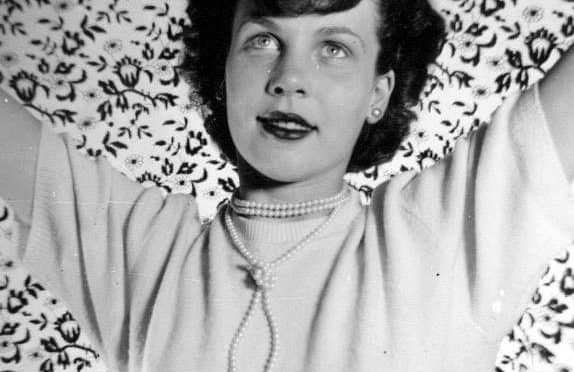
Angela shines for all to see.

Dear Mum: Happy Belated Mother’s Day

May 15/21

Hi Mum,

I think it’s been years since I last wrote to you. It’s been well over 25 years since we last saw each other, but I keep pictures of you nearby, and think of you and look at you all the time.

Last year, Kim and Christina sent me some letters written by you and Dad, from Saskatoon, before I was born. There was one you wrote to your mother, not long after you were home from hospital, recovering from your burns and skin grafts. That must have been such a scary, stressful ordeal for you. It really sounds like you were trying to regain your confidence while you healed at home. Although you sounded hopeful for the future, you sounded a bit lonely too.

I think I like writing these letters to you when your special dates roll around. It was always hard to know what to get you as a gift on Christmas, birthdays, or Mothers Day. Mostly, I remember buying you slippers and lots of chocolate! You always seemed to enjoy the chocolate.

Kim is surviving and thriving in her life, and her two daughters are raising their own children. You have great-grandchildren. That just blows my mind, but in a good, happy way. One of your great-grandsons has the middle name of Huntley, just like you. Although you weren’t able to be in our lives for very long and couldn’t enjoy your family or even have much of a role in it, you have influenced it greatly all the same. Kim and I both love music, and hold your idealized image in our hearts, and beautiful photos of you on our walls and in our photo albums.

I’m sitting in a favourite coffee shop being thoughtful on a sunny day, while a piano version of “Take the A-Train to Harlem” tinkles brightly from the cafe’s speakers. That old chestnut is a tune I first heard either on the radio or maybe hummed or sung by you, back in Poppy’s house in Victoria. Beautiful piano music always makes me think of you.

On Humanity, broken systems, and free will…

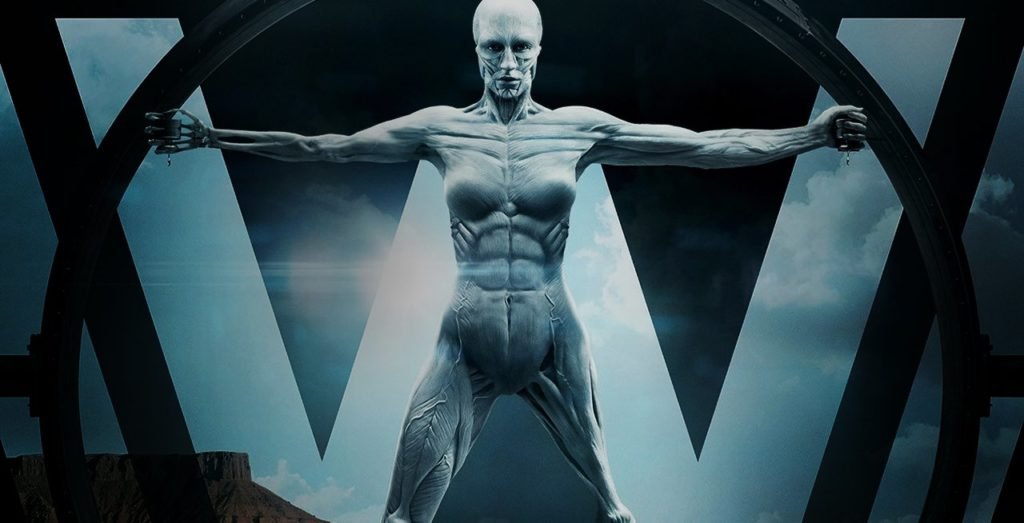
In 2018, we were watching season 1 of Westworld. It posed many questions about human nature and existence and the line between human and machine.

For me, the most memorable themes were:

  • How reliable is our definition of reality?
  • How permananent is our personality?
  • How do advanced AI and life-like automatons alter our definition of a living thing or a sentient being?
  • How do we know that we have free will? How do environment or external forces influence and limit our decisions?
  • What ethical obligations do we have over our offspring or other sentient dependants?
  • Is AI and robotics defining the next race on Earth? (Will humans one day become obsolete?)
  • Is Westworld the future of virtual reality and theme parks?
  • When does a thing start becoming a person, and when does a person start becoming a thing? (Personification, and dehumanization.)

Connecting some themes to my own life

At some point, my own Mother became a “broken system” and difficult to read and to communicate with. By the time I was finishing grade seven, she’d already slipped into a deep depression and given up trying. She gradually almost killed herself from alcoholism. Something deep in her mind and spirit was broken. She wasn’t trying to help herself, and nobody was helping her.

In her youth, Angela was bright and lively in company. She acted in the Gilbert and Sullivan Society in Victoria, she sang, and she played piano, ukelele and other instruments. She was popular, talented, and well-liked. Who knows if she was actively fighting bipolarism in her youth, but it’s possible. Maybe being happy around others was just another way to fulfill an acting role each day.

Years later in the early 1980s, by the time Angela was in her fifties, she was a patient/resident in Riverview Psychiatric Hospital, and whether it was the cumulative effects of Lithium Sulphate, or the after-effects of alcohol overdose-induced brain damage, she was no longer lively at all. She would sit silently, eyes wide, tremoring her arms, and rocking in her chair, her face looking like a mask that was covering mysterious thoughts.

Indeed, Angela’s personality changed after her alcohol overdose. She had suffered brain damage after liver failure and transfusions, and her mannerisms and speech changed noticeably. She became more direct and almost child-like in her declarations. Many of her memories seemed to have been wiped, at least those from the past five to ten years. It was pretty painful for us to realize that we’d really lost her, even while she was sitting there right in front of us. At home, Dad spoke of her in the past tense, because the person he’d known was gone already. Riverview was now maintaining a different version of Angela Huntley Clarke.

As a late teen verging on adulthood, I began to see my mother and my distance from her in a non-personal, non-subjective way. Perhaps this was just a coping mechanism. Angela’s dysfunction began to make me think about the relationship of the mechanics of the body, and how they may or may not be controlled by the brain. I began to understand that some aspects of human behaviour were systemic, and some were conscious and voluntary, and that when the system became damaged, the behaviour became different.

The image below (from a 1984 issue of either Time or OMNI magazine), struck me so strongly at the time as a representation of my lost mother, and my mother’s lost past and personality. The pale mask of a face, and the empty eye sockets, like the missing windows of an abandoned family home.
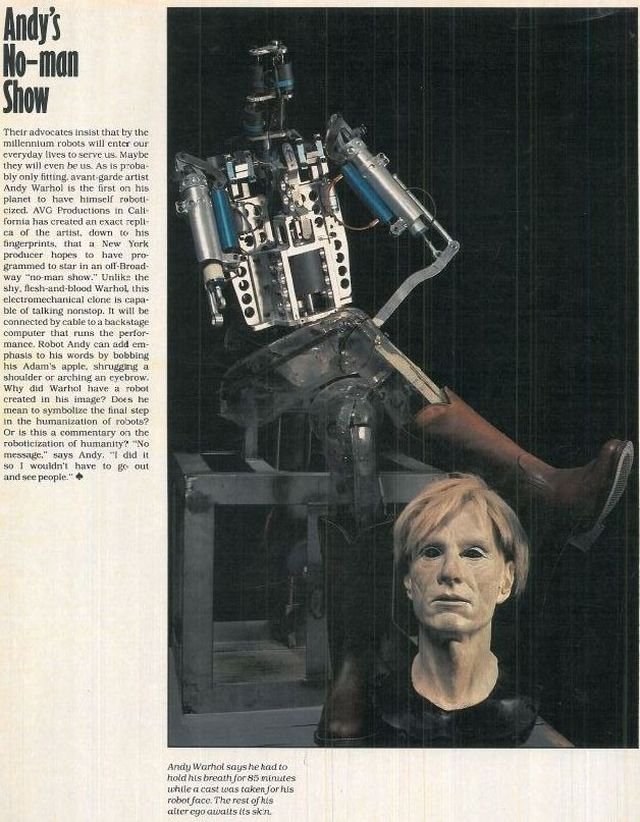
It helped me process it all to see her as a victim with and of a broken system to depersonalize her a little, to accept the space between us that could not be bridged, and any past connection, which now might need to be reconstructed again. I didn’t have the tools for this job.

As 1984 turned into 1985, I visited Mum whenever I could, and tried to connect with her more as a person (even though I wasn’t convinced that she still remembered me as her son). I introduced myself if I needed to, I tried to converse, I shared drawings and photos with here, and brought her chocolate every time. As the years rolled on, it helped me to think of her more like a helpless child, instead of a broken system. I still called her Mum.

Automatons are not people, even if they are shaped like them. People may appear like broken machines, but they’re still people inside – still human.

image_pdfimage_print