I grew up with a feeling of my country living in the shadow of our southern neighbour. The stereotypes I held were that people from the U.S. were louder, flashier, prouder, and more opinionated than the people I knew in Canada. Growing up in the sixties and seventies, I think that for the most part we truly did live in the shadow of our neighbour, constantly influenced and deeply intermingled with their culture, media, and values.
Canadians, as my Dad described us, were proud, independant, and smart. Dad didn’t think much of Pierre Trudeau, but he loved that he seemed smarter than Richard Nixon. He told me that all the best engineers from A.V. Roe left when our government cancelled the Avro Arrow project, and went to work for NASA in the States. He thought that our people were smart, our leaders were stupid, and the US government was opportunistic. His version of Canadian pride seemed to be framed by resentment.
Looking at Canada and the U.S. today, the differences and similarities are still in force. Collectively, our idiocy and genius are as pronounced as ever, although since 2015, the idiocy level south of the border seems to be tipping the American scales of justice in the wrong direction over and over again. Sadly, some Canadians have taken part in the right-wing anti-vaccine echo chamber, proving that US media bias and radical thinking are as transmissable as Covid, and almost as dangerous to freedom and progressive values.
Let’s stay clear-minded, balanced, and rational up here, and treat ourselves and our fellow citizens with compassion, honesty, justice, and understanding.
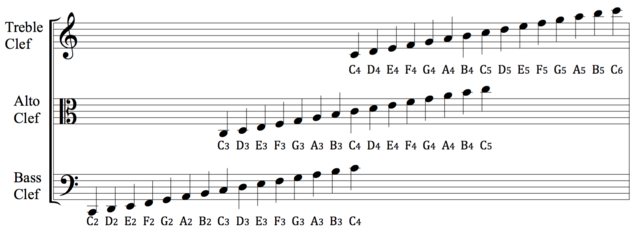
As a little boy, one of the figures I remember learning to draw was a Treble Clef. I thought it was just a funny spiralling capital “S” that had something to do with music.
I’m pretty sure that my Mum taught it to me. She could read music, and had once been a talented pianist and opera singer. I’d seen a Treble Clef in Sunday newspaper funnies whenever Schroeder played Beethoven on his toy piano. I could recognize musical notes in drawings, but I didn’t know what they actually said or meant. They were part of some mystical other language – and judging by the old music they usually represented, the language must have belonged to olden times.
There were little reminders of a musical past in my maternal grandfather’s house in Victoria too: a tiny black toy piano, or a ukelele sitting in the corner gathering dust. Down in his basement, my grandfather had a full-sized upright piano that had been damaged years earlier when his hot water heater blew up. It was covered in boxes, and other than a couple of pokes of its keys by his curious nine year old grandson, it hadn’t made a sound in years.
Around December of 2021, while going through files of my mother’s early photos and papers, I rediscovered a high school handout from her early music training. It was a collection of ten typewritten pages that might have been a correspondence course of some kind. It mentioned preparation for a provincial exam, and it covered musical notation, scales, and staffs. In it, I finally read the explanation of the Treble Clef (known as the “G Clef”). As I read on, I was delighted by the idea that at 55, I was finally tracing some of my mother’s youthful footsteps.
I remembered enjoying learning the notes in Grade 6 music class, and trying to play the recorder, ukele, and guitar. In the forty years since, I can still recognize quarter, half, and whole notes, but I’ve forgotten everything else. I could probably learn to play music by ear and practice, but sheet music itself had never come to life for me – it had remained a silent visual language from a culture I’d only visited or observed, but had never lived in. I felt regret in that realization.
So a couple of weeks ago when I started reading my Mother’s old high school music notes, I wondered why I hadn’t tried to learn to read music years ago. Could I have become a musician like her? Looking at her pages, at the grand staff and its two sets of bars, I started to understand how the layout of a piano keyboard matches the staffs in sheet music. Schematically, a piano seemed to be a much better match for musical scales, and better for learning music and music theory than a guitar.
Learning about reading and playing music might help me to connect to her…
Looking back on the past year, in the midst of such fear, uncertainty, and worry around pandemic disease, war, and political and social unrest, I can say that in spite of all those unsettling factors, I have almost ironically grown to feel like some of my old, personal internal baggage has become lighter, almost vapourous, and some very old shadows have almost faded away.
I’m talking, in colorful terms, about the baggage of my youth: my past family experiences and my strained relationships with my parents.
So far, in my True Life writing project, I’ve dredged up a lot of old memories and revisited many one-sided assumptions. I may still regret many of my parents’ life choices, but I’ve also learned to celebrate their successes and to appreciate them. My mother and father were not just tragic people with burdens and failures. They were each full but flawed, and each worthy of compassion and understanding.
Maybe at the age of 56, I’ve finally grown enough distance from them and gathered enough of an older person’s perspective in my life that I’ve released a lot of my lingering sorrow, hatred, and resentment for how their mistakes affected me and my sister. Maybe the mass and individual tragedies in the world in the past few years has finally convinced me of life’s finiteness, and made my problems seem smaller and more ordinary. Maybe I’ve finally reached a “life’s too short” resolution.
Deaths of family and friends has probably been another major factor contributing to my letting go of baggage:
In 2018, we lost our brother Victor to cancer. In 2019, we lost our beloved little cat Peaches to a mysterious cancer-like tumour. In 2021, we lost my wife’s father to complications from Covid.
Watching an old friend’s family suffer the devastating loss of their mother and their son, I saw how the grief and pain drew them all closer, and made them even more devoted to each other. Last month, one of my wife’s dearest friends passed away from cancer too, and we watched her family’s love coalesce and crystalize in the same way.
It’s felt like step after step of loss, from one person to another, all of them reminding me that living must come to an end for each of us some day. Often, a recent loss will evoke a memory of an earlier one, tangling and compounding the grief.
At some point back in my youth, I believed in life as a kind of infinite horizon that offered me as much room as I could take. I felt it was up to me to keep running towards that bright light. Now, it’s an end-point, not a magnetic goal to run towards. It’s more like a wall. I feel as if I can see the wall that I must one day breach, and it’s getting gradually closer. I wonder how long I’ll live, and how healthy or happy I’ll be while I’m doing it.
The challenge is in accepting this truth:
While my life’s horizon no longer feels infinite, once I get over that last wall, everything I am will be.
I saw Curtis James outside Stadium Skytrain a few days ago. It had been months since I’d last ran into him, and it was a happy mutual recognition as we elbow-bumped and traded compliments on each other’s leather jackets. We talked about how nice the clear blue skies have been, and I asked him if he was still living in the same SRO. “Yeah, it’s still the same old shit hole”, he laughed.
” Hey,” he continued, “did you know that Vancouver has an underground nu-clear power plant? That’s what those vents are coming out of the ground, across from the church.”
“Bullshit!” I heard myself say. What a character, I thought. “There’s a steam plant a couple blocks away that delivers high-pressure steam to heat buildings all over downtown. Maybe that’s what those vents are…”
“Nope,” he said, shaking his head adamantly, “those are underground cooling towers for a nu-cu-lar power plant! That’s where that steam’s coming from!”
He was sticking to his tall tale adamantly. I wasn’t going to convince him, so decided to play along. “Well, I don’t see any third eye in the middle of your forehead, so I guess you’re still safe, eh?”
Christmas Day has come and I have been thinking of you all day. Kim is spending Christmas with me and Grace this year, and we’ve planned a number of visits with childhood friends, and trips down memory lane in old neighbourhoods. I feel so lucky to be with her over Christmas this year. You’d be so proud of her and her beautiful daughters, Christina and Meaghan. They are two strong, sound women, raising their own sons and daughters with love and in healthy lifestyles.
Christmas Eve day was a big day to revisit the times when you were in Riverview, and to remember your life with us. Kim wanted to go there to think of you and maybe to get some closure by walking on the grounds again. I wasn’t so sure that I wanted to return, but I knew how much it meant to her.
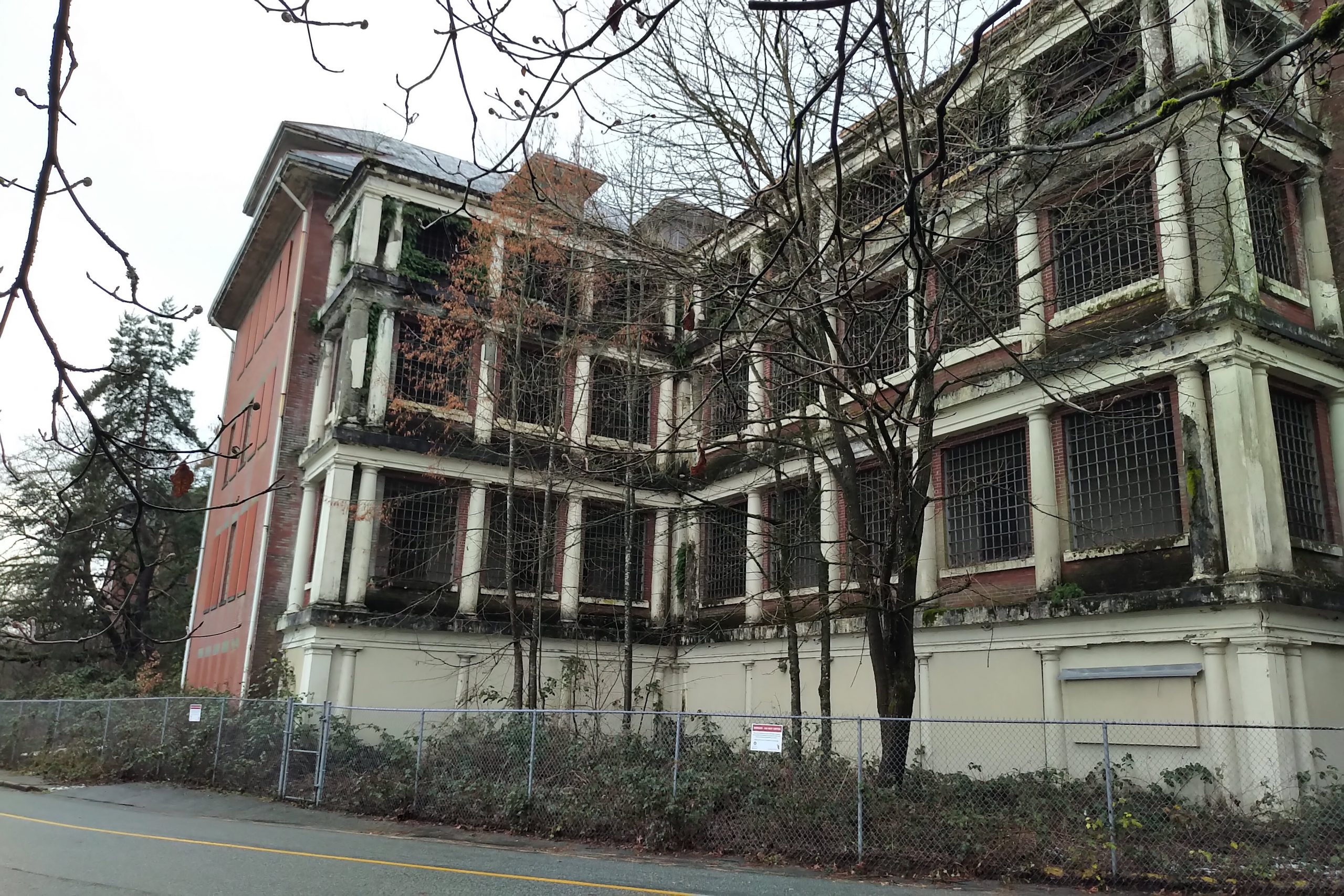
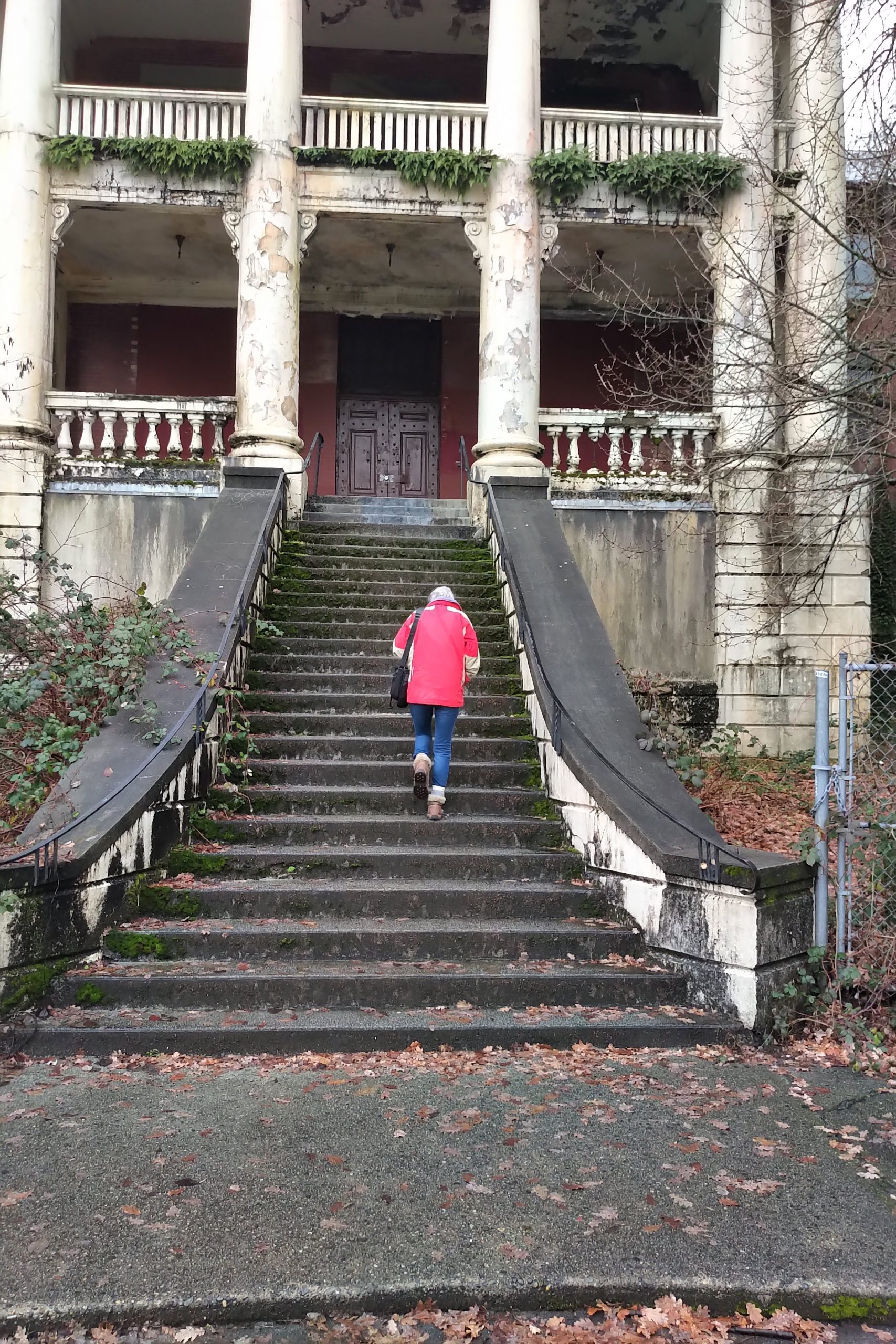
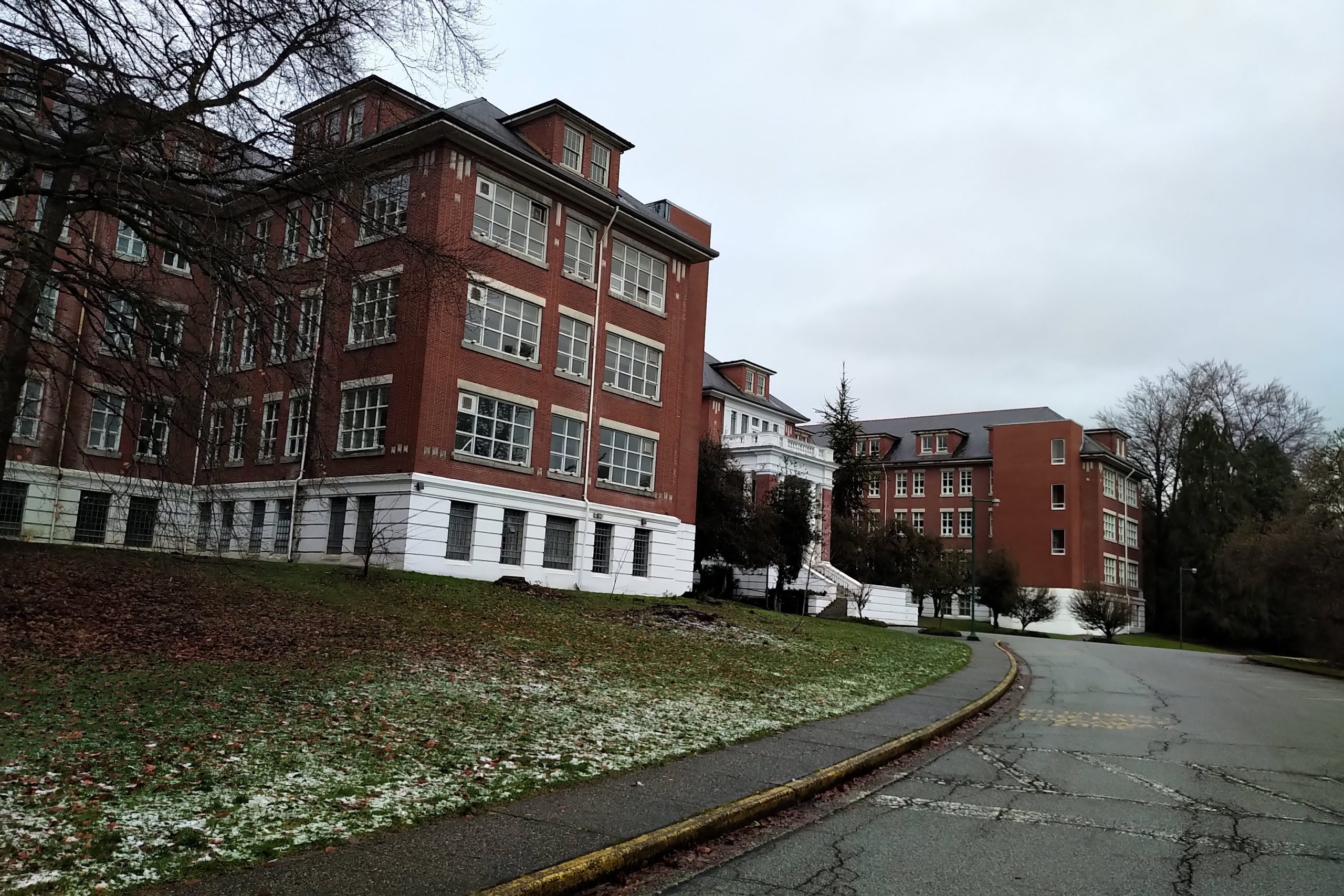
Riverview Hospital is now a mix of old, run-down buildings that represent 120 years of evolution in mental health practices, as well as some new facilities that promise a much brighter future. It was painful to see how decrepit, rusted, and overgrown some of those old buildings have become, especially West Lawn with its cracked and chipped pillars and giant rusted steel front door. That building is spooky as hell. It was practically empty and closed back in the 80s when we went to see you, and I never liked it.
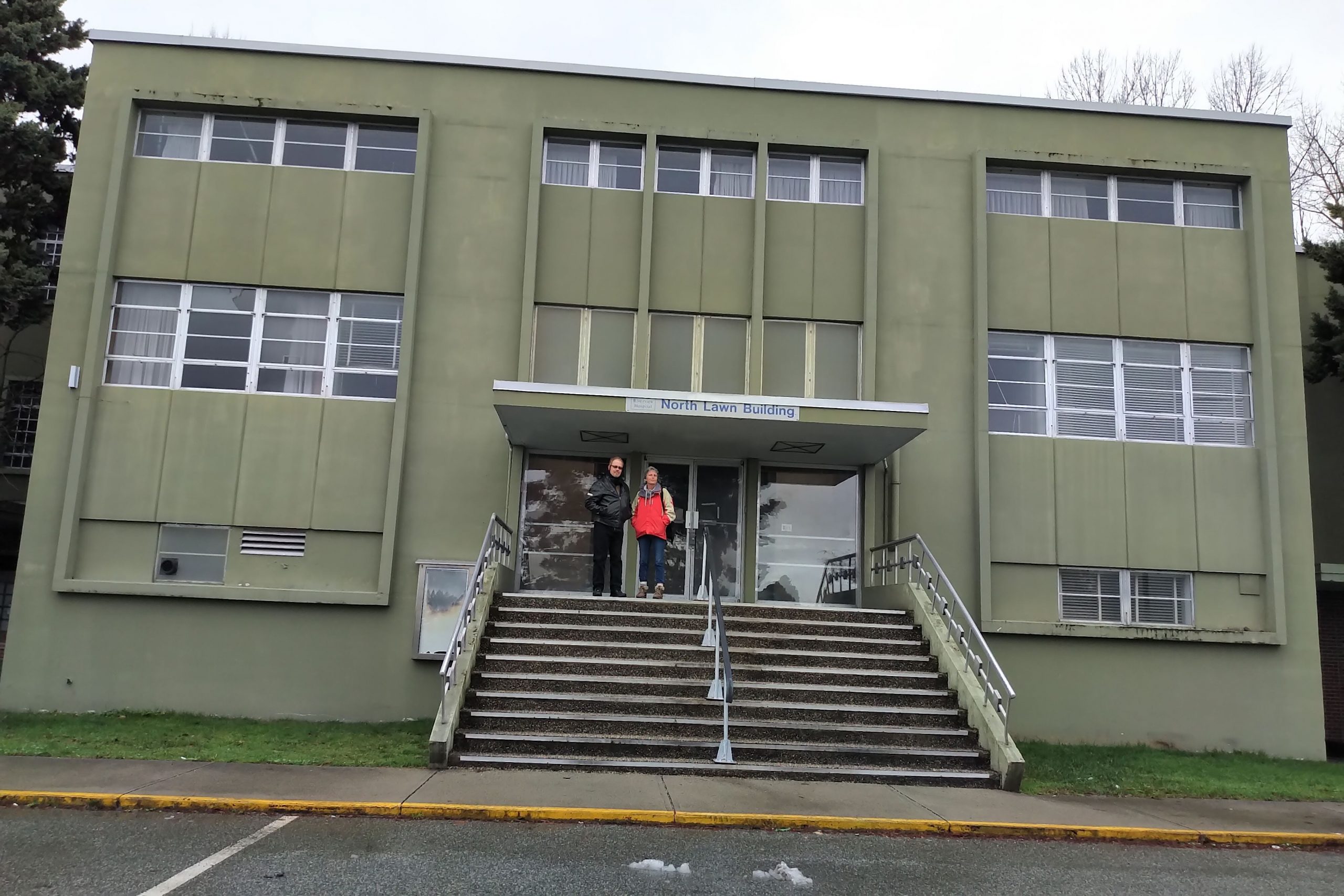
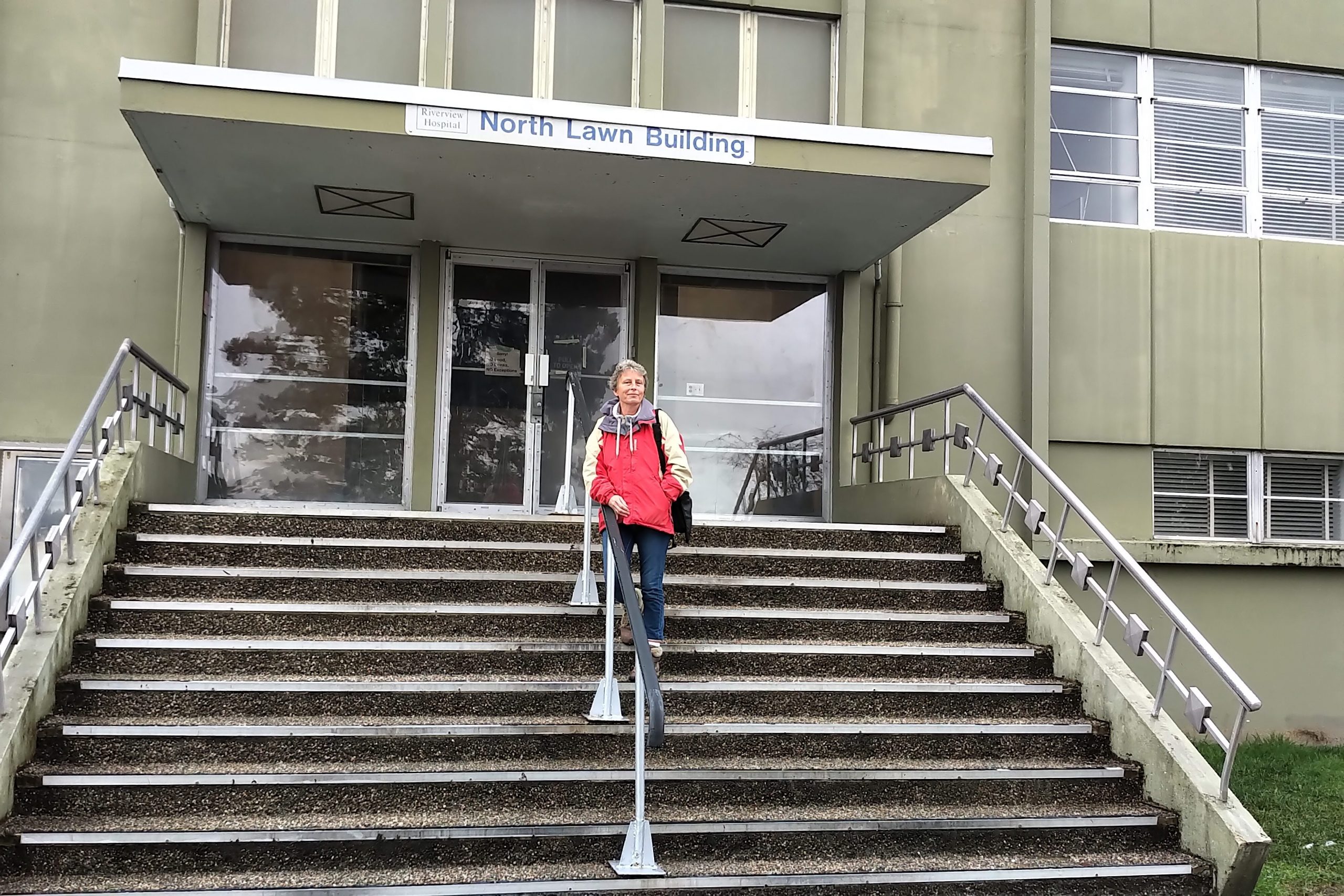
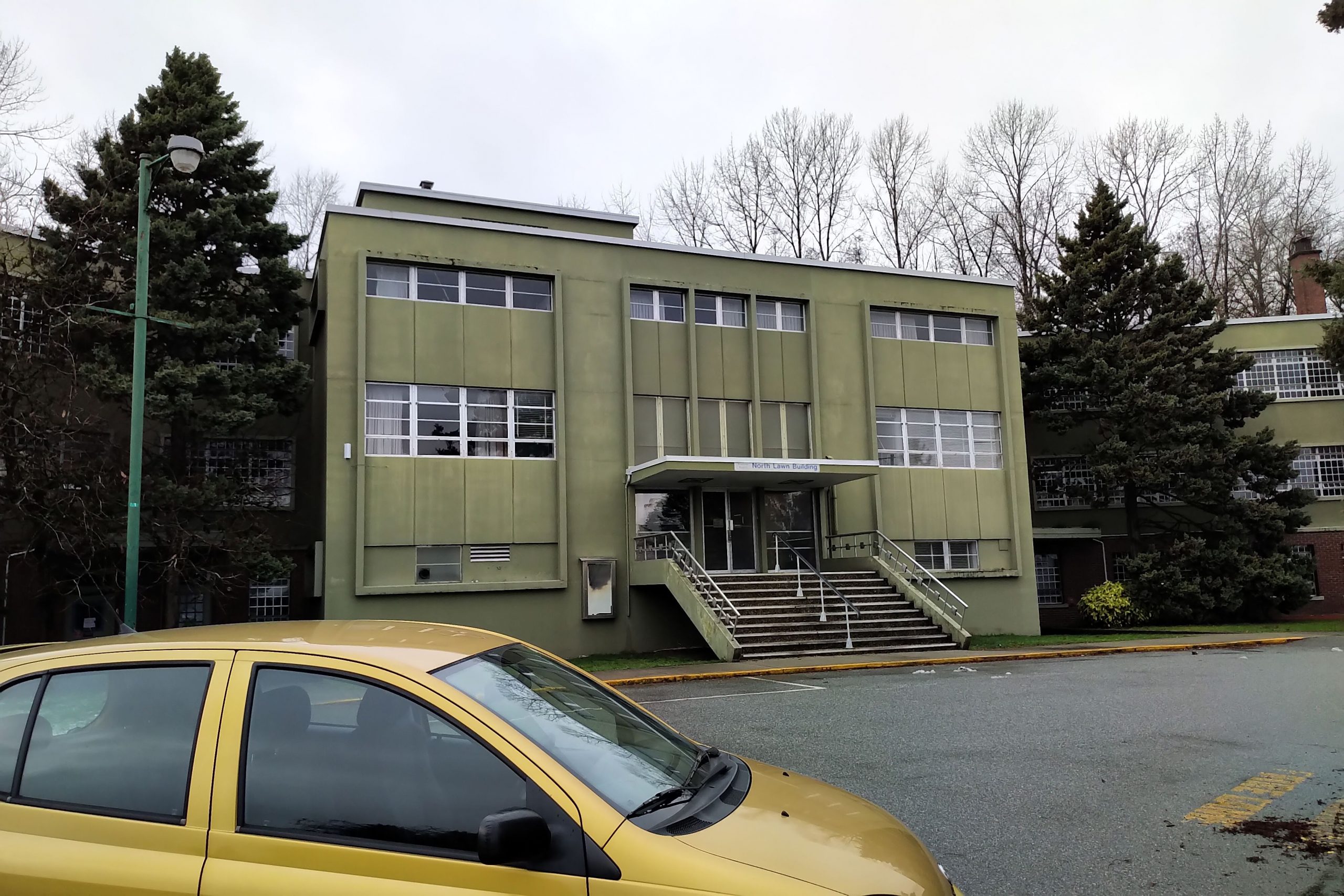
Visiting Centre Lawn and North Lawn units on the Riverview grounds
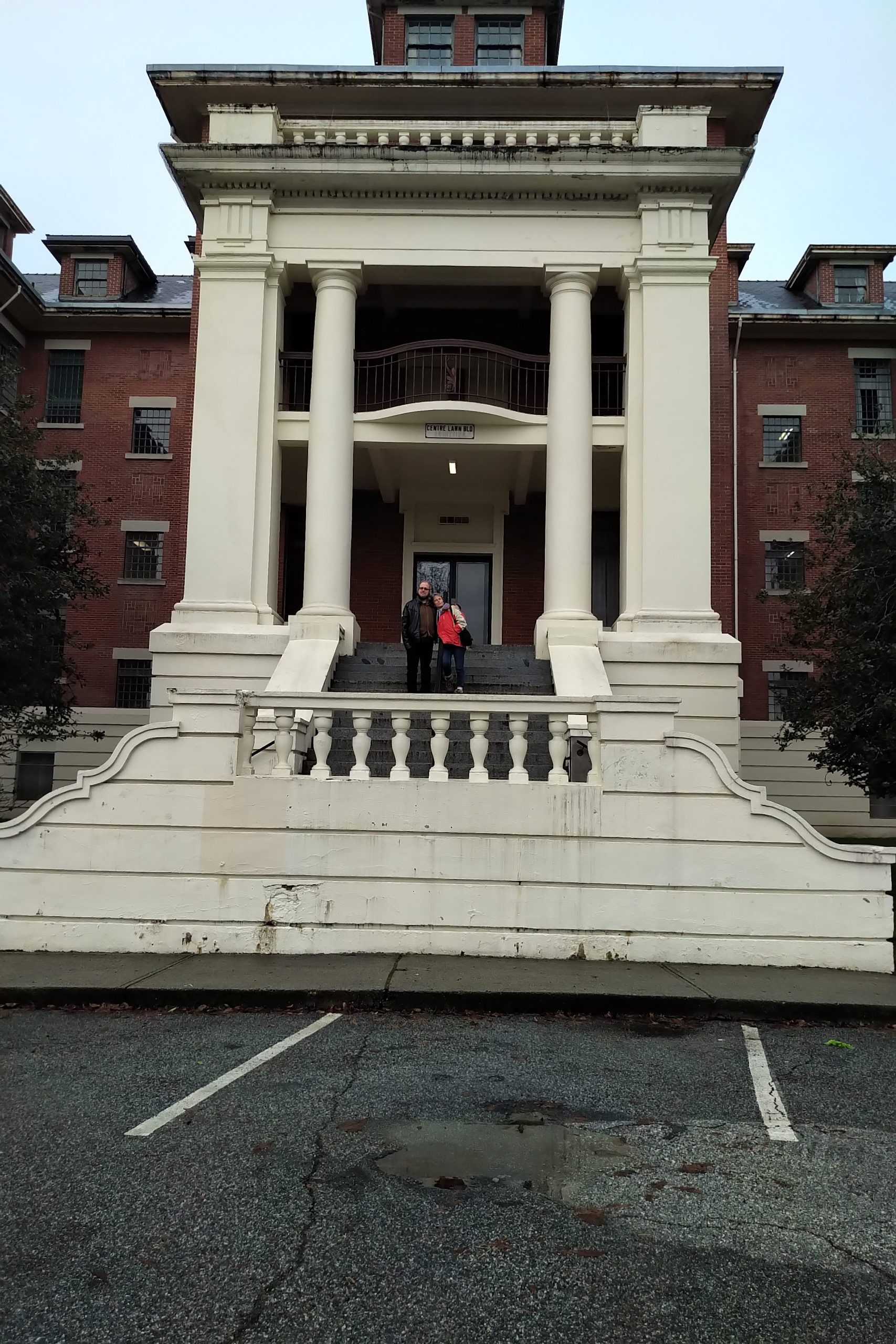
Centre Lawn, where you were for a little while in ’73 and ’79/80, is in much better repair. It now gets used as a shooting location for movies and TV shows. We took pictures of me and Kim standing on the stairs. Centre Lawn was the first ward you were in.
To me, being at Riverview again was uncomfortable. At first, I felt like I didn’t belong there, like I was trespassing in my old neighbourhood and seeing my childhood house with some other family now living their lives there. I relaxed and settled down after about fifteen minutes, and my curiosity got the better of me as we walked around behind the large Centre Lawn building to explore the lane behind it.
After that, we drove up the hill to the North Lawn Unit, where you’d spent most of your time in long-term care. We took photos from those steps, and came back down to the car to admire the beautiful view across the highway. I admired the snow covered mountains and remembered many visits to you from the top of that hill.
The last step in our visit was to find the Riverview Cemetery. Kim was very keen to find it, but I was not. We did wonder if we’d manage to find a grave of your grandfather Isaac Ernest Marks, who died at Essondale in 1948. The hospital has undergone many names in its long history, from Colony Farm, to Essondale, to Riverview, and recently , the lands were renamed “The Place of the Great Blue Heron”.
The view from the Riverview Cemetary
There’s a kind of line of mental illness that runs from Great-Grandpa Isaac, through your Mother, to you, and then on into the next couple of younger generations. As we walked all over the puffy, mossy cemetary grounds, pulling deep mounds of mud and leaves off of neglected grave markers, we didn’t find any graves older than the 1950s. Few people ever come out here, I decided. Seeing a marker for “Jane Doe” stopped me in my tracks and brought me to tears. It was the idea of being nameless and possibly forgotten that overwhelmed me. Standing on that little hill, in a cemetary only about 2000 square meters in size, I couldn’t stop thinking about the sadness of lost or maybe even unfulfilled lives. I couldn’t stand to be there anymore, and I lost interest in finding my great grandpa Isaac. He must have been cremated and scattered somewhere else, I reckoned.
I can’t stand the idea of one of dead loved ones becoming forgotten. I expect this happens to all of us in time, but I never wanted it to happen to you Mum! That was my big worry for you, but I’m grateful for the friends and family who visited you there, and for those who always remembered your birthday and christmases. You have always had friends and family who’ve thought of you and loved you amidst living their daily lives. As long as Kim and I are alive, your memory will stay alive too.
Hope for the future
On the way back from the cemetery, we passed the two new state-of-the-art buildings for native and youth mental health care. Seeing their bright, open, modern design made me feel so happy for the future of mental health care. It was such a huge lift up from the rundown look of the old buildings.
A couple of month ago, I got in touch with your old Nurse, Anna Tremere. She was the head nurse, and also the only person who knew you better in your Riverview times than your own family. Anna was bright and energetic in her remembrances of her long nursing career, and spoke warmly of you, your piano playing, and your sense of humor. Anna gave me a more optimistic view of the care provided at Riverview, and we talked about the new facilities in operation on the grounds, and how that gives one a reason to be hopeful for the future of mental health care in BC.
Mum, in our last brief talk back in 1994 or 1995, I asked you if you minded being at Riverview, and you just said that it was your home now. You’d been there for over 14 years at that point, which was a very long time. I felt sad for you at hearing your resigned acceptance, but also a little relieved by it. I felt like if you’d accepted your circumstances, then that was like permission for me to let go of some guilt too.
We’d gotten glimpses of how scared you were in the beginning on our first visits, years earlier. It was torture for us to see you crying and pleading as we left you behind the big door in that Centre Lawn ward, and saw your teary eyes through the door’s little window.
After that, we went back to Vancouver, and Kim and I visited you and Dad at Mountain View Cemetary. We found your spot on the Rose Wall, and said what we could in spite of light snow and some bitterly cold winds.
We’ve been a long time away from each other now (over 26 years) and I always wished I could get out to visit you more often (especially in your last few years).I do pray that you knew that your family always loved you and missed you.
I still miss you, Kim misses you, and we think about you all the time.
It’s okay to visit the past, but you’re not really supposed to live there.
For most of my life, I’ve had questions about my parents, especially my mother. There have always been things I wanted to know about her, but even when she was right in front of me, I either couldn’t ask them, or she would not be in a position to answer.
That feeling of unresolved curiosity and the dread of lost opportunities are nagging, bothersome, incomplete feelings, born of a thousand little toddler-era insecurities.
I started asking myself questions about my Mother when I was between the ages of twelve and eighteen, but I was raised to “accept things” and “move on” with the necessities of living. That was the tone of our family: don’t discuss painful subjects, and don’t question Dad.
I asked lots of little questions anyway, but if my questioning got into tender territory, Dad would lose patience. I learned to not ask him about my Mum very often. These tendencies were practical – they stopped one from being frozen with regret or guilt – but the downside is that they just left all my questions buried under a thin veneer. Until I really decided to dig a little deeper, I’d never know enough about who my mother Angela was on the inside. Our Dad had already known her and lost her, whereas me and my sister had lost her without ever really knowing her.
After our Mum passed on in 1995, I took on a challenge for myself to write my life story as much as I could, to try to capture and make sense of the actions and events of my parents, the arc of their lives, and what my life meant. Overall, that writing project was really just me trying to answer the question “Who am I?”
Writing about my Mother’s life helped me to see her more clearly, to appreciate her anew as a person, and to reinvigorate my feeling of connection to her.
Revisiting the past can be a limiting experience, like climbing inside a box of memories and being trapped in with them, banging your head against the interior.
But, it can also be an expansive, creative experience, where you integrate new information and new insights, and describe your discoveries. The Past can be like a gallery, meant to be shared and celebrated.
There’s something deeply satisfying about exploring the world on foot.
When my years were in single digits, I explored the city of Victoria. It was my home, it was my mother’s birthplace, and it felt big but usually also friendly. It was the right size for me, perhaps.
Most of my dreams are of personal journeys, on foot most often, down blocks, or along endless hallways. I’m always looking for something or late for something, and unprepared. It means that life can be mysterious and unpredictable, and often lonely.
Just a week ago, I walked a few miles around Victoria, down the tourist strip, through Beacon Hill Park, where I’d played as a kid and marvelled at the peacocks, and walked way up Cook Street, past the sites of both of my grandfather’s long-demolished homes.
It made me reconsider what the words “home” and “memory” are really worth when most of the landmarks from my neighbourhood had disappeared after forty years.
But on this little real-world journey, my wife was with me, and as we walked, we joked some old jokes, bickered in the heat, and debated our directions, and i was not alone, and the past was something that happened to someone else, a long time ago.
Most cities are in some constant state of reinvention and transformation. This city and its occupants are no different. We’re going somewhere – together.
For a lot of reasons (mostly a lack of money, but maybe also loneliness or anxiety), my family moved around a lot when I was growing up. In my first ten years, we moved ten times.
In my life (so far) I have lived in 16 different homes. Here they are:
1966 – Born in Saskatoon (Home 1, on Alexander St.) 1970 – Cook Street, Victoria (Home 2, Grandpa’s house, in Victoria, BC) 1972 – Fort Langley Hotel, Blue Star Motel, then a mobile home in Langley (Homes 3 through 5) 1974 – Cook Street, Victoria (Home 6, Grandpa’s again) 1975 – 1976: Vancouver (Homes 7 through 9, three dodgy motel units: 2 in Mountain View, 1 in Peacock Court) 1976 – Vancouver (Home 10, a nice townhouse in Park Place) 1984 – Vancouver (Home 11, a 1 bedroom flat downtown on Hornby Street) 1985 – A nice townhouse again (Home 12, back in Park Place) 1986 – 2 bedroom flat in a skeevy old apartment building on Pender St. (Home 13) 1987 – A nice 1 bedroom flat in Mount Pleasant (Home 14, with my fiance) 1991 – A better, bigger 2 bedroom basement suite (Home 15, in East Van) 1995 – Bought a new 3 bedroom condo (Home 16, still in East Van)
…so that’s why I hate moving.
As kid, I had no say or control in where I lived. Ownership seemed to have really forced me to stay put. 😉
It’s not like I’ve always known where I should be or where I belong. People and places need to claim you with some certainty and purpose, especially when you’re young, so you don’t feel like you’re just drifting.
Growing up, I never felt extremely claimed or tied-in to my own family. It was just where I lived and who I lived with while I tried to figure out what each day would bring. I only knew I was living, but no idea why, or why it mattered.
It seemed like there was always a reason to fight, or to cry, or to want to escape instead of to just enjoy where I was. I’m probably being unfair to my parents but that’s most of what I can remember growing up: Someone being angry, someone crying, and a meek observer wishing on whatever the next horizon could bring.
These may all be the products of a rich dinner or a rich imagination, or an overfed sense of drama. Maybe I’m just being a little selfish or dramatic. I’ve always been something of a loner at heart. Maybe everyone else’s family will always look better to me than my own, real or not.
I still feel like a bent piece searching for my own space in the puzzle.